What does concrete slab foundation repair cost in Texas?
A slab-on-grade foundation is a reinforced concrete pad poured directly over prepared soil. Because the slab supports the entire house, repair costs depend less on square footage alone and more on the cause, location, and severity of movement.
Concrete slab foundation repair commonly costs $3,500-$7,000. Minor crack work may cost a few hundred dollars, while extensive foundation underpinning with numerous piers can exceed $25,000.
Typical Texas price range at a glance
| Repair scope | Typical Texas range | What it may involve |
|---|---|---|
| Minor crack repair | $250-$1,000 | Epoxy injection or sealing of stable cracks |
| Partial stabilization | $2,000-$6,000 | Void filling, foam injection, or support beneath a limited area |
| Multi-pier underpinning | $7,000-$25,000+ | Pressed concrete, steel push, or helical piers |
| Foundation leveling | $5,000-$15,000+ | Carefully lifting and stabilizing affected sections |
| Full slab replacement | $20,000-$100,000+ | Demolition, excavation, plumbing work, and rebuilding |
These are typical Texas ranges, not contractor quotes. Pier count, installation depth, expansive clay soil, interior access, drainage problems, plumbing leaks, engineering, permits, and cosmetic repairs can all change the final price.
A low bid for crack sealing is not equivalent to a proposal for underpinning. Sealing may control moisture intrusion, but it does not correct active differential settlement. Ask each contractor to specify the repair method, work locations, pier type and count, expected lift, exclusions, and warranty terms.
Get 2-3 written estimates before approving work. For major underpinning, whole-house leveling, conflicting recommendations, or unusually expensive proposals, consider obtaining an independent structural engineer’s report.
Texas foundation repair costs by project scope
Cost table: crack repair through full slab replacement
Most concrete slab repairs fall near the $3,500-$7,000 benchmark, but localized sealing and extensive underpinning sit well outside that range. The figures below are typical Texas ranges for budgeting, not contractor quotes.
| Repair scope | Typical Texas range | Likely method | Complexity |
|---|---|---|---|
| Minor foundation crack repair | $250-$1,000 | Epoxy injection or sealing of a stable crack | Low |
| Partial slab stabilization | $2,000-$6,000 | Polyurethane foam injection, slabjacking, or limited pier installation | Moderate |
| Multi-pier underpinning | $7,000-$25,000+ | Pressed concrete, steel push, or helical piers | High |
| Whole-house leveling | $10,000-$30,000+ | Multiple support points, controlled lifting, and stabilization | Very high |
| Full foundation replacement | $20,000-$100,000+ | Demolition, excavation, rebuilding, and related plumbing work | Extreme |
The final cost depends on how much of the slab has moved and why. A limited area affected by a soil void may need foam injection, while widespread differential settlement can require numerous piers installed beneath load-bearing sections.
Installation depth also matters. Piers must reach suitable load-bearing soil or satisfy the contractor’s specified refusal criteria. Difficult soil, expansive clay, buried utilities, patios, landscaping, and interior work locations can increase labor and equipment costs. Major piering may reach or exceed $25,000, especially when access is restricted or engineering is required.
Cost per pier versus cost per square foot
Contractors often calculate underpinning by the number of support points. A broad budgeting range is approximately $700-$2,500+ per installed pier in Texas, depending on whether the design uses pressed concrete, steel push, or helical piers. Depth, load requirements, excavation, material, and access can move the price higher.
Cost per pier is useful only when proposals describe the same system and scope. One estimate may include excavation, lifting, steel brackets, cleanup, and a plumbing test, while another lists only pier installation.
Cost-per-square-foot calculators are less reliable for foundation repair. A 2,500-square-foot house with movement along one corner could cost less than a 1,600-square-foot house needing deep piers around several walls. Foundation size affects the potential scope, but pier count, repair locations, expansive clay conditions, and damage severity usually have more influence.
Additional charges that may not appear in the base price
Ask whether each estimate includes these potential expenses:
- Structural engineer’s report: commonly $500-$1,500+ in Texas
- Permit fees: often $100-$1,000+, depending on the city and project
- Plumbing or hydrostatic testing: commonly $300-$800+
- Interior access: floor removal, dust control, and finish replacement
- Excavation: extra labor for deep or restricted work areas
- Landscaping restoration: replacement of plants, irrigation lines, soil, or hardscape
- Debris removal and final cleanup
- Temporary lodging: potentially necessary during disruptive interior work
- Cosmetic repairs: drywall, flooring, tile, trim, masonry, and paint
These are typical Texas ranges, not property-specific quotes. Obtain 2-3 written estimates showing inclusions, exclusions, pier count, payment terms, and warranty coverage. Before major underpinning or whole-house leveling, consider an independent structural engineer’s report.
Why Texas soil and water conditions cause foundation movement
Texas foundations move when the soil beneath them gains or loses moisture unevenly. The slab may settle where support shrinks, rise where wet soil expands, or experience both across different areas.
Expansive clay and the soil shrink-swell cycle
Expansive clay soil is common in many parts of Texas. During prolonged heat and drought, clay loses moisture, contracts, and may pull away from the slab perimeter. After heavy rain, the same soil absorbs water and swells.
When moisture changes are uneven, one section of a slab-on-grade foundation can move more than another. This creates differential settlement. Saturated clay may also push part of the slab upward, producing foundation heave.
Repeated drought and flood cycles increase stress on concrete, masonry, drywall, flooring, and plumbing. Even after foundation repair, uncontrolled soil moisture can contribute to recurring movement. Piers may stabilize supported areas, but they do not automatically correct poor drainage or plumbing leaks.
Drainage, grading, gutters, and soil moisture
Rainwater should move away from the house instead of collecting beside the foundation. Watch for:
- Soil that slopes toward the slab
- Ponding water after rainfall
- Erosion near corners or downspouts
- Missing gutters or overflowing gutters
- Downspouts that discharge beside the foundation
- Irrigation leaks or overspray against the house
Downspout extensions and properly designed grading can reduce concentrated saturation. Gutters also need enough capacity and routine cleaning to handle runoff.
Some properties benefit from maintaining reasonably consistent moisture around the slab during dry periods. However, there is no universal Texas watering schedule. Soil type, drainage, vegetation, local restrictions, weather, and foundation design all matter. Avoid sudden overwatering after drought, and ask a qualified local professional about conditions at your property.
How plumbing leaks can destabilize a slab
A pressurized water-line leak or damaged drain pipe beneath the slab can saturate, soften, or wash out supporting soil. The result may be localized settlement, heave, or a void under part of the concrete.
Possible warning signs include unexplained increases in water use, a meter that moves when fixtures are off, warm floor areas, damp flooring, sewage odors, recurring drain problems, or movement concentrated near plumbing lines. Leak detection or a plumbing test may be appropriate before approving foundation work.
For major underpinning or leveling, consider an independent structural engineer’s report and obtain 2-3 written estimates. Any prices discussed in this guide are typical Texas ranges, not quotes for a specific property.
Foundation warning signs Texas homeowners should not ignore
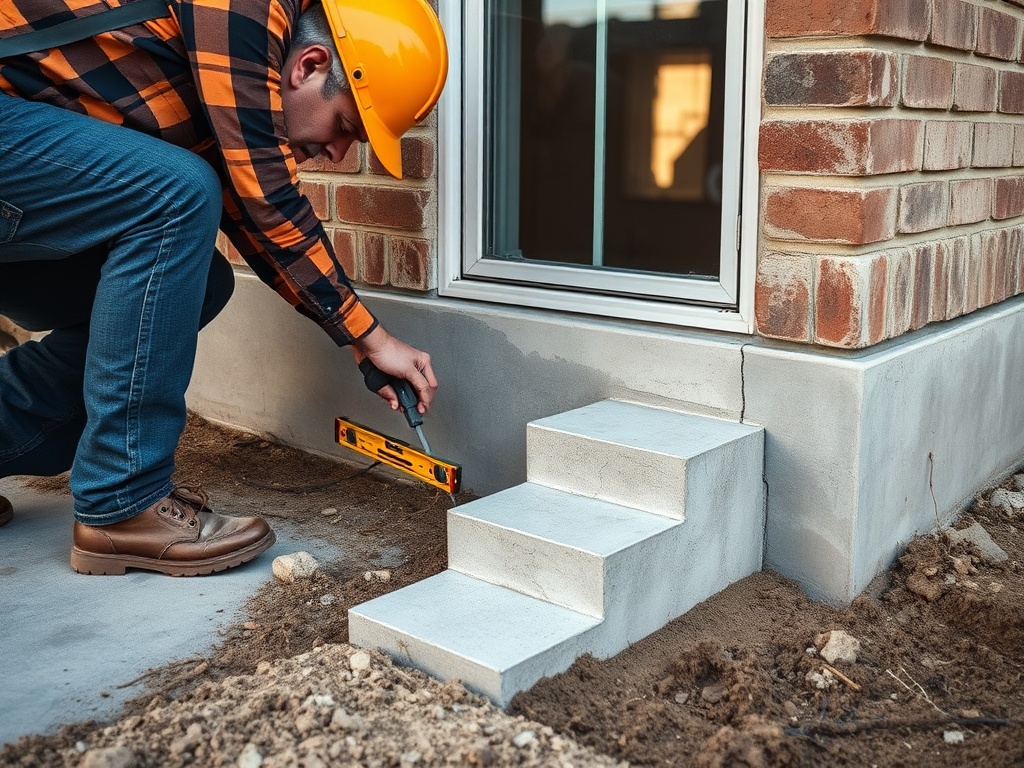
No single crack proves that a foundation is failing. Location, displacement, nearby symptoms, and changes over time provide more useful evidence than appearance alone.
Cracks that may be cosmetic
An isolated hairline crack in drywall or concrete may result from normal curing, minor shrinkage, or seasonal movement. Small separations at trim joints can also be cosmetic when surfaces remain aligned and the gap stays stable.
Document the condition before assuming it needs structural repair:
- Photograph the crack with a ruler or crack-width gauge beside it.
- Record the date, location, and approximate width.
- Mark the ends lightly with a pencil to track growth.
- Recheck after heavy rain, drought, and seasonal temperature changes.
- Note whether doors, floors, tile, or masonry nearby have also changed.
A stable hairline crack without displacement usually deserves monitoring. Repeated patching will not solve active movement, however, so watch for reopening or widening.
Patterns associated with possible foundation movement
Multiple symptoms concentrated in one area deserve more attention than a single blemish. Possible warning patterns include:
- Foundation cracks that widen, separate, or show one side higher than the other
- Stair-step cracks running through brick or mortar joints
- Floors that slope, dip, or feel uneven underfoot
- Trim, cabinets, or countertops separating from walls
- Doors and windows that suddenly stick or no longer latch
- Diagonal drywall cracks extending from door or window corners
- Tile cracks appearing across several adjoining rooms
Progression matters. A crack that changes noticeably within weeks, or several new symptoms appearing together after drought or heavy rain, may indicate differential settlement, foundation heave, drainage trouble, or a plumbing leak.
When to arrange a professional foundation inspection
Schedule a timely inspection if cracks are changing rapidly, walls show visible displacement, floor elevations differ significantly, or several doors suddenly stop operating correctly. Recurring drain issues, unexplained water use, warm floor areas, or localized movement may also justify leak detection or a plumbing test.
A foundation repair contractor can perform an initial inspection and propose a repair scope. For major underpinning, whole-house leveling, conflicting diagnoses, or an expensive proposal, an independent structural engineer can provide a separate assessment without tying the findings to a repair sale.
Any repair prices discussed in this guide are typical Texas ranges, not quotes for your property. Obtain 2-3 written estimates that identify the cause, method, pier count, exclusions, testing, and warranty terms before approving work.
Slab-on-grade versus pier-and-beam repairs and methods
Slab-on-grade and pier-and-beam foundation comparison
Repair methods depend on the foundation type, movement pattern, soil conditions, and access to the affected area.
| Foundation type | Access and excavation | Common repair methods | Typical disruption and timeline | Major cost drivers |
|---|---|---|---|---|
| Slab-on-grade | Exterior pits beside the slab, tunnels, or openings through interior floors | Underpinning, controlled leveling, slabjacking, foam injection, crack sealing | Limited work may take 1-3 days, while extensive piering can take a week or longer | Pier count, installation depth, interior access, plumbing, landscaping, and expansive clay |
| Pier-and-beam | Crews may work through the crawlspace, although low clearance can limit access | Pier adjustment, shimming, beam replacement, joist repair, and added supports | Many projects take 2-5 days, but damaged framing or difficult access can extend the schedule | Crawlspace clearance, wood decay, moisture, beam condition, support count, and drainage |
Crawlspace access can make some pier-and-beam repairs less disruptive because crews may not need to cut through finished floors. However, standing water, damaged beams, inadequate ventilation, or limited clearance can increase labor and material costs.
Slab repairs often require exterior excavation. Piers beneath interior load-bearing areas may require floor openings or tunneling, increasing dust, cleanup, flooring repairs, and project time.
These timelines and any prices below are typical Texas ranges, not contractor quotes.
Pressed concrete, steel push, and helical piers
Foundation underpinning transfers part of the home’s load to deeper, more reliable soil. Contractors may recommend different pier systems based on soil conditions, structural loads, access, and the location of settlement.
- Pressed concrete piers use stacked concrete cylinders hydraulically pressed into the ground using the building’s weight as resistance. They are common in Texas, but achievable depth and suitability vary by soil and structure.
- Steel push piers use steel sections driven until specified resistance or suitable bearing material is reached. They may reach deeper layers, although steel, brackets, equipment, and engineering can raise the price.
- Helical piers have screw-like plates rotated into the soil. Installation torque helps evaluate capacity. They may be considered for lighter structures, additions, or sites where the building provides insufficient weight for conventional push installation.
Installed pier costs often fall around $700-$2,500+ per pier in Texas. Material, depth, load requirements, excavation, access, engineering, and the number of support points determine the actual total.
The primary goal is usually stabilization. Returning a house completely to its original elevation may be impossible or undesirable because aggressive lifting can damage plumbing, flooring, drywall, masonry, and windows. The written scope should state the expected lift and how elevations will be documented.
Slabjacking, foam injection, and crack repair
Mudjacking or slabjacking pumps a cement-based grout beneath concrete to fill voids and raise suitable settled sections. The material is relatively heavy and requires drilled injection holes.
Polyurethane foam injection uses expanding material to fill voids and lift certain concrete areas. It generally requires smaller holes and adds less weight, but it does not replace deep underpinning when active settlement requires load transfer.
Epoxy crack injection can bond or seal a stable concrete crack. It may reduce water entry and restore continuity in appropriate situations, but sealing the visible crack does not correct expansive-soil movement, foundation heave, or differential settlement.
Obtain 2-3 written estimates that identify the proposed method, work locations, pier count, lift expectations, exclusions, and warranty. For major underpinning or whole-house leveling, consider an independent structural engineer’s report before approving the work.
Inspections, engineering reports, and comparable estimates
When an independent structural engineer is worth the cost
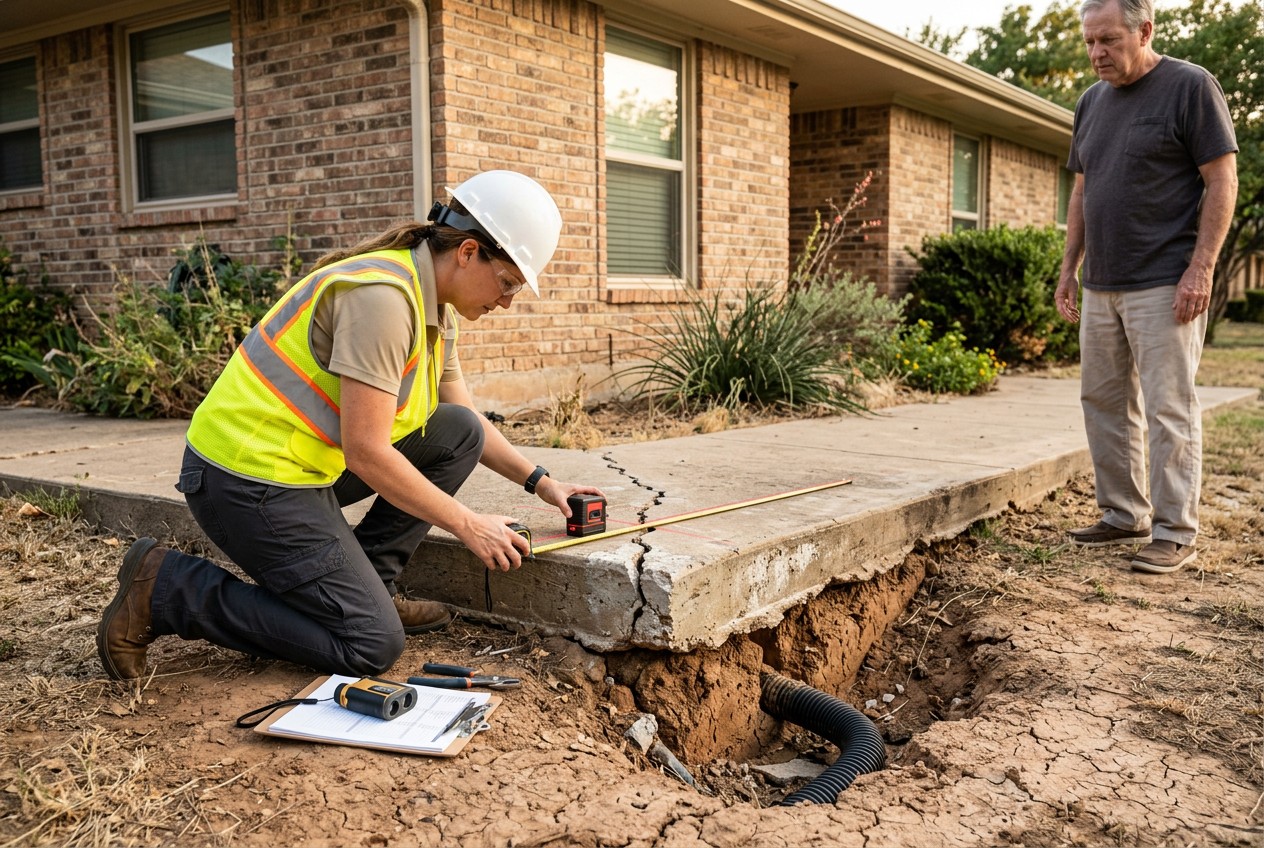
A contractor’s foundation inspection usually identifies visible symptoms, takes floor-elevation measurements, and recommends work the company can perform. An independent structural engineer evaluates the structure and may provide a sealed report without selling the repair.
In Texas, an engineer’s assessment commonly costs $500-$1,500+, depending on property size, location, testing, and report detail. This is a typical Texas range, not a quote.
Consider an independent report before:
- Major multi-pier underpinning
- Whole-house leveling
- Buying a home with previous foundation work
- Accepting an unusually large bid
- Choosing between conflicting contractor diagnoses
- Repairing movement that may involve framing or plumbing damage
The report can help determine whether the goal should be monitoring, drainage correction, leak repair, stabilization, or controlled lifting.
Useful diagnostic records and tests
Good records help connect cracks and uneven floors to expansive clay movement, drainage problems, plumbing leaks, or another cause. Gather:
- A floor-elevation survey showing measurements and reference points
- Dated crack photographs with a ruler or crack-width gauge
- Notes about sticking doors, sloping floors, and when symptoms appeared
- Drainage observations made during or after heavy rain
- Previous engineering reports, warranties, invoices, and elevation diagrams
- Plumbing repair records and water-use history
- Permit records for earlier foundation or structural work
A static pressure test, hydrostatic plumbing test, or specialized leak detection may be appropriate when movement is concentrated near plumbing lines or water loss is suspected. Because testing can stress weakened drain systems, ask a qualified plumber which procedure fits the property.
Confirm permit and inspection requirements with the local city or county before signing a contract.
Apples-to-apples foundation estimate checklist
Get 2-3 written estimates and compare the same details:
- Diagnosis and work locations - Ask what is moving, why, and where repairs will occur.
- Pier system and count - Require the pier type, quantity, spacing, brackets, and support locations.
- Installation criteria - Identify expected depth, refusal criteria, load requirements, and how capacity will be documented.
- Lift expectations - Clarify whether the goal is stabilization, partial recovery, or leveling, plus the risks of lifting.
- Included services - Confirm engineering, permits, plumbing tests, excavation, tunneling, landscaping, interior floor access, cosmetic repairs, debris removal, and cleanup.
- Project administration - List subcontractors, schedule, change-order rules, deposit, progress payments, and completion conditions.
- Warranty terms - Review coverage, exclusions, adjustment fees, transfer requirements, and the company responsible for future service.
Every price in this guide is a typical Texas range, not a contractor quote. For major work, use the estimates alongside an independent structural engineer’s report before approving the final scope.
How to vet a contractor and protect the repair investment
Contractor credentials, insurance, and reputation
Verify claims before comparing prices. Ask each contractor for:
- Its legal business name, physical address, and years in operation
- License or local registration numbers where applicable
- Proof of required permits for your city or county
- A current general liability insurance certificate issued by the insurer
- Recent references for projects involving similar soil conditions and repair methods
- Disclosure of subcontractors and who supervises their work
- Complaint history and documentation showing how disputes were resolved
Licensing and registration requirements can vary by trade and jurisdiction in Texas. Confirm the rules directly with the local permitting office, and verify professional licenses with the appropriate state agency. Call references and ask whether the final price, schedule, cleanup, and warranty service matched the contract.
Written scope, payment terms, and foundation warranties
Get 2-3 written estimates and compare the same repair scope. Each proposal should identify pier type and count, repair locations, installation criteria, lift expectations, engineering, permits, plumbing tests, landscaping restoration, cleanup, and exclusions.
The contract should also explain:
- Deposit and progress-payment amounts
- Conditions for final payment
- Who may approve change orders
- How unexpected excavation or access costs are priced
- Project start and completion expectations
- Responsibility for interior and cosmetic damage
Do not treat a “lifetime” or transferable foundation warranty as automatic full coverage. Check which components are covered, whether adjustments cost extra, what soil movement or drainage conditions are excluded, and whether transfer or inspection fees apply. Confirm which legal entity must remain in business to perform future service.
Insurance documentation and post-repair care
Homeowners insurance coverage usually depends on the cause of damage, policy exclusions, endorsements, and supporting records. Foundation movement caused by ordinary soil shrink-swell cycles may be treated differently from damage involving a covered plumbing leak. Contact the insurer before work begins and ask what inspection reports, photographs, plumbing tests, and repair estimates are required.
After repair, retain the final elevation diagram, paid invoice, permit approvals, engineer’s report, plumbing-test results, photographs, and warranty documents. Correct grading, drainage, gutter, downspout, irrigation, or leak problems identified during the project. Consider delaying drywall, tile, and paint repairs until the contractor or engineer advises that post-lift movement has been evaluated.
Any cost figures in this guide are typical Texas ranges, not quotes. For major underpinning or whole-house leveling, obtain 2-3 written estimates and consider an independent structural engineer’s report.
Frequently asked questions about Texas slab foundation repair
Can a slab foundation be repaired, and what repairs cost the most?
Yes. Many slab-on-grade foundations can be stabilized without replacing the entire slab. Localized problems may be addressed with crack injection, void filling, or a limited number of piers.
The most expensive projects usually involve deep foundation underpinning, numerous steel or helical piers, difficult interior access, widespread differential settlement, whole-house leveling, or full replacement. Typical Texas costs range from $250-$1,000 for minor stable crack repair to $7,000-$25,000+ for multi-pier underpinning. Full replacement may reach $20,000-$100,000+.
These are typical Texas ranges, not contractor quotes. The appropriate method depends on the cause of movement, soil conditions, pier depth, access, and structural damage.
How long does foundation repair take, and can you stay home?
Epoxy crack injection may take several hours or one day. Limited stabilization often takes 1-3 days, while multi-pier installation may require 3-7 days. Extensive leveling, tunneling, plumbing repairs, or interior excavation can take a week or longer.
Many homeowners remain in the house during exterior foundation work. Temporary arrangements may be needed when the project involves interior floor openings, heavy dust, excessive noise, utility interruptions, restricted access, or safety concerns. Ask the contractor for a written schedule and occupancy guidance before work starts.
Will foundation cracks return, and will homeowners insurance pay?
Cracks may remain visible or reopen after stabilization. Concrete, brick, drywall, and flooring respond differently to lifting, temperature, and continuing soil shrink-swell cycles. Correcting drainage, grading, gutter discharge, and plumbing leaks can reduce recurring movement, but no repair can eliminate all future soil activity.
Homeowners insurance coverage is cause-specific. Policies often exclude ordinary settlement or expansive-clay movement but may treat damage from a covered plumbing leak differently. Confirm coverage directly with your insurer and provide inspection records, photographs, plumbing tests, engineering reports, and written estimates.
For major or disputed repairs, obtain 2-3 written estimates and consider an independent structural engineer’s report before approving the scope.
Foundation lifting, underpinning, tunneling, slab injection, and structural excavation are hazardous professional operations. Do not attempt this work yourself or enter unsupported excavations or unsafe crawlspaces; use qualified contractors and appropriately licensed professionals.
If you notice sudden or severe structural movement, partial collapse, exposed wiring, flooding, hissing or damaged utility lines, or the odor of gas, leave the affected area immediately and contact emergency services or the appropriate utility provider. Do not re-enter until the property has been declared safe.