What Are Helical Piers?
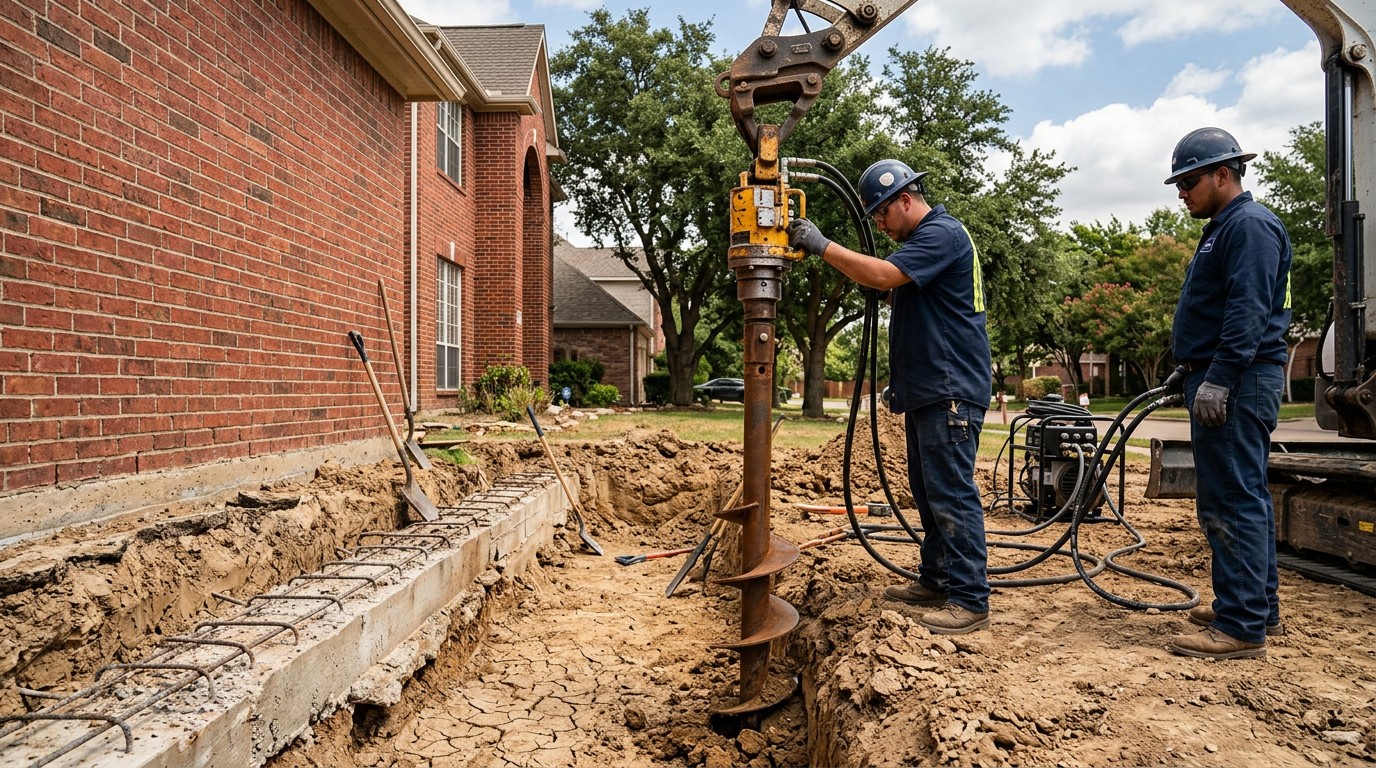
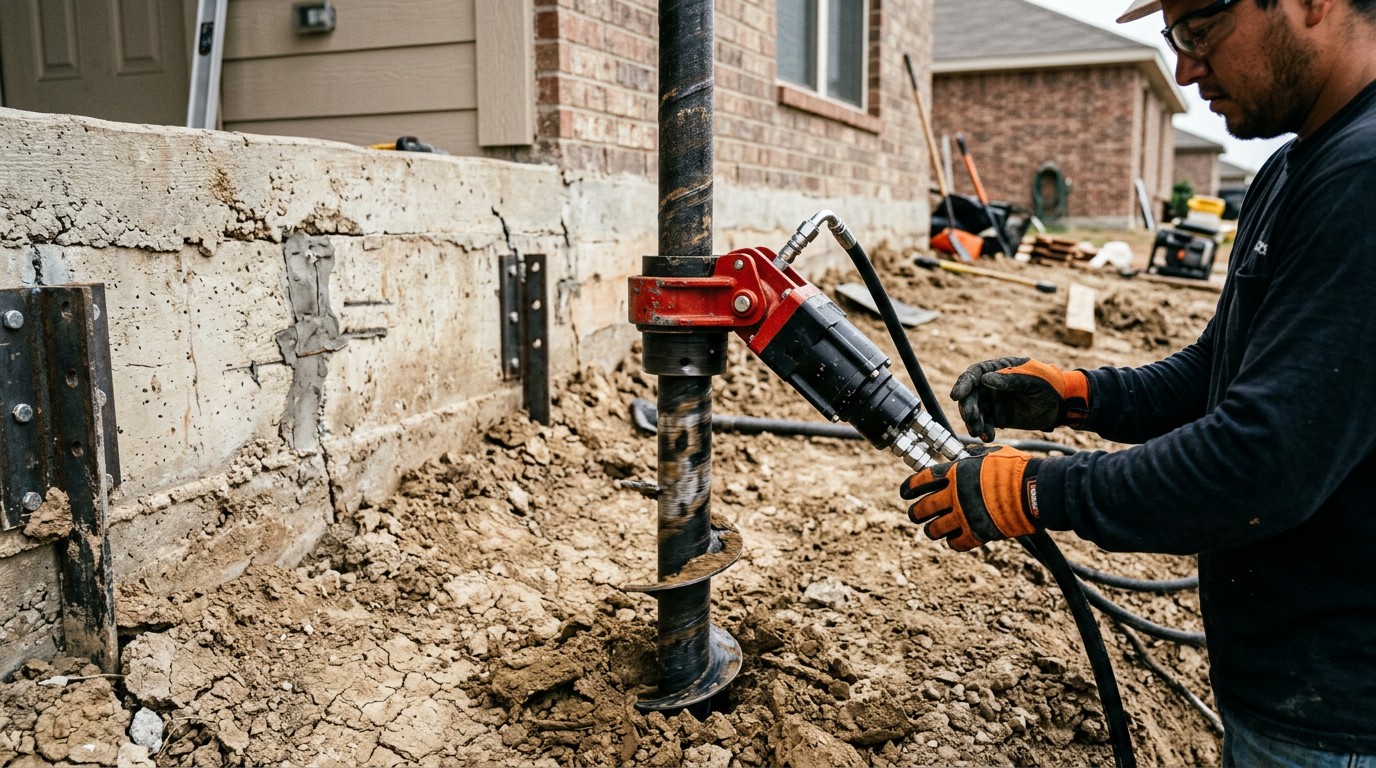
Helical piers are steel foundation elements with one or more helix-shaped plates welded to a central shaft. An installer rotates the shaft into the soil, adding extensions until the pier reaches the depth and installation-torque criteria specified for the project. A bracket then connects the pier to the existing foundation so the structure can transfer load into deeper, more suitable soil.
They are also called helical piles, screw piles, or screw anchors. In residential foundation repair, the term helical pier is common. Building codes and engineering documents often use helical pile.
The method is easy to recognize on site: the equipment screws the shaft into the ground rather than pressing stacked concrete cylinders or driving a push pier using the weight of the house. That installation difference is why helical piers are often considered for lighter structures, additions, porches, and situations where the structure does not provide enough reaction weight for a conventional push-pier installation.
Helical piers are not a universal answer for Texas clay. The system, shaft size, helix configuration, target depth, bracket and spacing should come from the conditions at the property and the loads being supported. Major work should be reviewed by an appropriately qualified Texas professional engineer.
How Helical Piers Stabilize a Foundation
A helical pier works by transferring the supported load away from weak or seasonally active soil near the surface. In much of Texas, expansive clay swells when wet and shrinks during drought. If the near-surface soil moves unevenly, one section of a slab or grade beam can settle more than another.
The installer advances the pier through those upper layers. Installation torque provides project data that helps the design professional evaluate whether the pier has reached the required bearing condition. The pier is then attached to the foundation with a repair bracket.
The sequence usually looks like this:
- Excavate small access points at the specified bracket locations.
- Expose and prepare the grade beam or supported foundation element.
- Rotate the lead section into the soil and add shaft extensions.
- Record installation depth and torque for each pier.
- Install the bracket and transfer the planned load.
- Verify elevations and document the completed work.
- Backfill the access points and complete any specified drainage work.
Model building codes include requirements for deep-foundation elements and helical piles, but the code and amendments adopted locally vary. The Texas professional engineer and contractor should identify the design basis, product evaluation, permits, inspections and documentation required for the address.
Helical Piers vs Push Piers vs Concrete Pressed Piers
The right comparison is not simply steel versus concrete. Each system reaches support differently, and the house, soil, access, and engineer’s repair design determine which method fits.
| Method | How it is installed | Common reason it is considered |
|---|---|---|
| Helical pier | Rotated into soil using a hydraulic drive head | Lighter structures, new additions, compression or tension applications |
| Steel push pier | Hydraulically pushed using the structure as reaction weight | Existing heavier foundations where deep support is required |
| Concrete pressed pier | Concrete cylinders pressed below the foundation | Existing-foundation repair where the property, system and design support its use |
Helical piers do not need the same reaction weight
A push pier uses the weight of the existing structure during installation. A helical pier develops its installation resistance as the plates rotate through the soil, so it can be used where the supported structure is too light to push a pier to the intended depth. This is one reason contractors discuss helical systems for porch columns, additions, garages, and some perimeter repairs.
Installation records matter more than the sales label
“Steel pier” is not a complete specification. A credible scope identifies the system type, manufacturer or evaluation report, shaft and helix configuration, bracket, design load, spacing, target or minimum depth, and acceptance criteria. It should also say who reviews the installation records.
If one bid says only “12 lifetime steel piers” and another contains a drawing plus torque records and load criteria, they are not equivalent bids.
When a Texas Home May Need Helical Piers
Helical piers may be considered when an engineer needs deep support but the structure provides limited reaction weight, or when the repair must resist both downward and uplift forces. They may also fit sites where smaller installation equipment and limited excavation reduce disruption.
Common project types include:
- settled additions or sunrooms
- porches, stoops, and exterior columns
- lightweight framed structures
- selected slab or grade-beam repairs
- new foundations or additions built next to an existing home
- stabilization where an engineered screw-pile system fits the soil profile
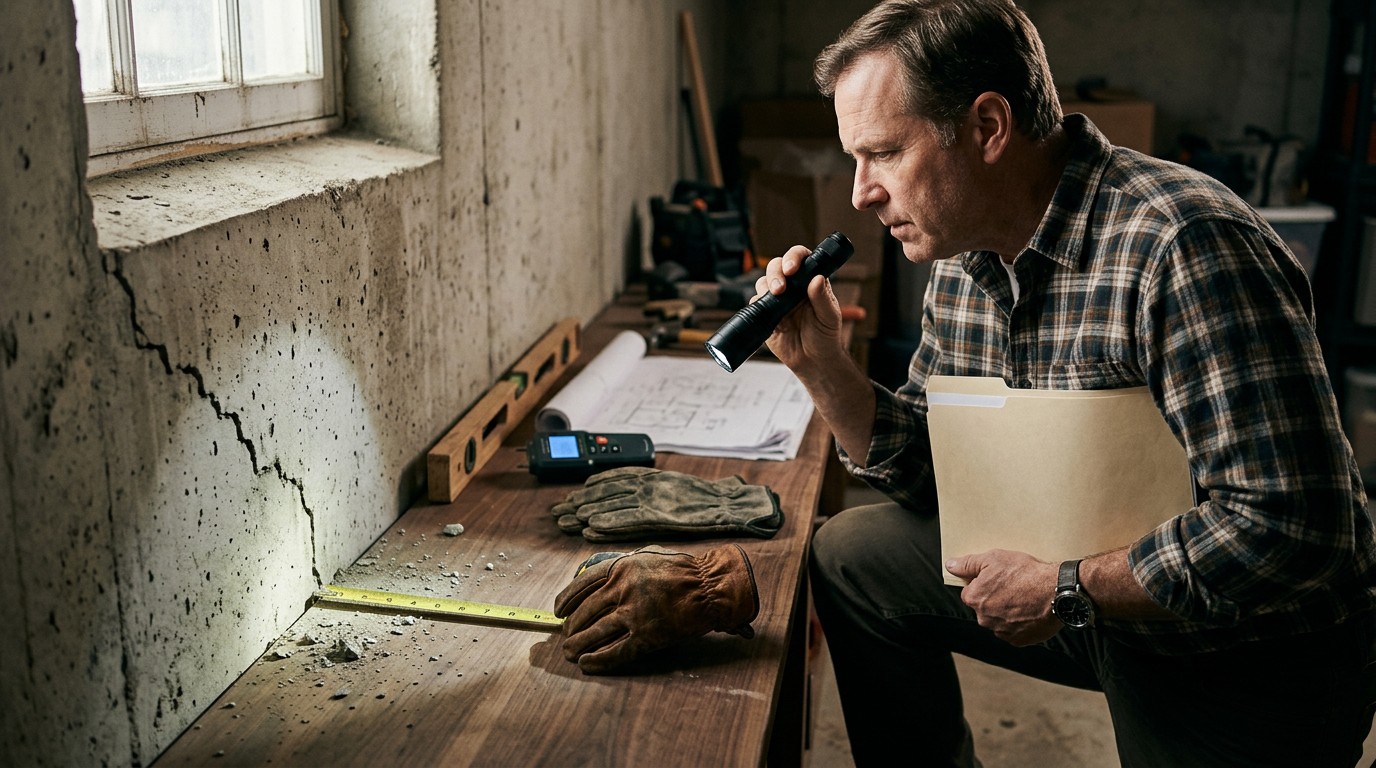
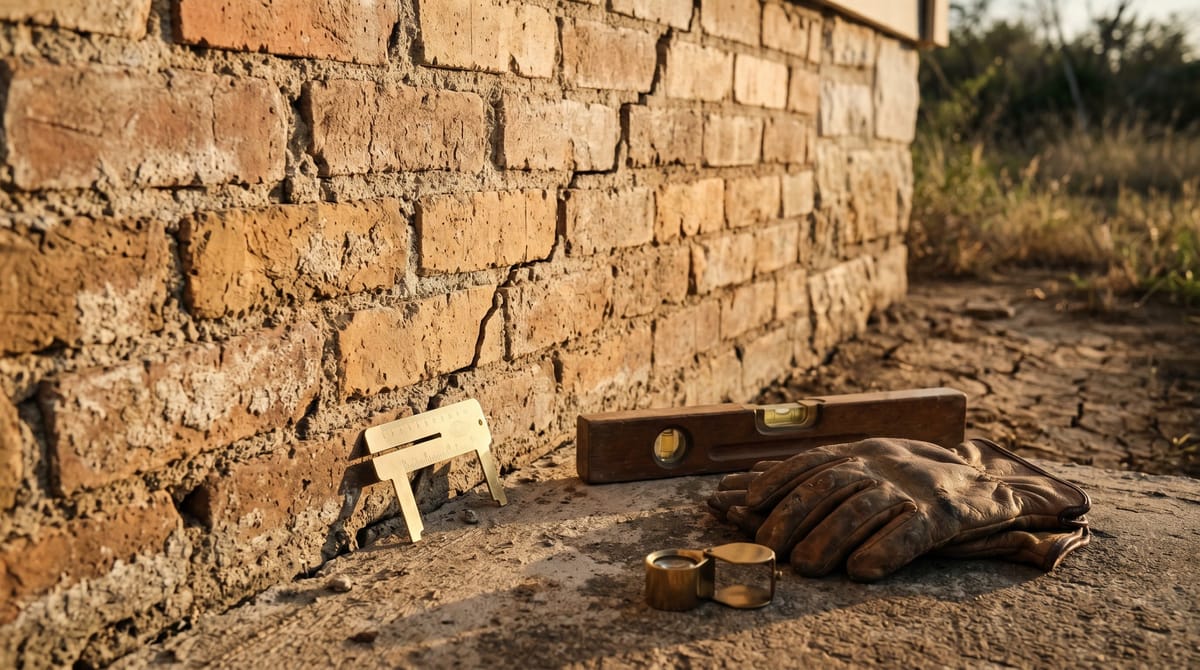
None of these conditions proves that helical piers are necessary. Similar visible symptoms can come from drainage, plumbing, framing, or non-foundation causes. Start with evidence: elevation measurements, crack patterns, drainage observations, and an independent evaluation for major work.
What Helical Pier Foundation Repair Costs in Texas
Helical piers are normally quoted per installed pier and then multiplied by the number required in the repair design. Access, excavation, bracket type, shaft configuration, engineering, permits, interior work, and restoration can all change the project total.
See the Texas foundation repair cost guide for a bid-normalization worksheet. Foundation Compass does not publish per-pier ranges without a representative observed-bid dataset.
A useful written estimate should separate:
- pier count and unit price
- system and bracket specification
- excavation and access charges
- engineering or inspection fees
- permits and required testing
- lift or load-transfer work
- concrete, landscaping, or interior restoration
- plumbing testing, when relevant
- warranty and future adjustment charges
All figures you receive are property-specific estimates, not universal Texas prices. Collect 2-3 written estimates using the same engineer-defined scope so you are comparing equivalent work.
What Should Be in a Helical Pier Quote?
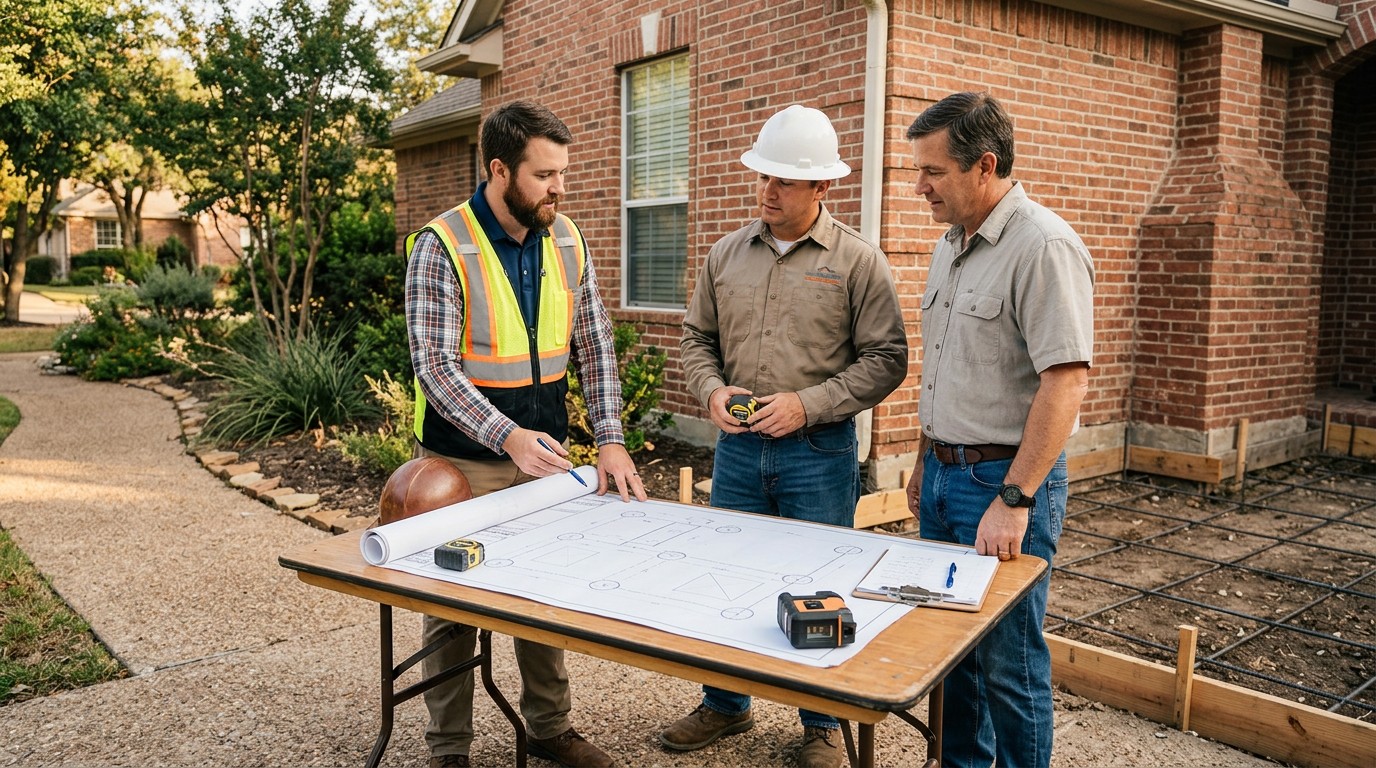
The quote should explain the repair, not merely count hardware. Ask for a marked plan showing every pier location and a scope that connects those locations to measured settlement.
Technical items to request
A detailed proposal should identify:
- the helical-pier system and manufacturer
- shaft and helix configuration
- bracket type and supported foundation element
- design load and acceptance criteria
- target or minimum depth, if specified
- required installation torque
- how torque and depth will be recorded
- who reviews and signs off on the installation
- permit and inspection responsibilities
- the final elevation or completion report
You do not need to calculate these values yourself. You need enough documentation for a structural engineer to verify that the installed system matches the design.
Warranty questions
Read the warranty before work begins. Ask whether it is transferable, whether future adjustment labor is included, which drainage or plumbing conditions can void coverage, and what documentation a future buyer receives. A lifetime headline means little if the agreement charges for every adjustment or depends on a company that disappears.
The FTC recommends multiple written estimates, careful review of the contract, and avoiding pressure to pay the full project price upfront. That advice applies especially well to foundation work, where different scopes can produce very different totals.
Engineer, Contractor, and Permit Responsibilities
For a major underpinning project, the Texas professional engineer and contractor serve different roles. The engineer evaluates the structure and specifies or reviews the repair design. The contractor installs the system. City permitting and inspection requirements vary across Texas, so the proposal should say who submits documents and schedules inspections.
Do not accept “engineered” as a vague marketing word. Ask for the engineer’s name, Texas license number, written report and relationship to the contractor. If the project is large or the bids disagree sharply, consider an independent Texas professional engineer who does not sell the repair system.
Before excavation, confirm that underground utilities are located through Texas 811 and that the contractor has current liability coverage. Never assume a permit is unnecessary because another homeowner on the block skipped one.
Helical Pier Red Flags
Pause the sale if you see any of these:
- a pier plan created without elevation measurements or a site inspection
- no written connection between the observed movement and proposed pier locations
- a generic “steel pier” description with no system details
- no installation torque or depth records
- a same-day discount tied to immediate signature
- a large cash payment requested upfront
- a warranty that cannot be transferred or has hidden adjustment fees
- claims that drainage no longer matters after piers are installed
- resistance to an independent engineer reviewing the scope
Piers stabilize supported points. They do not automatically correct every drainage, plumbing, or grading problem around the home. A complete plan should address the cause of movement as well as the underpinning hardware.
Helical Piers Foundation Repair FAQ
Are helical piers good for Texas clay soil?
They can be appropriate when the designed shaft and helix system transfers load beyond unsuitable near-surface soil. Soil conditions vary across Texas, so an engineer should evaluate the property rather than selecting a system from a general rule.
How are helical piers installed?
The installer rotates the lead section into the ground, adds extensions, records depth and torque, attaches a foundation bracket, and transfers the planned load. The exact sequence and acceptance criteria depend on the engineered system.
What is the difference between helical piers and push piers?
Helical piers are screwed into the soil and do not rely on the same amount of structure weight during installation. Push piers are hydraulically advanced using the existing structure as reaction weight.
How much do helical piers cost in Texas?
Costs depend on pier count, system, access, engineering, permits, and restoration. See the foundation repair cost guide for the fields that should match between proposals, then obtain 2-3 written estimates for your property.
Do helical piers require an engineer?
Requirements vary by project and city, but major structural repair should be based on qualified professional evaluation and a documented design. Ask who specifies the loads and reviews installation records.
Can helical piers lift a settled foundation?
They can be part of an engineered stabilization and load-transfer plan that may include controlled lifting. The amount of lift, if any, is property-specific and should be defined before installation.
How long do helical piers last?
Service life depends on the steel system, corrosion protection, soil conditions, installation, loading, and warranty. Ask for the product evaluation report and written warranty rather than relying on a universal lifespan claim.
This article is general consumer information, not structural-engineering, legal, or contracting advice. Foundation conditions and local requirements vary. Major repairs should be evaluated by a qualified Texas professional engineer, and every price should be confirmed through 2-3 written estimates.
Find a Foundation Repair Company in Texas
Compare foundation contractors in Houston, Dallas, Fort Worth, Austin, and San Antonio.