What Is Foundation Underpinning?
Foundation underpinning is a structural repair used when part of a home has settled and can no longer rely on the soil directly beneath the original foundation. Contractors install deeper supports to transfer the building load to stronger, more stable soil.
Settlement means the foundation moves downward, often unevenly. Foundation heave is upward movement, commonly associated with expanding clay soil. Both can cause cracks, sticking doors, and uneven floors, but they may require different solutions. Underpinning should not be selected from warning signs alone.
How Structural Underpinning Works
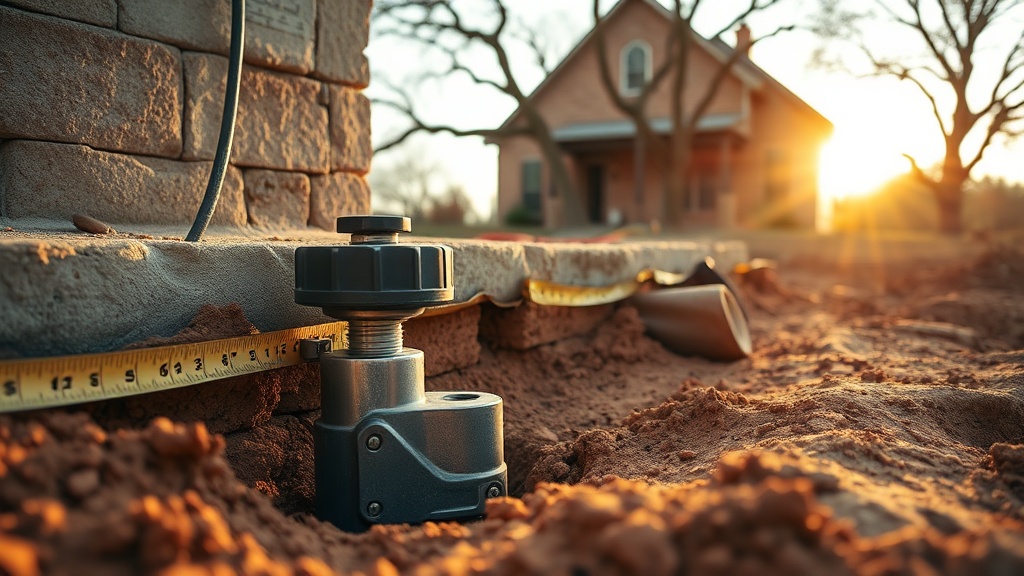
Piers are installed at engineered or contractor-specified locations beneath a concrete slab foundation or along affected support areas. Common systems include pressed concrete pilings, concrete piers, steel push piers, and helical piers.
Once the supports reach the required depth, resistance, or installation criteria, the home’s weight is transferred onto them. The primary goal is stabilization. A controlled lift may be attempted when conditions allow, but returning a foundation to its original elevation is not always practical or safe. Lifting can also affect plumbing, drywall, tile, and masonry.
Structural underpinning commonly falls within a typical Texas range of about $6,000-$30,000, depending on pier count, system, access, and repair complexity. These figures are planning ranges, not contractor quotes. Obtain 2-3 written estimates and consider an independent structural engineer’s report before approving major work.
Structural Underpinning vs Mobile-Home Skirting
The word “underpinning” is sometimes used for mobile-home skirting. Skirting encloses the open area below a manufactured home for appearance, weather protection, or pest control. It does not normally stabilize a settling structural foundation.
Because the purpose, materials, and installation are different, skirting prices should not be compared with structural foundation-repair costs. Confirm exactly which service an estimate covers.
Typical Foundation Underpinning Cost in Texas
Cost per Pier and Whole-Project Price Ranges
Foundation underpinning in Texas typically costs about $6,000-$30,000, although extensive or difficult projects can exceed that range. These figures are typical Texas planning ranges, not binding quotes.
Pier installation is often priced at roughly $500-$1,500 per pier. Steel push piers, helical piers, deep installation, restricted access, and interior slab breakouts may cost more. Practical project scenarios include:
- Limited repair: $3,000-$8,000 for several accessible perimeter piers.
- Midrange project: $8,000-$18,000 for roughly 10-20 piers around one or more settled areas.
- Extensive underpinning: $18,000-$30,000 or more for numerous piers, interior access, deep load-bearing soil, or significant excavation.
Pier count alone does not determine the final price. Contractors may also quote a cost per linear foot when stabilizing a continuous wall or foundation section. Ask how that measurement translates into pier quantity, spacing, materials, and total cost.
What a Foundation Repair Estimate Should Include
A detailed written estimate should identify:
- Pier type, quantity, and proposed locations
- Material specifications and installation method
- Required depth, pressure, torque, or refusal criteria
- Excavation, tunneling, and interior slab access
- Labor, equipment, engineering, and building permits
- Plumbing leak tests before or after lifting
- Soil removal, cleanup, and landscaping restoration
- Expected stabilization or lift, with stated limitations
- Excluded drywall, flooring, tile, masonry, or plumbing repairs
- Warranty coverage, service conditions, and transfer requirements
Confirm whether the price includes a foundation elevation survey and an independent structural engineer’s report. Major repairs may also require local permits or inspections.
Why a Low Per-Pier Bid May Cost More Later
An unusually low price may cover only the pier itself and basic labor. Engineering, permits, deeper installation, difficult access, interior breakouts, plumbing tests, debris removal, and finish repairs may appear later as added charges.
Warranty language matters too. A “lifetime” or transferable warranty can include service fees, moisture-management requirements, limited covered movement, or transfer deadlines. Read the actual document before signing.
Get 2-3 written estimates based on the same pier locations, quantities, materials, depth criteria, exclusions, and cleanup responsibilities. If a major repair is proposed, consider obtaining an independent structural engineer’s report before choosing a contractor.
Underpinning Costs by Foundation and Pier Type
Concrete Slab Foundation vs Pier-and-Beam Foundation
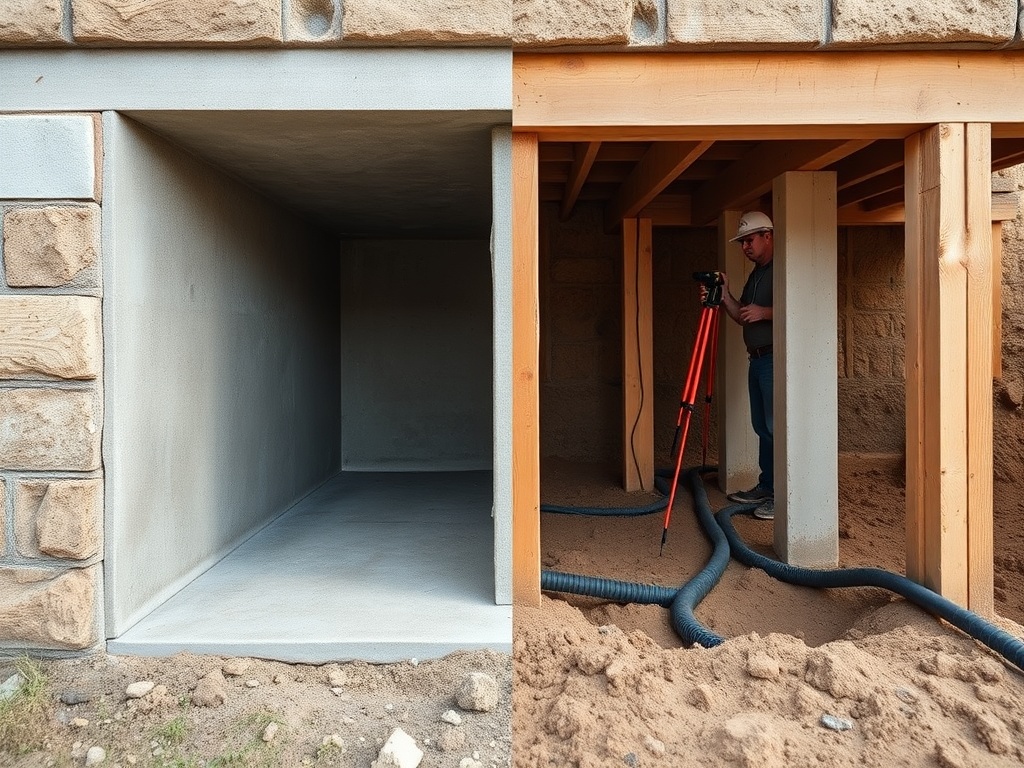
Foundation type changes both access and repair scope.
| Foundation | Typical repair considerations | Common cost drivers |
|---|---|---|
| Concrete slab | Piers may be installed around the perimeter, through interior slab breakouts, or by tunneling beneath the home | Pier count, excavation depth, tunneling, flooring removal, plumbing tests, and post-lift repairs |
| Pier-and-beam | Crews usually work through the crawl space to adjust or replace supports, beams, joists, or shims | Crawl-space clearance, moisture damage, rotten wood, access, temporary supports, and beam replacement |
Limited pier-and-beam repairs may cost about $2,500-$8,000, while extensive beam, joist, or support replacement can reach $10,000-$20,000 or more. Slab underpinning often falls within the broader $6,000-$30,000 range.
A crawl space does not automatically make work inexpensive. Standing water, tight clearance, damaged beams, or difficult equipment access can increase labor. For slabs, interior breakouts and tunneling usually create more disruption than accessible perimeter work.
Concrete Piers and Pressed Concrete Pilings
| System | Installation and common use | Major price factors |
|---|---|---|
| Drilled concrete piers | Holes are drilled to a specified depth, reinforced when required, and filled with concrete | Diameter, depth, reinforcement, curing time, soil conditions, and access |
| Pressed concrete pilings | Precast concrete cylinders are hydraulically pressed into the soil beneath the foundation | Required resistance, achievable depth, pier count, equipment access, and concrete quality |
Pressed pilings are common in Texas slab repairs because installation can be relatively fast and economical. However, performance depends on the soil profile, installation criteria, and load conditions. Drilled concrete piers may offer greater design flexibility but can require more excavation and time.
Typical installed prices may range from approximately $500-$1,200 per concrete pier or piling, depending on scope. These are typical Texas ranges, not quotes.
Steel Push Piers and Helical Piers
Steel push piers are driven using the building’s weight as resistance. Installation continues until the specified pressure, depth, or load criterion is reached. They are often considered for heavier structures where suitable load transfer can be verified.
Helical piers are screwed into the ground using hydraulic equipment. Installation torque is monitored as an indicator of soil resistance. They may be useful for lighter structures, additions, or locations where the existing building cannot provide enough reaction force for push-pier installation.
Steel systems commonly cost about $1,000-$2,500 per pier, with depth, corrosion protection, brackets, engineering requirements, and restricted access affecting the total. These figures are typical Texas planning ranges, not binding contractor quotes.
Pier selection should be based on the structure, soil conditions, loads, and installation criteria - not price alone. Obtain 2-3 written estimates with matching scopes, and consider an independent structural engineer’s report before approving major underpinning work.
Why Texas Soil and Drainage Affect Foundation Movement
Drought, Heavy Rain, and Expansive Clay Soil
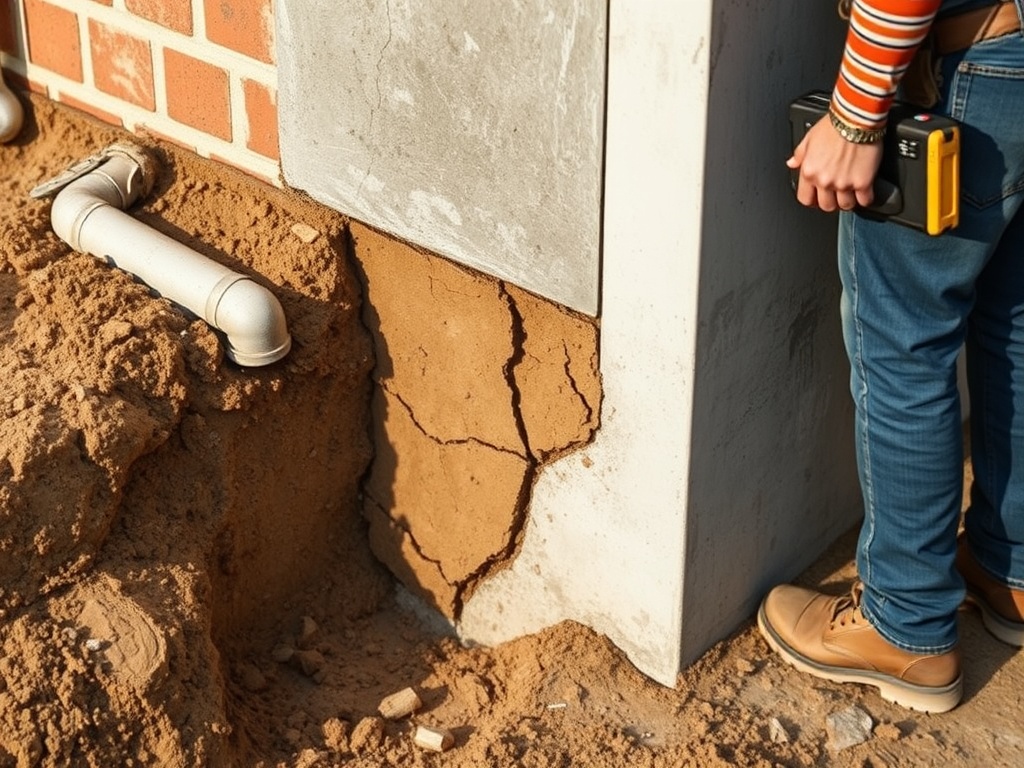
Expansive clay soil changes volume as its moisture content changes. During a Texas drought, clay can dry, shrink, and pull away from parts of a foundation. After heavy rain, the same soil may absorb water and swell.
Movement becomes more concerning when moisture is uneven. One side of a home may stay wet because of poor drainage, while another side dries near a sunny yard or thirsty trees. This imbalance can contribute to differential settlement or foundation heave, resulting in cracks, sticking doors, or uneven floors. However, these signs do not automatically mean underpinning is required.
Drainage Corrections That May Be Recommended
A contractor or engineer may recommend controlling water before or alongside foundation repair. Common measures include:
- Regrading soil so surface water flows away from the foundation
- Installing or repairing gutters and downspouts
- Extending downspout discharge several feet from the house
- Correcting erosion near slab edges or pier-and-beam supports
- Repairing standing-water problems in a crawl space
- Performing a plumbing leak test when an underground supply or drain leak is suspected
Typical Texas drainage projects may range from about $500-$5,000, while extensive grading or drainage systems can cost more. These are planning ranges, not contractor quotes. A confirmed plumbing leak may need repair before lifting or stabilization so the soil is not continually saturated.
Drainage Work Is Not a Substitute for Every Repair
Drainage improvements can reduce future soil moisture movement, but they cannot restore every damaged or inadequately supported foundation. Other proposed remedies also address different conditions:
- Root management changes how nearby vegetation affects soil moisture.
- Mudjacking raises certain settled concrete surfaces but does not provide deep structural support.
- Crawl-space repairs address damaged beams, joists, supports, or moisture.
- Shimming adjusts localized pier-and-beam support but may not correct failing footings or soil movement.
Ask the contractor to explain the diagnosed cause, expected result, and limits of each recommendation. For major work, obtain 2-3 written estimates with comparable scopes and consider an independent structural engineer’s report before approving underpinning.
Warning Signs and When to Call a Structural Engineer
Cosmetic Cracks vs Patterns of Possible Movement
A narrow, stable crack in drywall or a concrete slab may reflect normal shrinkage or minor seasonal movement. More concerning patterns include cracks that widen, reopen after repair, show vertical displacement, or appear diagonally above doors and windows.
Watch for several warning signs occurring together:
- Stair-step cracks through brick or masonry joints
- Foundation cracks with one side higher than the other
- Doors or windows that suddenly stick
- Gaps between walls, ceilings, cabinets, or trim
- Sloping, bouncy, or uneven floors
- Tile cracks extending across multiple rooms
- Chimneys, porches, or exterior walls pulling away
One sign alone does not confirm foundation settlement or heave. Coordinated changes across different parts of the home justify a professional inspection.
How to Document Changes Safely
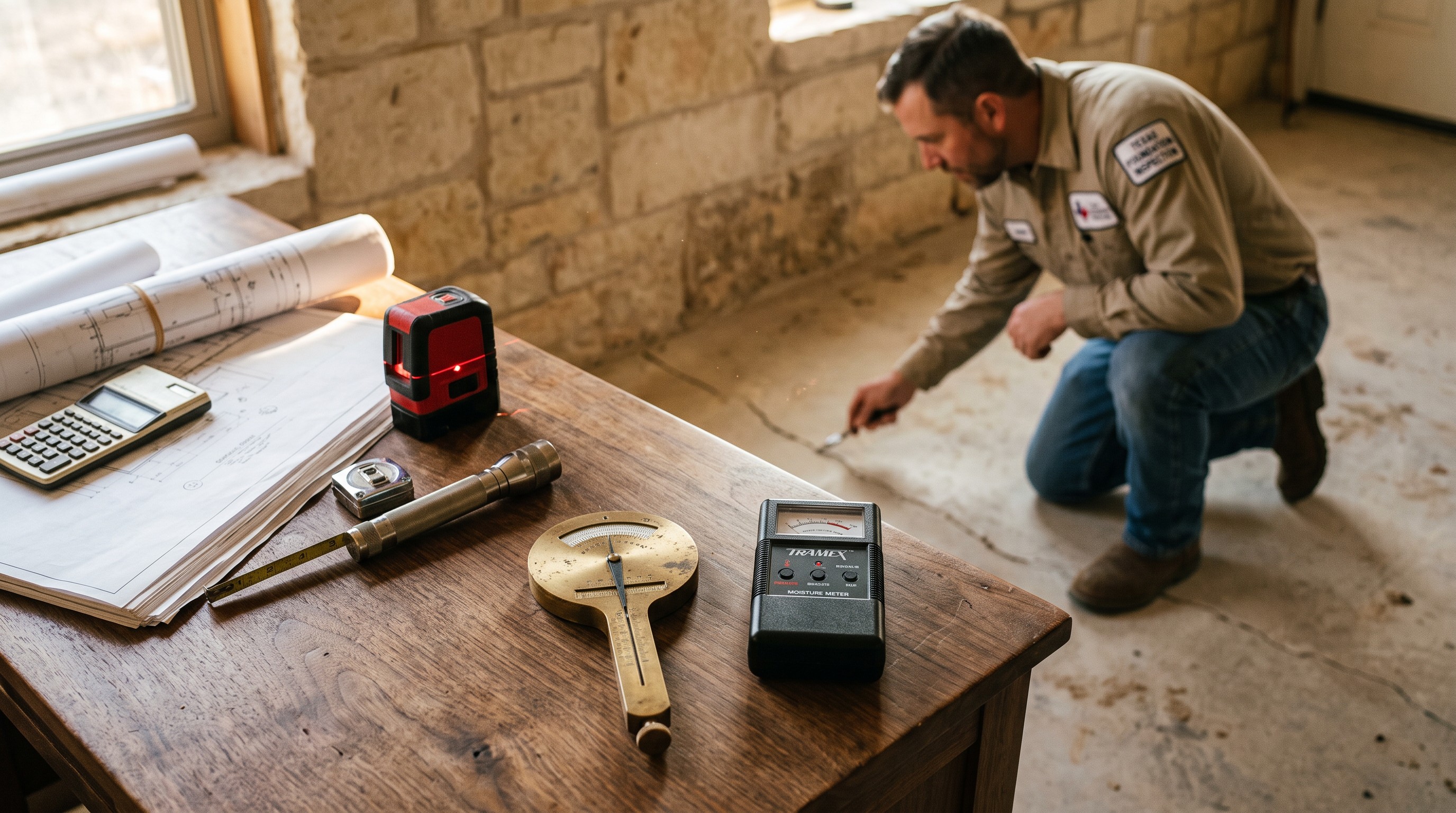
Take dated photos from the same angle every 30-60 days. Place a ruler or tape measure beside visible cracks so changes can be compared. Keep brief notes describing sticking doors, floor changes, and whether symptoms appeared after drought, heavy rain, plumbing trouble, or drainage work.
Save records for plumbing leak tests, gutter repairs, yard grading, and previous foundation work. Do not dig beside the foundation, force doors into alignment, or attempt to diagnose structural movement from crack width alone. Soil moisture, framing movement, material shrinkage, and foundation movement can produce similar symptoms.
When an Independent Engineer’s Report Is Worthwhile
Consider hiring an independent structural engineer when movement appears widespread, multiple contractors recommend different repairs, or proposed underpinning will cost thousands of dollars. An engineer can review visible conditions, evaluate likely movement patterns, and perform or order a foundation elevation survey to identify relative high and low areas.
The report may help determine whether underpinning, drainage correction, plumbing repair, monitoring, or another approach is appropriate. Engineering and elevation surveys often cost roughly $500-$1,500 in Texas, depending on property size and investigation scope. These are typical Texas ranges, not quotes.
Before approving major work, obtain 2-3 written estimates based on the same repair scope and consider an independent structural engineer’s report.
How to Compare Contractors, Estimates, and Project Scope
Compare 2-3 Written Estimates on the Same Basis
Request 2-3 written estimates and compare matching scopes, not just total prices. Each proposal should specify:
- Pier type, quantity, materials, and locations
- Installation method and access requirements
- Depth, pressure, torque, or refusal criteria
- Stabilization goals and any expected lift
- Engineering, elevation surveys, and permits
- Excavation, tunneling, interior breakouts, and cleanup
- Landscaping, flooring, plumbing, and cosmetic-repair exclusions
- Payment schedule and change-order process
Ask why the proposed pier count differs between bids. An unusually low estimate may exclude engineering, permits, deeper installation, debris removal, or warranty service.
All figures in this guide are typical Texas ranges, not contractor quotes. An independent structural engineer’s report can provide a neutral scope when contractors recommend substantially different solutions.
Verify Credentials, Insurance, and Warranty Terms
Texas does not have one statewide foundation-repair contractor license. Requirements may instead involve local contractor registration, trade licenses for plumbing or electrical work, and municipal building permits. Verify the rules with your city or county.
Ask each contractor for current liability-insurance documentation, recent local references, and details about subcontractors. Check complaint history through local consumer-protection sources and confirm who will obtain permits and schedule inspections.
Read the warranty itself. Confirm what movement is covered, whether service fees apply, what moisture or drainage maintenance is required, and how a transferable warranty passes to a future owner. Verbal promises should appear in the contract.
Plan for Timing, Access, and Post-Lift Repairs
A limited perimeter project may take several days, while tunneling, interior piers, or extensive excavation can take longer. Ask where crews will dig, store soil, move equipment, and access the slab or crawl space.
Foundation lifting can affect drain lines, supply pipes, drywall, tile, masonry, cabinets, and flooring. Confirm whether pre-lift and post-lift plumbing tests are included and who pays for resulting repairs. Photograph landscaping and interior finishes before work starts.
Before approving major underpinning, compare 2-3 written estimates and consider obtaining an independent structural engineer’s report.
Foundation Underpinning Cost FAQs
Is Foundation Underpinning Worth the Cost?
Underpinning may be worth the cost when documented foundation settlement threatens structural performance, causes recurring damage, or could complicate a future sale. The decision should reflect the severity of movement, repair scope, property plans, and findings from an independent structural engineer.
Not every crack requires piers. Drainage correction, plumbing leak repair, monitoring, or localized pier-and-beam work may be more appropriate. Before approving a typical $6,000-$30,000 Texas underpinning project, compare the proposed repair with credible alternatives and the likely consequences of delaying necessary work.
How Long Does Underpinning Last, and Is It Insured?
A properly designed and installed pier system may remain effective for decades, but no service life is guaranteed. Performance depends on pier type, installation depth or resistance, structural loads, soil conditions, drainage, plumbing leaks, and ongoing moisture management.
Review the contractor’s warranty for exclusions, service fees, maintenance conditions, and transfer rules. A transferable warranty is only useful if the company remains available and the claim qualifies under the written terms.
Homeowners insurance coverage varies by policy and the cause of damage. Gradual soil movement is often treated differently from sudden damage caused by a covered plumbing event. Ask your insurer for a written coverage explanation before assuming repair costs will be reimbursed.
Can Underpinning Be Financed, and What Are the Alternatives?
Some foundation contractors offer financing through third-party lenders. Homeowners may also consider personal loans, home-equity products, or other credit. Compare interest rates, origination fees, promotional periods, prepayment terms, and the total repayment amount - not only the monthly payment.
Depending on the diagnosis, alternatives or related work may include:
- Yard grading, gutters, downspouts, or erosion control
- Plumbing leak detection and repair
- Crawl-space beam, joist, or support replacement
- Shimming for limited pier-and-beam adjustment
- Mudjacking for certain nonstructural concrete surfaces
- Root management guided by qualified professionals
These solutions are not interchangeable with structural underpinning. All prices discussed are typical Texas ranges, not quotes. For major work, obtain 2-3 written estimates using the same scope and consider an independent structural engineer’s report before signing a contract.
Safety warning: Foundation lifting, pier installation, tunneling, excavation beneath a building, and temporary structural support are hazardous and should be performed only by qualified professionals using appropriate engineering and safety controls. Do not enter an unstable crawl space or excavation.
Emergency warning: Leave the affected area and seek immediate assistance if you observe sudden structural movement, partial collapse, exposed or damaged electrical wiring, a suspected gas leak, or rapidly worsening cracks. Contact emergency services or the appropriate utility provider when there is an immediate hazard.
Excavation safety: Arrange for underground utilities to be located before digging, grading, installing drainage, or performing root work. Contact Texas 811 and follow all applicable local requirements before excavation.
Regulatory notice: Permit, inspection, contractor-registration, engineering, plumbing, and electrical requirements vary by city and county. Confirm current requirements with the local building authority and use appropriately licensed professionals where required.
Hazardous materials: Cutting concrete or disturbing older building materials may release silica dust, asbestos, lead, mold, or other contaminants. Qualified professionals should assess suspect materials and use appropriate containment, ventilation, and protective equipment.