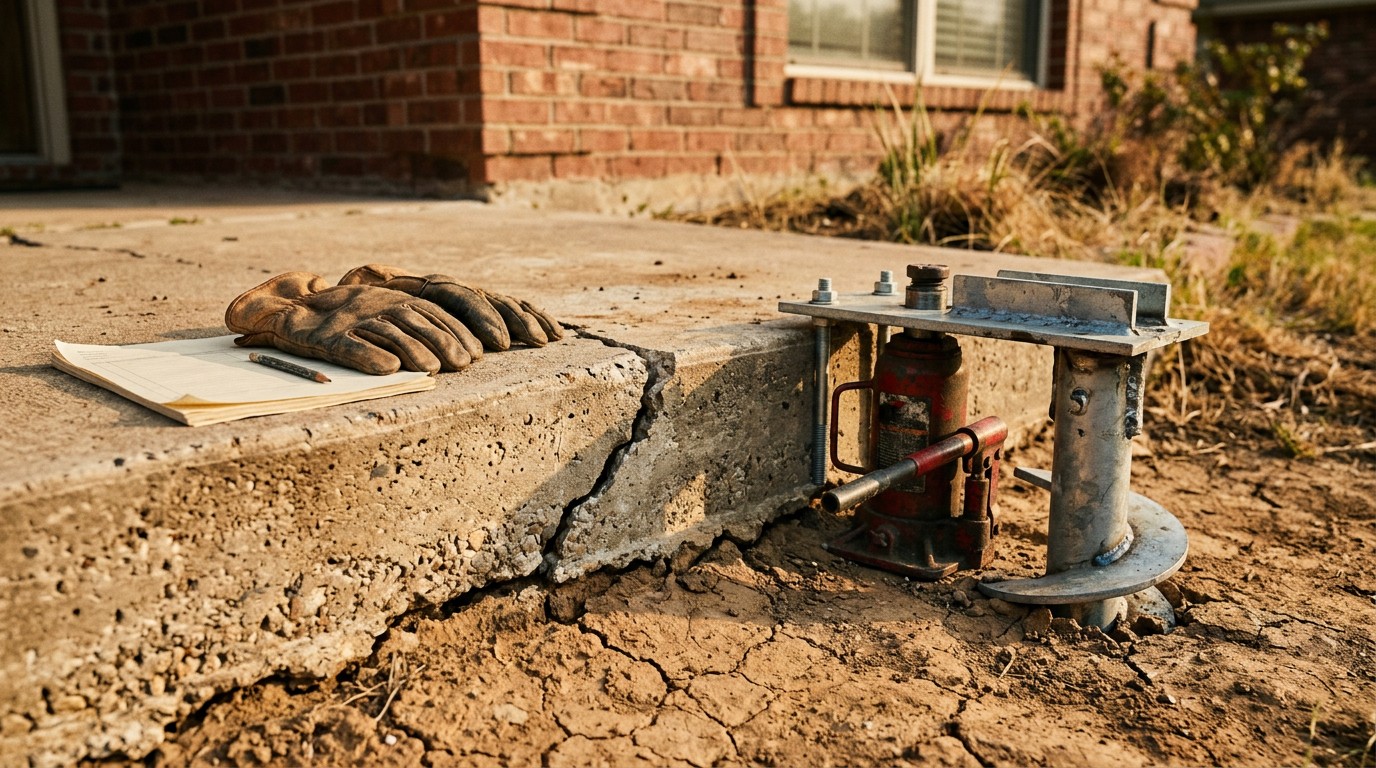
What Foundation Settlement Is - and Why Texas Homes Get It
Settlement describes downward movement, while differential movement means parts of a structure move by different amounts. Soil, fill, moisture, plumbing, loads, construction, and prior work may contribute. Cracks or binding openings can accompany movement, but they do not establish the direction, cause, or repair need by themselves.
Expansive clay occurs in parts of Texas and may change volume as moisture conditions change. Conditions vary within metros and lots, so regional soil descriptions are context for investigation - not a property diagnosis.
Foundation Compass does not publish per-pier or whole-home amounts without a representative set of observed bids. Compare written scopes for the same measured work, including the system, mapped locations, quantity, design basis, access, installation records, associated work, and warranty.
If the first evidence is a crack rather than an elevation survey, start with the foundation-crack documentation guide. For budgeting after the scope is defined, use the assumptions and exclusions in the foundation repair cost guide.
Warning Signs: Normal Settling vs Time to Act
Symptoms need context. Crack width is useful for documentation, but direction, location, displacement, change over time, and related floor, door, exterior, plumbing, or moisture evidence also matter.
Observations That May Be Lower Concern When Stable and Isolated
Finish shrinkage, framing movement, humidity, and other non-foundation causes can produce minor observations. Examples that may be lower concern when stable and isolated include:
- Hairline cracks in drywall - thinner than a credit card, often at the corners of doors and windows
- A door with seasonal binding - humidity, hinges, framing, and foundation movement are among the possibilities
- Fine cracks in the slab surface or mortar joints - concrete shrinks as it cures, and small cracks are part of the material
Dated photographs and repeated measurements can help document change when there is no immediate safety, gas, electrical, plumbing, or water concern. Apparent stability does not identify the cause, and a consumer crack gauge is not a structural assessment.
Signs That Need a Professional Look
Call for an inspection when you see any of these:
- Cracks wider than 1/4 inch - roughly the width of a pencil - anywhere in brick, drywall, or the slab
- Stair-step cracks in brick that follow the mortar joints diagonally and keep widening past your pencil marks
- Doors and windows that never re-align, even after wet weather, or new gaps appearing at frames
- Uneven or sloping floors - if a golf ball rolls on its own, or you feel the slope walking, the drop is significant
- A tilting chimney or separation between the chimney and the house wall
- Multiple symptoms clustered on one side of the home - a pattern that deserves measured evaluation
One widening crack plus a door that will not latch on the same wall is worth more attention than a dozen stable hairlines. When symptoms cluster and keep progressing, get a foundation inspection - and for anything that looks major, an independent structural engineer’s report before you accept a repair bid.
Foundation Settlement Repair Costs in Texas: Per-Pier Bid Breakdown
A foundation pier is an installed support intended to transfer load according to a repair design and documented installation criteria. System, depth or termination, capacity, brackets, spacing, and whether lifting is appropriate depend on the structure and subsurface conditions. Pier type and count are important cost inputs, but access, interior work, plumbing, engineering, permits, and restoration also affect the bill.
Cost per Pier by Type
| Pier type | Quote unit to clarify | What to verify |
|---|---|---|
| Concrete pressed piles | Per support or whole project | System, capacity basis, termination, access, warranty |
| Push piers (steel, hydraulically driven) | Per support or whole project | Design load, depth or termination record, brackets, warranty |
| Helical piers (screwed steel) | Per support or whole project | Design load, helix configuration, torque or capacity record, warranty |
Concrete pressed piles use stacked sections installed with hydraulic force. Steel push and helical systems use different hardware and installation criteria. No system can be ranked from material, claimed depth, or a “lifetime” label alone; compare design basis, installation records, exclusions, adjustment fees, and transfer terms.
Do not assume a typical support layout or multiply a generic count into a repair budget. A support plan should follow measured movement, loads, the foundation, site conditions, and access. Compare per-support prices only with a justified count and itemized proposals covering the same support locations and associated work.
Mudjacking and Foam Injection
Two other methods may be considered for suitable slab-lifting applications:
- Mudjacking (slabjacking) - a cementitious slurry that may be quoted by treated area, material, or job
- Polyurethane foam injection - expanding material that may be quoted by treated area, material, or job
Suitability depends on whether the slab is structural, its condition, voids, drainage, soil, load, access, and the material specification. Lifting does not by itself correct an ongoing water or soil problem, so the cause and expected performance should be documented before choosing either method.
How a Support Count Should Be Evaluated
There is no universal 6-8-foot spacing or typical count that a homeowner should apply. Elevations are one input, along with structural loads and details, soil or rock information, access, existing supports, and the proposed system’s design criteria. If bids differ, require each company to map its locations and explain the technical basis.
Compare estimates line by line: system, support locations, installation or termination records, engineering role, warranty terms, access, restoration, and plumbing testing. An independent engineer engagement may assess the condition or provide repair criteria, but not every report is a final support design. Confirm its fee and scope, and send technical conflicts back to the responsible professional.
Slab vs Pier-and-Beam: Two Very Different Repair Bills
First identify the foundation system. A visible slab edge, crawl-space access, vents, floor height, plans, and inspection can provide evidence, but floor feel and build year are not conclusive and additions may use mixed construction. Confirm the system before applying repair assumptions or comparing bids.
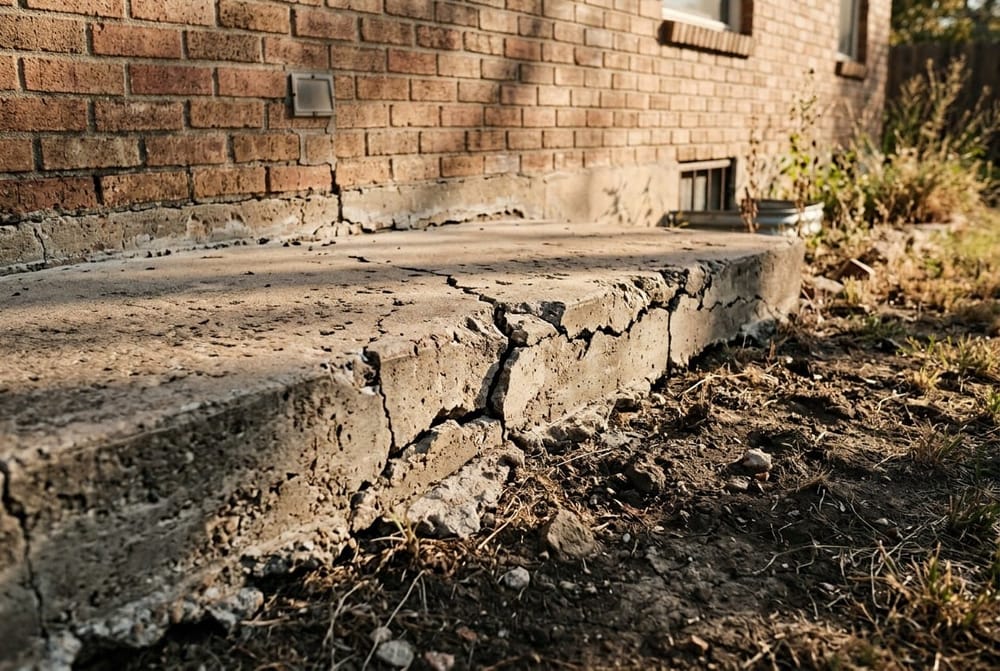
The repair math differs sharply:
| Slab | Pier and beam | |
|---|---|---|
| Potential work | Underpinning, lifting, drainage or plumbing work as indicated | Shimming, support or footing work, framing, moisture or drainage work as indicated |
| Budget approach | Compare unit prices only after the mapped scope, system, access, and associated work match | Separate adjustment, framing, footing, moisture, pest, drainage, and new-support work |
| Access | Excavation, sometimes tunneling or breaking through the slab | Crew works in the crawl space |
Crawl-space access can simplify some work, but low clearance, framing decay, footings, utilities, moisture, pests, and temporary support can expand the scope. Compare the actual work rather than assuming a raised foundation is cheaper.
Slab repairs can involve an extra question: whether a plumbing leak under the slab contributed to movement or could be affected by lifting. A hydrostatic or other plumbing test should be selected and performed by an appropriately licensed plumber when the project team considers it suitable; testing method and timing are not identical for every system. Request the test scope, access, fee, and deliverable in writing.
Inspection-First Steps Before You Pay for Piers
Moisture is one important variable on expansive clay, but it is not the whole diagnosis and changing it does not guarantee that movement will stop. Before signing a structural contract, document elevations and inspect grading, gutters, plumbing, trees, and drainage. Then choose only the measures that fit the identified problem:
- Correct a confirmed grading problem. A drainage professional can define a safe slope and fill approach that preserves clearances, utilities, and lawful discharge. Request measured quantities, material, compaction, haul-off, erosion control, and restoration in the bid.
- Service gutters and redirect roof water where appropriate. The outlet must not create erosion, ponding, or a problem on neighboring property. Compare equivalent lengths, materials, connections, and discharge points.
- Use a soaker hose only when qualified guidance supports it. Buying equipment does not create a universal placement or schedule. Follow local restrictions and avoid abrupt saturation.
- Use an arborist for tree and root decisions. Cutting roots or changing tree watering can damage the tree or structure and should not be prescribed from distance alone. Require a site-specific arborist scope.
- Add a French drain only for a verified drainage path. It requires measured elevations, an appropriate route, a lawful outlet, utility clearance, suitable materials, and restoration; it is not a generic fix for every wet area.
Timing is useful context, not a reason to delay urgent evaluation or manipulate moisture before measurements. Tell the inspector about recent drought, rain, irrigation, leaks, and crack changes. An engineer can decide whether monitoring, drainage work, plumbing work, or structural repair should come first and whether immediate safety action is needed.
How to Vet a Foundation Repair Contractor in Texas
Texas does not offer one simple statewide foundation-repair specialty credential that replaces project due diligence. Verify the business, insurance, applicable local registration, permits, and any trade-specific licenses required for plumbing, electrical, or engineering work:
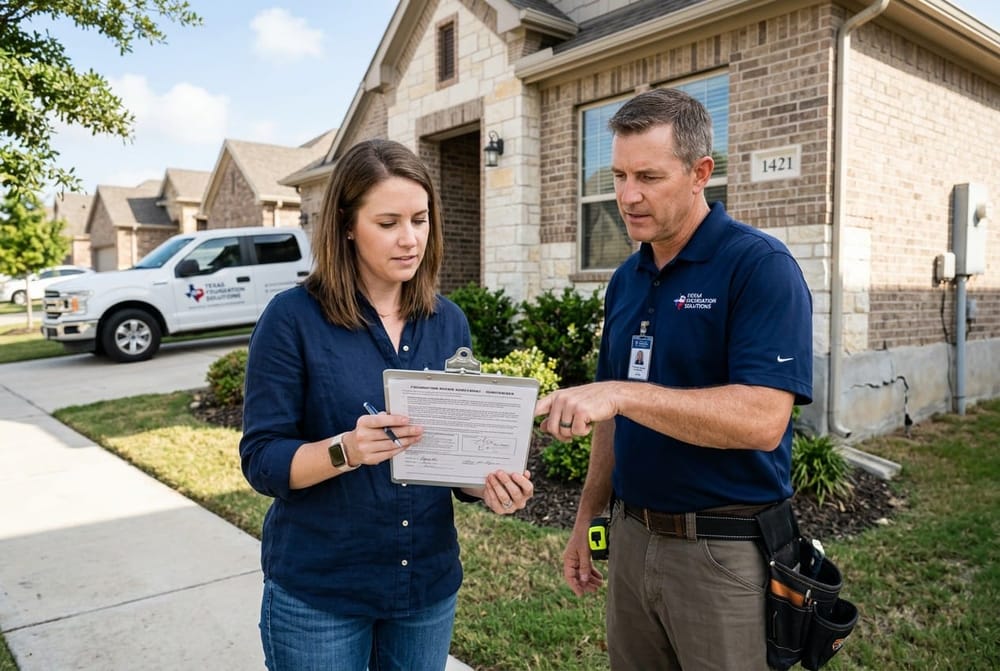
- General liability insurance and workers comp - ask for certificates and verify them with the insurer, not just a photocopy
- A verifiable business identity and service history - ask how warranty requests are handled if the business name or ownership changes
- References that include completed work and later warranty service - recent and older experiences answer different questions
- Any claimed association membership or certification - verify it with the issuing organization and ask what it actually requires; a badge does not establish scope quality
Free Inspection vs Independent Structural Engineer Report
A no-charge contractor inspection may provide measurements and a proposed repair scope. An independent structural engineer can provide third-party assessment; depending on the engagement, the report may diagnose, recommend additional investigation, set repair criteria, or provide a design. Confirm the fee and what is included rather than assuming every stamped report specifies supports.
Independent review is especially useful when movement is significant, scopes conflict, or the work needs design. Multiple written proposals can also help reveal differences, but agreement among contractors does not replace engineering when the structure, authority, or project requires it.
Warranty Terms and What They Are Worth
A warranty should state duration, transfer rules, covered adjustments, service fees, exclusions, required maintenance, and the responsible legal entity. “Lifetime” does not necessarily mean the life of the structure or free future work.
Company continuity and claim handling matter alongside the written terms. Compare what each warranty actually obligates the provider to do instead of ranking it by label alone.
Does Homeowners Insurance Cover Foundation Settlement?
Coverage depends on the policy and cause of loss. Settling or earth-movement exclusions are common, but endorsements, ensuing-loss provisions, deductibles, foundation limits, and covered plumbing events vary. Request a written coverage position rather than predicting the claim from a general article.
A sudden plumbing event may involve different policy provisions, but it is not a universal exception and pipe, access, ensuing damage, and foundation work may be treated differently. If a leak is suspected:
- Check your policy for “foundation coverage” or a water damage endorsement
- Ask an appropriately licensed plumber which test is suitable, what access is needed, what the fee includes, and how findings will be documented
- Photograph the damage and keep the plumber’s written report before any repairs begin
For a sale, use the disclosure form and guidance applicable to the transaction; legal duties and exemptions vary. Inspection findings, permits, elevations, repair records, plumbing documents, and exact warranty terms give buyers evidence to evaluate without promising a resale outcome.
FAQ: Foundation Settlement Repair in Texas
How much does foundation repair cost per pier in Texas?
Foundation Compass does not publish a Texas per-pier range. Compare unit prices only after the support system, locations, count, acceptance criteria, access, engineering, restoration, exclusions, and warranty are aligned in written, site-specific proposals.
Is foundation settlement covered by homeowners insurance?
It depends on the policy language and cause. Settling or earth-movement exclusions are common, while plumbing events, ensuing damage, endorsements, and limits vary. Notify the insurer as required and use an appropriately licensed plumber to select any needed test.
How do I know if settlement is serious?
Width, direction, location, change over time, and related floor, door, exterior, plumbing, or water symptoms all matter. A hairline crack can still warrant review if it changes or appears with other evidence. Get an inspection when symptoms cluster or progress.
Can I sell a house with foundation problems in Texas?
A sale is possible, but disclosure duties and exemptions depend on the transaction and current law. Use the applicable form and qualified guidance, and provide inspection and repair records so the buyer can evaluate the condition.
How long does pier installation take?
Duration depends on support count, access, excavation or tunneling, inspections, plumbing risk, lifting, restoration, and weather. Ask for a project-specific schedule. An independent engineer engagement may be appropriate when the condition is significant, bids conflict, or the work needs design; request its fee and deliverable directly.
This article is for general informational purposes only and does not constitute professional engineering, legal, insurance, or financial advice. Foundation repair decisions should be based on an inspection of your specific property by a qualified structural engineer or licensed professional.
Before any digging near your home - including French drains, root barriers, or regrading - call 811 to have underground utility lines located and marked. Striking a buried gas or electric line can cause serious injury.
Foundation Compass does not publish settlement-repair prices without a representative observed-bid dataset. Actual prices vary with the property and scope; obtain written estimates for your home.
Insurance coverage for foundation damage varies by policy and insurer. Verify your specific coverage with your insurance provider before making claim or repair decisions.