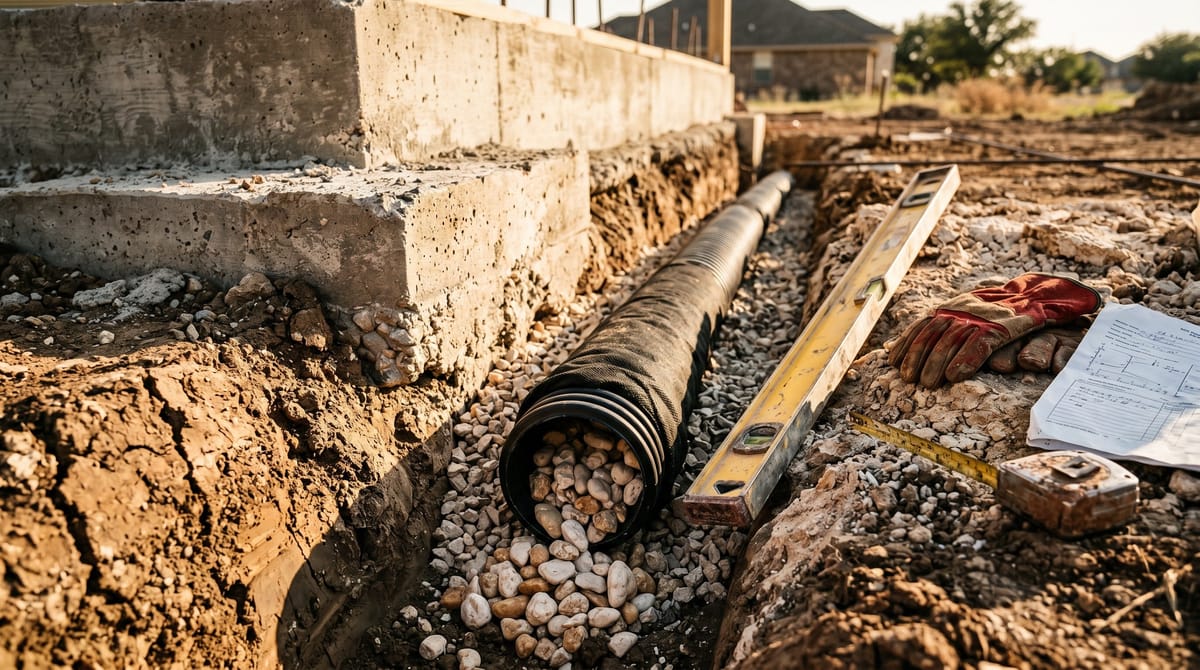
Foundation Cracks in Texas: Which Ones Matter
A crack in a slab, brick veneer, or drywall does not automatically mean the foundation is failing. Concrete shrinkage, framing, finishes, temperature, moisture, plumbing, and foundation movement can create overlapping patterns.
Useful screening observations include:
- An isolated hairline crack may be lower concern when it remains stable and has no related symptoms, but width alone cannot classify it.
- Horizontal, displaced, widening, water-bearing, or stair-step cracks deserve closer attention, especially with floor, door, exterior, or plumbing changes.
Texas housing includes slab-on-grade, pier-and-beam, basement, and mixed foundation systems across varied soils. Expansive clay is relevant in many areas, but records and inspection should confirm the foundation and property conditions rather than assuming them from the state.
This guide explains how to document crack type, width, location, and change; how foundation access differs; and how to compare written bids after the cause and repair scope are evaluated.
Foundation Compass does not publish crack or foundation-repair prices without representative observed bids. For significant or progressive symptoms, obtain an appropriate assessment before choosing a repair.
For a broader symptom checklist, see signs that merit a foundation evaluation. If you are deciding what kind of assessment to request, compare the roles and scope in the foundation inspection guide.
How to Read a Foundation Crack: Type, Direction, and Width
Direction, width, location, displacement, water, change over time, and related symptoms all provide evidence. A ruler or crack-width card is more reliable than comparing with a coin or pencil, and no single 1/4-inch threshold separates harmless from structural conditions.
Hairline and Vertical Cracks: Often Lower Concern, Not Self-Diagnosing
Concrete shrinkage can produce thin cracks, including on newer slabs, but age and width do not prove the cause. A hairline crack may still deserve review when it changes, admits water, has displacement, or appears with other symptoms.
A vertical crack still earns a second look in two cases:
- It is widening. Mark the ends with a pencil and date it. If the crack grows past those marks over a few months, something is moving.
- Water is coming through. Identify the water source and determine whether the crack is suitable for injection before sealing it. Ask for the measured crack, material, preparation, access, repair objective, finish work, and limitations in a written quote.
Diagonal and Stair-Step Cracks: Watch Closely
Diagonal cracks near doors and windows can occur with differential movement, but framing, lintels, finishes, thermal change, plumbing, drainage, soil, and construction details can produce similar evidence. They do not establish uneven soil moisture by themselves.
Stair-step cracks in brick veneer or mortar joints also warrant context. Veneer movement, corrosion, openings, support, and foundation movement are among the possibilities an inspection may consider.
Check the interior for confirming signs:
- Doors and windows that stick or will not latch
- Drywall cracks angling off door frames
- Trim or crown molding separating from the wall
- Floors that noticeably slope toward one corner
One of these alone is not proof. Two or three together, on the same side of the house as the exterior crack, is a pattern worth acting on.
Horizontal, Displaced, Widening, or Water-Bearing Cracks: Seek Evaluation
A horizontal crack can be significant, particularly with bowing, displacement, water, rapid change, or a retaining function, but its cause cannot be diagnosed online. Arrange prompt professional evaluation and use emergency services when there is sudden movement, collapse risk, damaged utilities, or unsafe egress.
Treat these the same way:
- A wide or displaced crack, with urgency based on location, structure, and change rather than width alone
- A crack that keeps growing past your dated pencil marks
- A crack leaking water after rain
For these patterns, an independent structural engineer may provide third-party assessment. Request the engagement fee and confirm whether it includes diagnosis, monitoring, repair criteria, or design. Contractor inspections can still supply proposals after the condition is understood.
Why Texas Homes Crack: Expansive Clay Soil
Expansive clay occurs across parts of Texas, including areas of the Blackland Prairie. Moisture changes can alter clay volume, but soil type, fill, depth, drainage, plumbing, vegetation, and foundation design vary by property.
Uneven support is one mechanism that can contribute to distress. Tree influence, sun exposure, leaks, grading, fill, and drainage are hypotheses to test, not conclusions from the crack location.
Some cracks change after dry or wet periods, while others do not. Seasonal behavior is useful monitoring evidence but does not prove that a crack is harmless; progressive change increases the need for evaluation.
Water management can contribute to movement, but downspouts, grading, trees, plumbing, fill, framing, and soil conditions need to be evaluated together. Distance from a tree or a wet corner is evidence to inspect, not proof of the cause.
Inspection-First Moisture and Drainage Options
Some low-cost measures can address a verified water-management problem, but start with the site and current local restrictions:
- Use supplemental watering only with site-specific guidance. A fixed hose distance and schedule is not safe for every soil, slab, drainage pattern, or drought rule. Avoid saturation and ponding.
- Correct confirmed grading problems. A drainage professional can define a suitable slope and discharge path without sending water to a neighbor, exposing the foundation, or covering required clearances.
- Redirect roof runoff where appropriate. Downspout changes are useful only when the outlet and downstream path are safe, legal, and do not create erosion or ponding.
- Have trees evaluated rather than cutting roots. Tree species, maturity, soil, utilities, and foundation evidence all matter; consult an arborist before root barriers, removal, or major pruning.
Slab-on-Grade vs Pier-and-Beam: Cracks Mean Different Things
Perimeter clues such as an exposed slab edge, crawl-space access, vents, and floor height can help, but age and appearance are not conclusive and additions may use mixed systems. Confirm through records or qualified inspection without entering an unsafe crawl space.
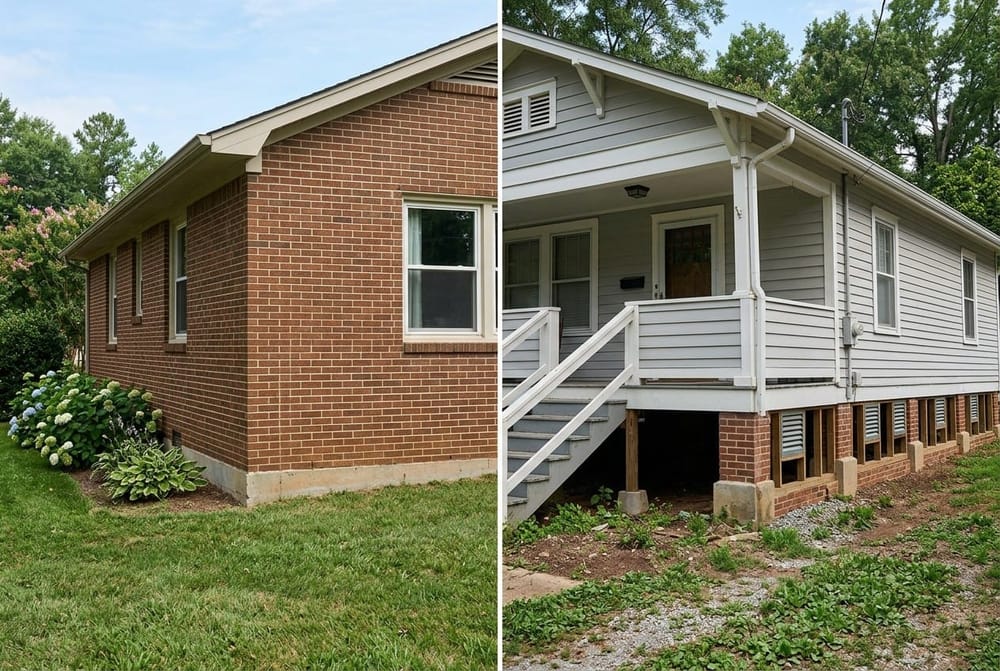
The same clay movement produces different symptoms on each, and different repair bills.
| Slab-on-grade | Pier-and-beam | |
|---|---|---|
| Where trouble shows first | Cracks in the slab, brick veneer, tile floors, drywall | Sloping or bouncy floors, gaps where interior walls meet the floor |
| Typical warning signs | Stair-step brick cracks, sticking exterior doors | Squeaky boards, doors out of square, musty crawl space |
| Common repair | Pressed concrete or steel piers under the slab | Shimming, sistering beams, replacing rotted wood piers |
| Quote comparison | Match system, mapped supports, quantity, acceptance records, access, restoration, and warranty | Separate adjustment, framing, footing, moisture, pest, drainage, and new-support work |
| Access for repair | Excavation around the perimeter, sometimes tunneling | Crew works in the crawl space |
Slab and superstructure movement can transfer into finishes, but cracks do not automatically mean clay-related settlement or piering. Repair may involve monitoring, plumbing, drainage, crack work, slab lifting, structural support, or another response based on diagnosis.
Pier-and-beam homes can show floor changes, framing distress, support movement, moisture, or pest damage. Crawl-space access may simplify inspection and some work, but tight clearance, footings, utilities, or deterioration can make the scope substantial.
Severity cannot be reduced to one crack width or floor slope. Rapid change, displacement, unsafe or soft flooring, water, damaged utilities, and multiple aligned symptoms matter. Obtain property-specific written quotes only after the repair scope is defined.
Monitor the Crack Yourself Before Paying Anyone
Monitoring can help when there is no urgent safety, water, plumbing, electrical, gas, or access concern. Do not delay professional evaluation merely to complete a three-month log, and do not assume monitoring can identify the cause on its own.
Set it up in one afternoon:
- Mark the ends. Draw a pencil line across each end of the crack and write the date next to it. If the crack lengthens, it will grow past your marks.
- Bridge the crack. Draw two short pencil ticks across the widest point, or install a consumer crack gauge that shows movement in millimeters. A crack-width card - a plastic ruler with printed line thicknesses - also helps record changes.
- Photograph with scale. Take a photo of each marked spot with a quarter or ruler in frame. Your phone timestamps it automatically.
- Log it consistently. Record date, width, location, related symptoms, and recent weather at an interval suited to the concern; an engineer can recommend monitoring duration.
A crack that changes seasonally provides useful evidence, but that rhythm alone does not establish whether repair, drainage, plumbing work, or continued monitoring is appropriate.
Seek evaluation when the crack grows, displaces, admits water, or appears with new door, floor, exterior, plumbing, or utility symptoms. Dated photos and a log can help the professional understand progression.
Foundation Repair Costs in Texas: How Each Scope Is Quoted
Actual pricing depends on diagnosis, foundation type, access, design, associated work, and location. The table identifies the units and scope fields to normalize rather than inventing a Texas range.
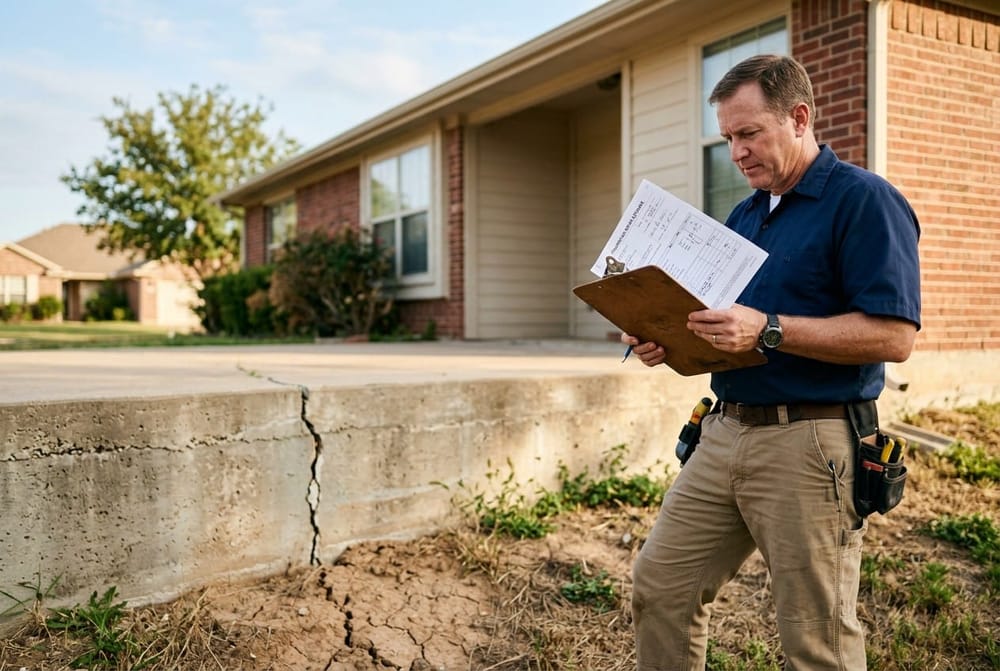
Here is the quick overview:
| Fix | Quote fields to compare |
|---|---|
| Epoxy or polyurethane crack injection | Measured crack, diagnosis, material, preparation, access, finish, and warranty |
| Drainage correction | Source, elevations, route, outlet, quantities, utilities, erosion control, and restoration |
| Pier-and-beam work | Shimming, framing, footings, supports, moisture or pest work, access, and exclusions |
| Slab piers | System, mapped locations, quantity, bracket, acceptance criteria, records, access, and warranty |
Coverage depends on the policy and cause of loss. Settling or earth-movement exclusions are common, while plumbing events, ensuing damage, endorsements, deductibles, and limits vary. Request a written coverage position rather than assuming approval or denial.
Crack Injection and Drainage: Separate Scopes
If water enters through a crack, identify the water source and have the crack evaluated before sealing it. Epoxy and polyurethane systems have different purposes and suitability; compare quotes for the same measured crack, preparation, material, repair objective, finish, and warranty.
Drainage work can address a verified water path, but grading, drains, and downspouts need a safe and lawful outlet. Compare measured quantities, route, material, utility conflicts, erosion control, and restoration. Drainage work does not guarantee that structural movement will stop or eliminate needed repair.
Foundation Piers: Normalize the Technical Scope
When measured settlement requires structural support, a design may use piers or another system. Support locations, installation criteria, and whether controlled lifting is appropriate are project-specific.
- Pressed concrete piers: require the system, installation and acceptance criterion, support map, access, records, and warranty.
- Steel push piers: require design load, reaction assumptions, bracket, depth or termination record, access, and warranty.
- Helical piers: require shaft and helix configuration, torque or capacity criterion, bracket, access, records, and warranty.
There is no typical support count or universal spacing in this guide. Elevations are one input alongside loads, foundation details, subsurface conditions, access, existing supports, and the system’s design criteria.
When support plans differ, ask each bidder to map and justify its locations. An independent engineer engagement may provide assessment or design, but confirm its fee and scope and do not assume that it will reduce the project cost.
How to Compare Foundation Repair Contractors
A no-charge contractor inspection can provide measurements and a proposed scope, but it is not the same engagement as independent engineering. Ask who performed the evaluation, what credentials apply, and whether the document is an assessment, a product proposal, repair criteria, or a design.
Use these steps when comparing a structural repair:
- Get written proposals. Each should map support locations, identify the system and installation records, state lifting criteria, list access and restoration, and show total pricing.
- Compare the technical basis. A large difference in support count or method should be explained in writing and, when engineering is involved, referred to the responsible professional.
- Read warranty terms. Check duration, covered adjustments, service fees, exclusions, responsible entity, and transfer steps rather than relying on a “lifetime” label.
- Verify the basics. Check the business, insurance, applicable local registration or permits, trade-specific licenses, and service history.
In a purchase or sale, use the disclosure form and guidance applicable to that transaction because duties and exemptions vary. Inspection, engineering, permit, elevation, repair, plumbing, and warranty records help the parties evaluate current condition without guaranteeing a price outcome.
Free Inspection vs Structural Engineer Report
A contractor inspection may be offered at no charge and can provide a proposed repair and price. An independent structural engineer can provide third-party assessment. Request the fee and confirm whether the report includes diagnosis, monitoring, repair criteria, or a final design; not every engineering engagement answers all four.
Independent review can be useful when symptoms are significant, estimates conflict, the work needs design, or a real-estate transaction needs third-party evidence. It may confirm, change, or add investigation to a proposal, but it does not promise a lower cost.
FAQ: Foundation Cracks in Texas
Are foundation cracks normal in Texas? Cracks are common observations, but no width or orientation is automatically normal or structural. Track change and related symptoms, and seek evaluation when the pattern progresses or raises concern.
When should I worry about a crack? Prompt evaluation is sensible for rapid growth, displacement, bowing, water, horizontal or stair-step patterns, or related floor, door, plumbing, utility, or exterior changes. Width is one input, not the diagnosis.
Does homeowners insurance cover foundation cracks? It depends on the cause and policy. Settling and earth-movement exclusions are common, while plumbing events, ensuing damage, endorsements, deductibles, and limits vary. Request a written coverage position.
Can I sell a house with foundation cracks in Texas? A sale is possible, but disclosure duties and exemptions depend on the transaction and current law. Use the applicable form and qualified guidance, and provide relevant inspection and repair records.
How fast do I need to act on a horizontal crack? Arrange prompt evaluation, with urgency increased by bowing, displacement, rapid change, water, damaged utilities, or unsafe egress. Sudden movement or immediate hazards call for emergency or licensed utility help.
Bottom line: document stable, low-concern observations when safe, and obtain appropriate evaluation for progressive or related symptoms before choosing a repair.
This article is for informational purposes only and does not replace an on-site assessment by a licensed structural engineer or qualified foundation professional. If you suspect structural damage, have your home inspected before attempting any fixes yourself.
Foundation Compass does not publish repair-price ranges without a representative observed-bid dataset. Actual costs depend on the property and scope; obtain written estimates.
Real estate disclosure requirements: information about seller’s disclosure obligations is general in nature and does not constitute legal advice. Consult a real estate attorney or licensed agent for your specific transaction.