When Does Homeowners Insurance Cover Foundation Repair?
Homeowners insurance may cover foundation repair when sudden and accidental damage results from a covered peril, such as a burst pipe, fire, or certain storm events. Coverage depends on the cause of loss, policy wording, exclusions, deductible, and Coverage A limit.
Gradual foundation settlement is usually excluded. Common exclusions include expansive clay soil movement, drought-related shrinkage, poor drainage, long-term plumbing leaks, erosion, and neglected maintenance. Standard policies also commonly exclude flooding and earth movement unless separate coverage or an endorsement applies.
Covered Cause vs. Uncovered Maintenance Problem
The cause and timing matter more than where the damage appears. For example, if a covered burst pipe suddenly washes out soil beneath a slab foundation, the resulting foundation damage may qualify for coverage. However, the policy might pay for opening the slab and repairing resulting damage without covering the worn or corroded pipe itself.
By comparison, cracks that develop over several years because Texas clay soil repeatedly shrinks and swells are typically considered gradual movement, not a covered event. The same may apply to pier-and-beam deterioration caused by persistent crawl-space moisture.
Document the damage before permanent repairs. For major work, obtain 2-3 written estimates and consider an independent structural engineer’s report. Coverage decisions remain policy-specific.
Covered Perils, Policy Exclusions, and Coverage A
Plumbing Leaks, Burst Pipes, Fire, and Storm Damage
Coverage A, also called dwelling coverage, may pay for foundation damage caused by a covered peril. A burst pipe that suddenly undermines a slab, a fire that damages supports, or covered wind damage may qualify as sudden and accidental damage.
Coverage for the failed component can differ from coverage for the resulting damage. For example, an insurer might cover access through the slab and related structural repairs but exclude replacement of a corroded pipe. Slow leaks, worn plumbing, and deferred maintenance are commonly excluded.
Before authorizing permanent repairs, photograph the damage, stop active water when safe, and ask the insurer what emergency mitigation is permitted.
Earth Movement, Flooding, and Gradual Settlement
Standard homeowners policies commonly exclude foundation settlement, expansive clay soil movement, erosion, earthquakes, and gradual deterioration. In Texas, repeated drought and rainfall cycles can shrink and swell clay beneath slab and pier-and-beam foundations. Because this movement develops over time, related repairs are often treated as maintenance or earth movement rather than a covered loss.
Surface flooding is generally handled through separate flood insurance, not standard homeowners insurance. Earthquake coverage may require a separate policy or endorsement. Some endorsements expand coverage for water backup, foundation seepage, or specific plumbing losses, but wording and limits vary.
Deductibles, Limits, and the 80% Insurance Rule
Even an approved claim is subject to the policy deductible. If covered repairs total $12,000 and the applicable deductible is $3,000, the maximum starting payment may be $9,000 before depreciation, limits, or other adjustments.
Coverage A limits cap dwelling-related payments. Endorsements may also impose separate sublimits. The 80% insurance rule can affect replacement-cost payments when dwelling coverage is below the percentage of the home’s required replacement value specified by the policy.
Read the declarations page, exclusions, endorsements, and loss-settlement terms. Ask the claims adjuster to identify the applicable deductible and policy language in writing. Any cost figures are typical Texas ranges, not quotes. For major work, obtain 2-3 written estimates and consider an independent structural engineer’s report.
Why Texas Foundations Move
Expansive Clay Soil and Drought Cycles
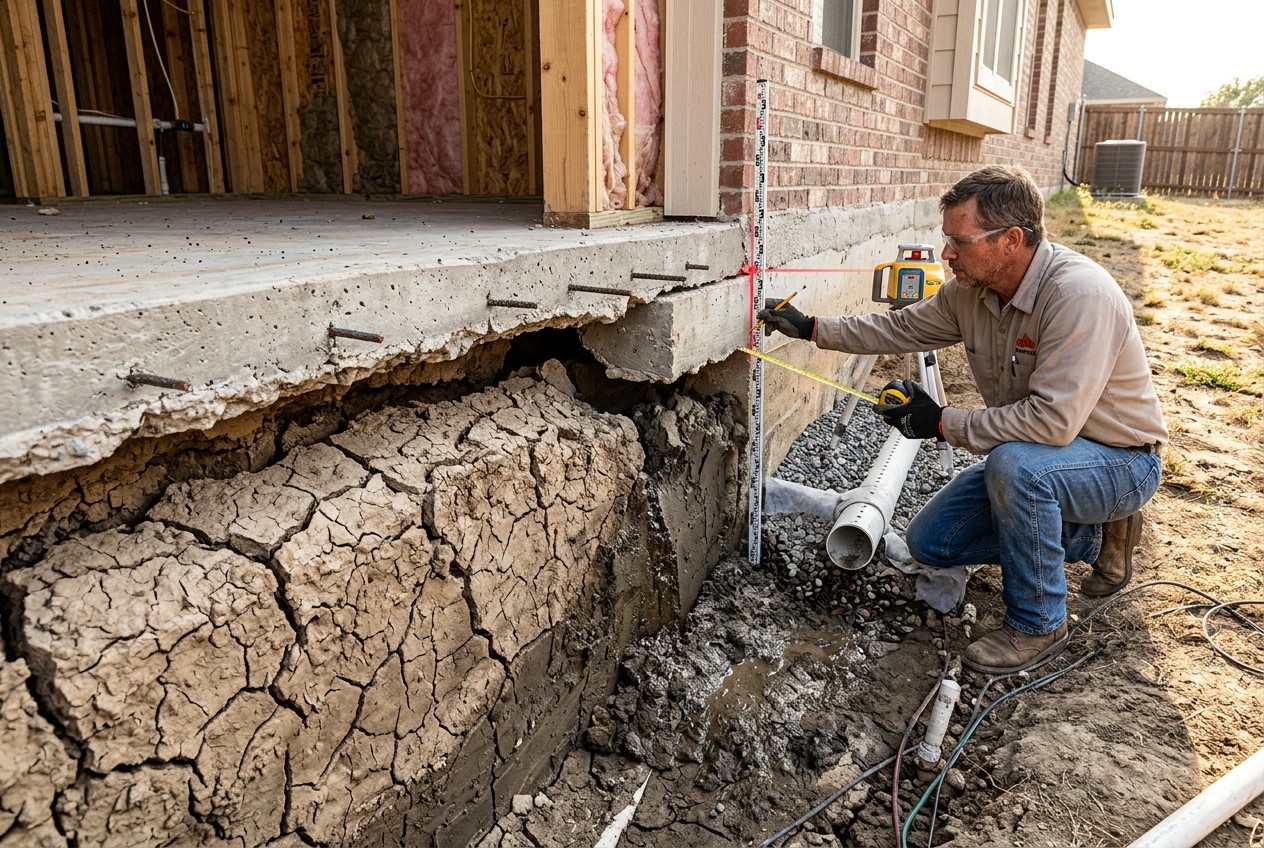
Much of Texas has expansive clay soil that changes volume as moisture levels rise and fall. During drought, clay loses water and contracts, which can leave gaps or reduced support beneath a slab foundation. After heavy rain, the soil absorbs water and swells. When these changes occur unevenly, one section of the foundation may rise or settle more than another.
Trees can intensify moisture differences by drawing water from soil near the foundation. Plumbing leaks can have the opposite effect, saturating a concentrated area. Both conditions may contribute to foundation cracks, uneven floors, separated trim, or sticking doors and windows, although these symptoms do not confirm a structural problem by themselves.
Pier-and-beam foundations can experience shifting piers, weakened beams, and crawl-space moisture. Slabs may develop differential movement or cracks as soil support changes. Gradual soil movement, poor drainage, and deferred maintenance are commonly excluded from homeowners insurance.
Drainage and Moisture Management Measures
Consistent moisture management may reduce extreme soil changes, but it cannot guarantee that foundation movement will stop.
- Clean gutters and repair sections that overflow near the house.
- Extend downspouts so water discharges away from the foundation.
- Correct negative grading that directs runoff toward exterior walls.
- Avoid overwatering one side of the home while leaving another side dry.
- Check irrigation lines, hose bibs, supply pipes, and drains for leaks.
- Watch for standing water, soil pulling away from the slab, crawl-space dampness, or unusually high water bills.
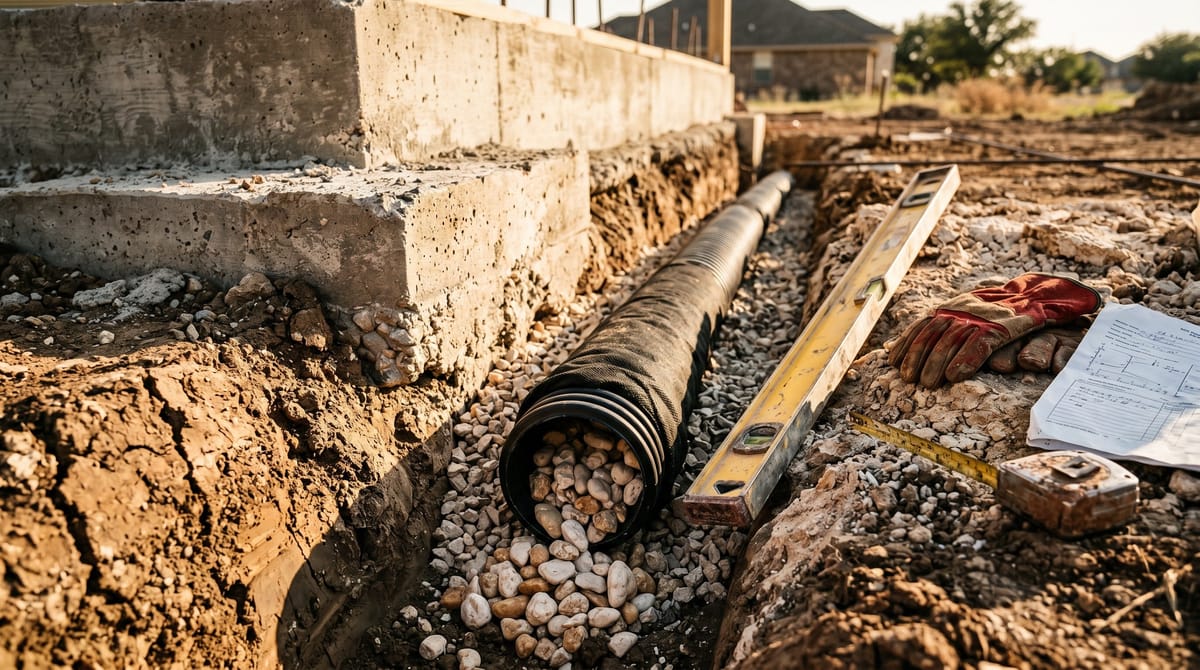
- Ask a qualified drainage contractor about surface drains, grading, or other site-specific corrections.
Do not begin aggressive foundation watering without professional guidance. Local soil, trees, drainage patterns, and water restrictions matter. If several warning signs appear or movement progresses quickly, consider an independent structural engineer’s report. For major drainage or foundation work, obtain 2-3 written estimates from licensed or properly registered contractors. Any prices discussed elsewhere in this guide are typical Texas ranges, not quotes.
Typical Texas Foundation Repair Costs
Cost Ranges by Repair Type
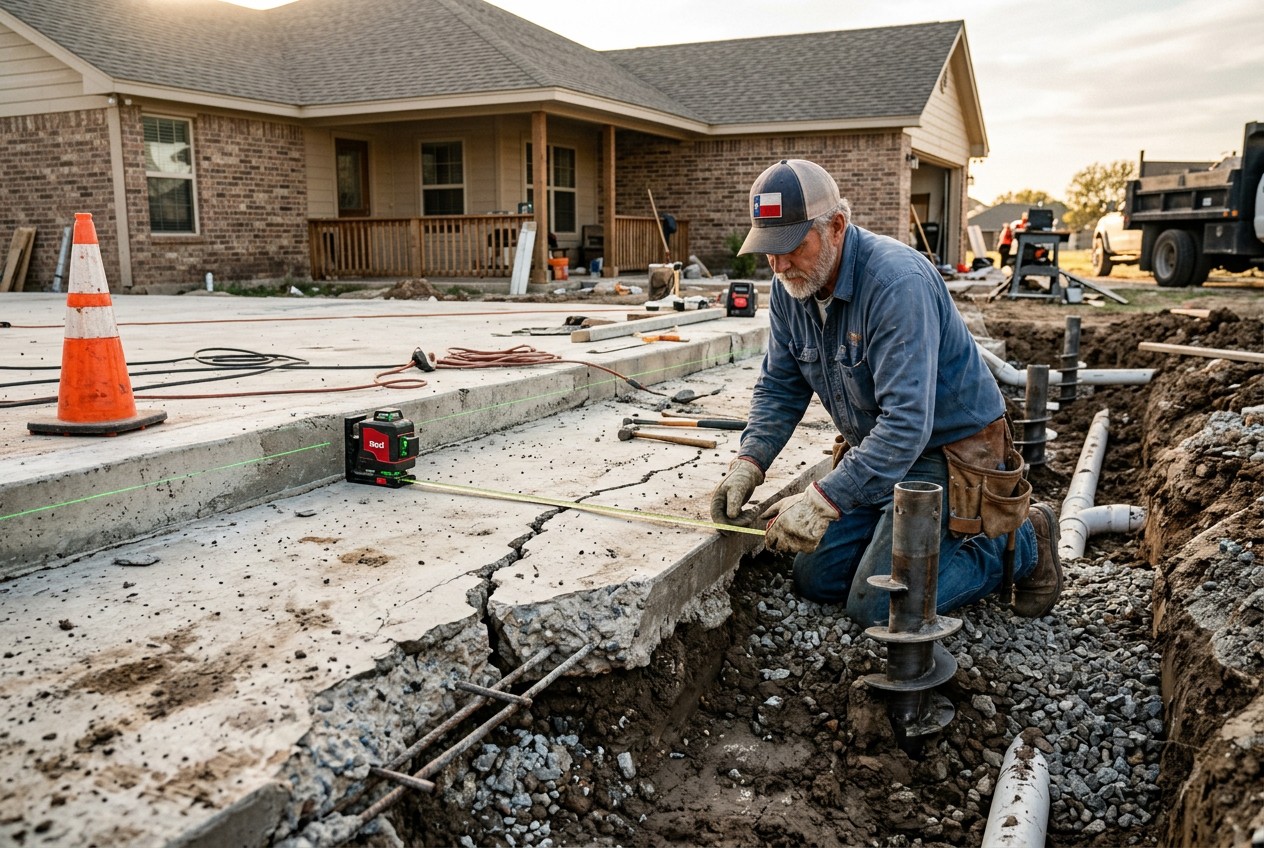
These figures are typical Texas USD ranges, not contractor quotes:
| Repair type | Typical range |
|---|---|
| Minor crack sealing or epoxy repair | $250-$1,000 |
| Slab leveling or limited stabilization | $2,000-$8,000 |
| Concrete or steel piers | $1,000-$2,500 per pier |
| Drainage or grading improvements | $1,500-$6,000 |
| Plumbing leak repair | $500-$4,000 |
| Major foundation stabilization | $10,000-$30,000 or more |
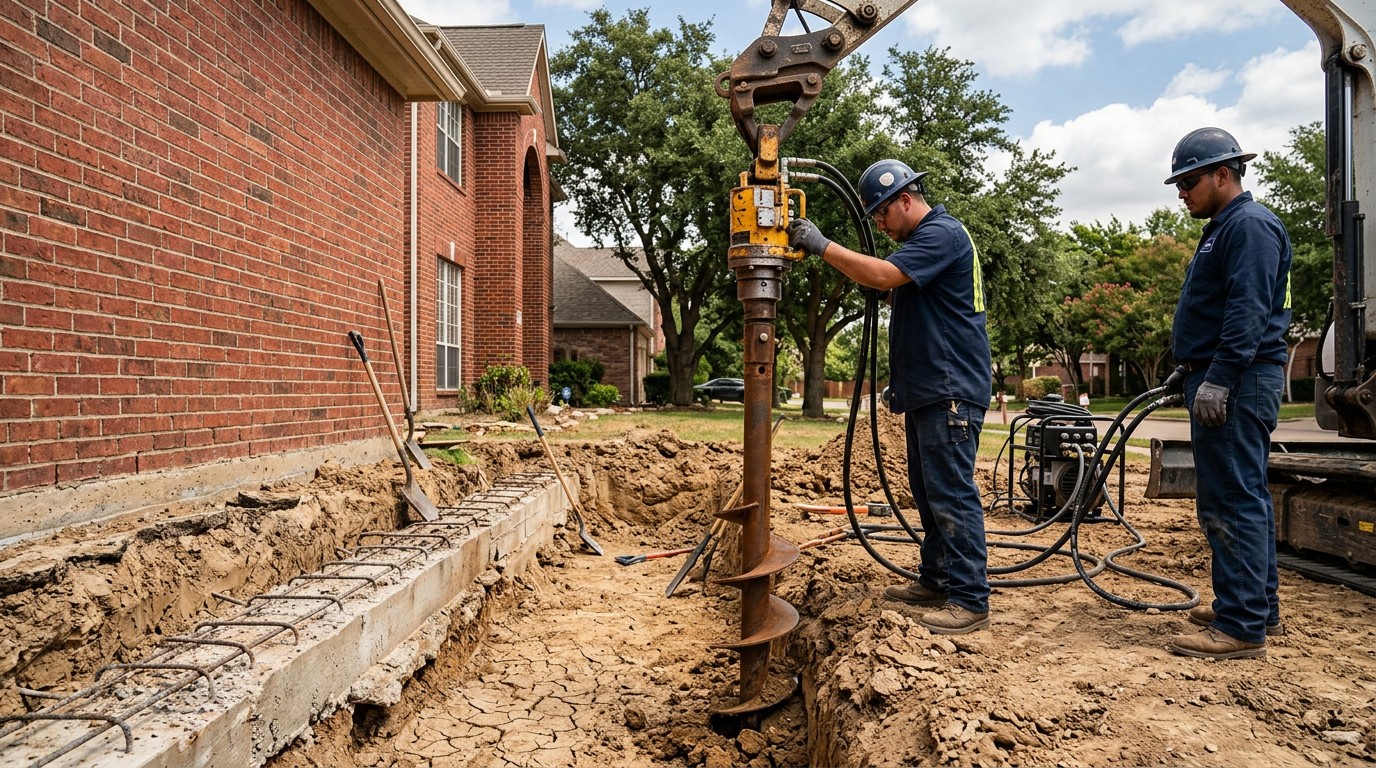
A repair involving 10 piers could therefore cost roughly $10,000-$25,000 before engineering, permits, plumbing tests, landscaping restoration, or interior repairs. Pricing changes with soil conditions, access, foundation depth, repair method, damage severity, and local permit requirements.
Crack sealing alone does not correct ongoing movement. Ask whether the proposed work addresses the cause, resulting damage, or both.
Slab Foundation vs. Pier-and-Beam Foundation
| Factor | Slab foundation | Pier-and-beam foundation |
|---|---|---|
| Common repairs | Piers, slab lifting, crack repair | Pier adjustment, shimming, beam or joist replacement |
| Access | Excavation or cutting through concrete may be required | Crawl-space access may simplify inspection but can be restricted |
| Moisture concerns | Plumbing leaks beneath the slab and uneven soil moisture | Crawl-space humidity, standing water, rot, and pests |
| Insurance issue | Coverage depends on whether movement followed a covered peril | Gradual decay and moisture damage are commonly excluded |
Neither foundation type is automatically covered or excluded. The cause of loss and policy language control the insurance decision.
Options When Insurance Does Not Pay
First, check builder warranties, prior repair warranties, and transferable warranty terms. If repairs are technically suitable for phasing, ask an independent structural engineer which work is urgent and which can wait.
Contractor financing and home-equity products may spread the expense, but compare interest rates, fees, lien terms, and total repayment. Prioritize active plumbing leaks or drainage problems when professional findings identify them as contributors.
For major work, obtain 2-3 written estimates with the pier count, repair method, exclusions, permits, payment schedule, and warranty language clearly stated. Consider an independent structural engineer’s report before selecting a contractor or authorizing stabilization.
Foundation Warning Signs and When to Act
Signs That Need Prompt Professional Attention
Arrange a professional inspection promptly if you notice:
- A foundation crack that widens quickly, exceeds about 1/4 inch, or shows vertical displacement
- Sudden sagging, sloping, or bouncing floors
- New gaps between walls, ceilings, cabinets, or exterior brick
- Doors or windows that abruptly stop opening, closing, or latching
- Active water entering around the slab or into a pier-and-beam crawl space
- A new plumbing failure, recurring drain backup, unexplained high water bill, or warm floor area
- Major separation around trim, rooflines, chimneys, or wall openings
Shut off the water if a supply-line failure is active and doing so is safe. Photograph the affected areas before emergency mitigation. Contact your insurer promptly if a burst pipe, storm, fire, or another potentially covered peril may have caused sudden damage. Ask what documentation and inspections are required before authorizing permanent repairs.
These warning signs can have several causes. They do not, by themselves, confirm foundation failure.
Signs to Document and Monitor
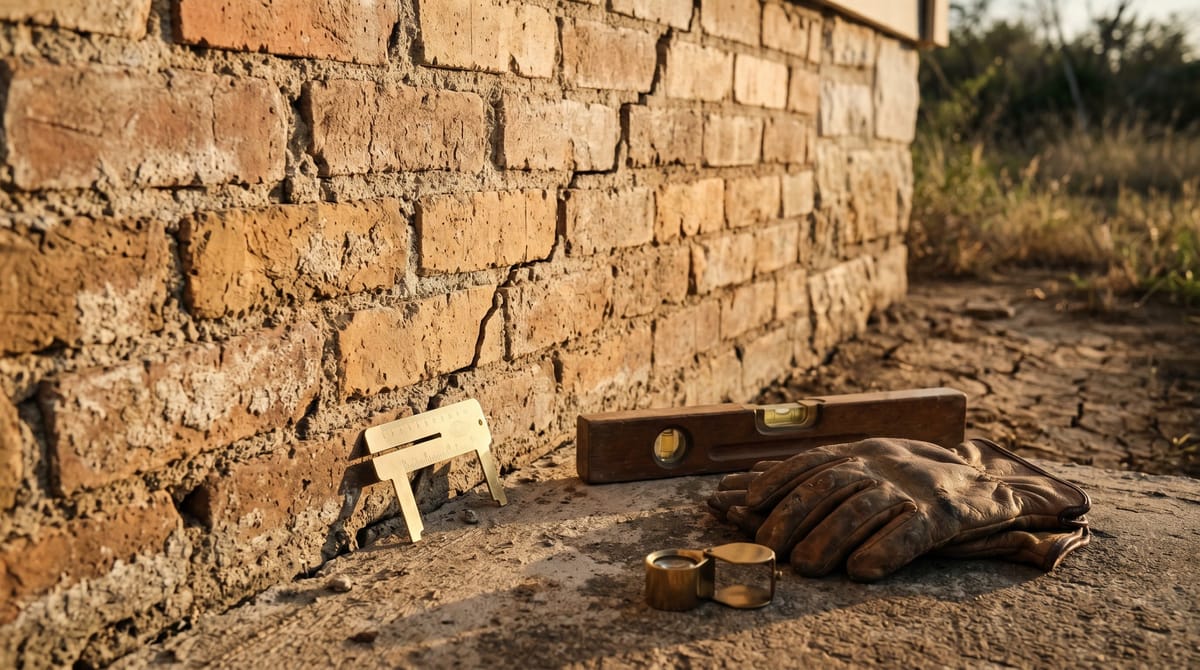
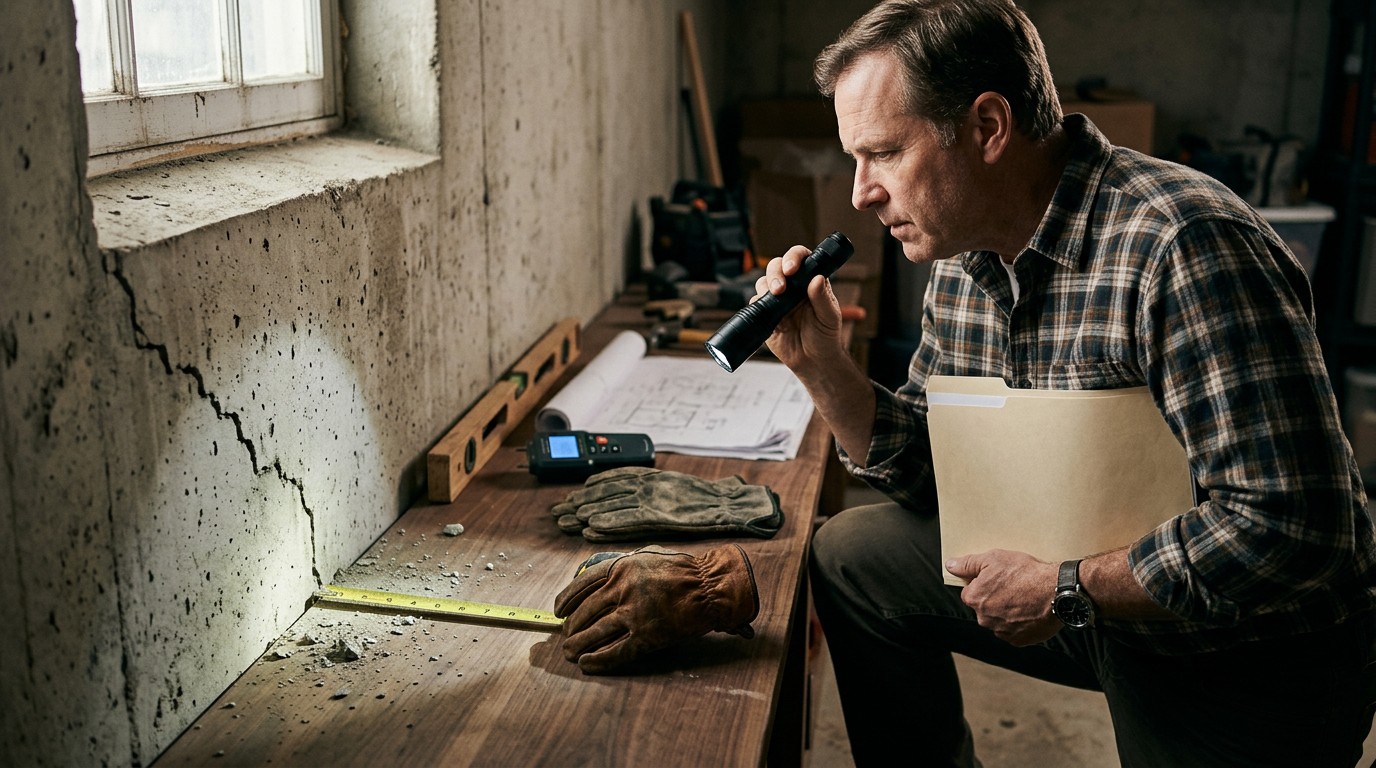
Small, stable hairline cracks may not require immediate foundation repair, but they should be tracked. Place a ruler, tape measure, or crack-width card beside the crack and take a clear, well-lit photograph. Record the date, location, approximate width, recent weather, plumbing issues, and whether the crack changes.
Repeat photographs from the same position every 30-60 days. Also note sticking doors and windows, uneven floors, separated trim, damp soil, crawl-space moisture, and seasonal changes after drought or heavy rain.
If several symptoms appear together, movement accelerates, or moisture persists, schedule a foundation inspection. For major work, consider an independent structural engineer’s report and obtain 2-3 written estimates from licensed or properly registered foundation-repair contractors.
Any repair figures in this guide are typical Texas USD ranges, not quotes. Actual costs depend on the diagnosis, foundation type, soil, access, permits, and repair scope.
How to File a Foundation Insurance Claim and Hire a Contractor
Document the Damage Before Repairs Begin
- Photograph cracks, uneven floors, separated trim, moisture, and damaged plumbing. Include a ruler or crack-width card for scale.
- Record when each problem was discovered and whether it followed a freeze, storm, burst pipe, or sudden leak.
- Gather maintenance records, weather information, water bills, plumber reports, foundation inspection findings, receipts, and prior repair warranties.
- For major movement, consider an independent structural engineer’s report. Obtain 2-3 written repair estimates, but do not authorize permanent work yet.
Preserve damaged materials when practical. If emergency mitigation is necessary, photograph conditions before and after the work and retain every invoice.
Contact the Insurer and Speak With the Claims Adjuster
- Report the loss promptly and describe only confirmed facts, including dates, visible damage, and professional findings. Avoid guessing whether soil movement, plumbing, or another event caused the problem.
- Ask the adjuster which deductible, exclusions, endorsements, inspections, and documentation apply. Confirm whether the insurer must approve leak detection, demolition, or emergency stabilization.
- Prevent additional damage when it is safe, such as shutting off water after a burst pipe. Unless immediate action is required, obtain insurer guidance before permanent foundation repair because early demolition can remove important evidence.
Vet a Licensed Foundation-Repair Contractor
- Verify applicable Texas licensing, local registration, permit requirements, and current liability insurance. Requirements can vary by trade and municipality.
- Check recent references for similar slab or pier-and-beam projects. Request a detailed scope showing pier type and count, installation depth or refusal criteria, leveling method, plumbing tests, exclusions, and site restoration.
- Review the deposit, progress payments, change-order process, lien releases, completion terms, and warranty. Confirm whether warranty coverage is transferable and what soil movement, drainage, or plumbing conditions can void it.
All figures in this guide are typical Texas USD ranges, not quotes. Compare 2-3 written estimates and consider an independent structural engineer’s report before major work.
Foundation Repair Insurance FAQ
Is Foundation Settling Covered by Homeowners Insurance?
Ordinary or gradual foundation settlement is generally excluded. This commonly includes movement caused by expansive clay soil, drought cycles, poor drainage, erosion, or deferred maintenance.
Coverage may apply when sudden foundation damage results directly from a covered peril, such as a burst pipe, fire, or qualifying storm event. The cause, timing, exclusions, and policy wording determine coverage.
Are Foundation Leaks Covered, and What If the Claim Is Denied?
A policy may cover resulting damage from a sudden plumbing leak without paying to replace the failed or corroded pipe. Slow leaks, seepage, wear, and maintenance problems are commonly excluded. Coverage for accessing a pipe beneath a slab also varies.
If the claim is denied:
- Request the decision and cited policy language in writing.
- Review the exclusions, endorsements, deductible, and Coverage A terms.
- Submit relevant plumber findings, dated photographs, maintenance records, repair estimates, and an independent structural engineer’s report.
- Follow the policy’s appeal or dispute process.
What Should I Tell the Adjuster, and Does the 80% Rule Apply?
Give the adjuster factual discovery dates, visible warning signs, weather events, plumbing records, photographs, and professional findings. Do not guess at the cause.
The 80% rule may reduce replacement-cost claim payments when dwelling coverage is below the required percentage of the home’s replacement value. Ask the insurer how the rule applies to your policy.
All figures in this guide are typical Texas USD ranges, not quotes. Obtain 2-3 written estimates and consider a structural engineer’s report before major work. This guide is informational, not structural-engineering or legal advice.
Safety: Leave the affected area and contact emergency services or qualified professionals if you observe signs of imminent collapse, falling masonry, fire, a gas odor, sparking, damaged electrical systems, or rapidly worsening structural movement. Do not enter an unstable building or crawl space.
Crack size alone does not determine structural risk. Any rapidly changing or displaced crack, or a crack accompanied by sagging floors, separation, water intrusion, or other structural symptoms, should be evaluated promptly by a qualified structural professional regardless of its width.
Before digging, grading, installing drains, or performing irrigation work, have underground utilities located and check local permit, easement, drainage, stormwater, and water-restriction requirements. Do not redirect runoff in a way that damages neighboring property.
Do not enter a crawl space containing standing water, suspected electrical hazards, sewage, significant mold, pests, restricted access, or visibly unstable framing. Arrange an inspection by an appropriately qualified professional.
Texas licensing and registration requirements vary by trade and municipality, and there may be no single statewide license for general foundation-repair contractors. Verify local registration, permits, liability insurance, references, and any required plumbing, electrical, or engineering credentials before work begins.
This guide provides general educational information and is not insurance, legal, financial, or structural-engineering advice. Coverage depends on the complete policy and facts of the loss; consult your insurer and appropriately qualified local professionals.