Pier and Beam Foundation Repair Cost in Texas - Typical Range
Pier and beam foundation repair typically costs $3,000 to $15,000 in Texas. This is a typical Texas planning range, not a project quote. Minor reshimming may cost less, while widespread pier or framing replacement can exceed $15,000.
What is a pier and beam foundation?
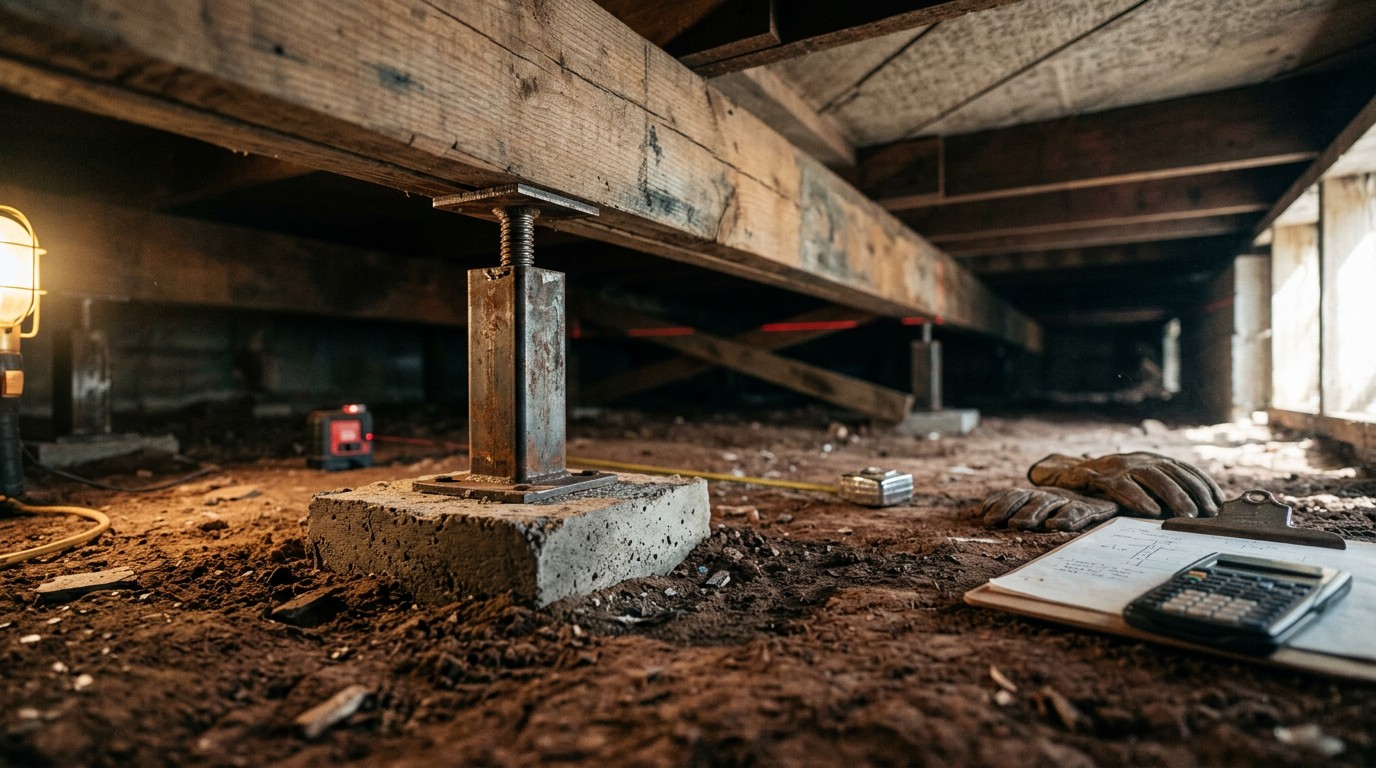
Foundation piers transfer the home’s weight into the soil. Support beams rest on those piers, and floor joists span the beams to carry floors and walls. The open crawl space below provides access for inspections, plumbing work, leveling, and repairs.
Movement can affect only a few shims or involve damaged piers, sagging beams, rotted joists, or sill beams. That distinction has a major effect on cost.
Why the $3,000 to $15,000 range is only a starting point
The final price depends on damage severity, pier type and quantity, crawl space clearance, wood damage, expansive clay movement, drainage, and the selected repair method. See the broader foundation repair cost guide for additional pricing factors.
An inspection should include crawl space observations and foundation elevation measurements. For major repairs or conflicting recommendations, consider an independent structural engineer’s report. Obtain 2-3 written estimates with matching scopes, materials, exclusions, permit responsibility, and warranty terms.
Typical Texas Costs by Pier and Beam Repair Scope
All amounts below are typical Texas planning ranges, not project quotes. Pricing can change substantially after crawl space inspection and foundation elevation measurements.
| Repair scope | Typical Texas range |
|---|---|
| Reshimming limited areas | $1,500-$4,000 |
| Adjusting existing piers | $2,000-$6,000 |
| Replacing concrete piers | $500-$1,500 per pier |
| Installing steel piers | $1,000-$2,500 per pier |
| House leveling | $3,000-$10,000 |
| Localized beam or joist repair | $1,500-$6,000 |
| Sill beam replacement | $4,000-$12,000 |
| Moisture or drainage corrections | $1,500-$8,000 |
| Extensive rebuilding | $15,000-$30,000 or more |
Reshimming, pier adjustment, and pier replacement
Reshimming fills small gaps between piers and beams to restore firm contact. It is generally the least expensive repair when the supports remain sound. Adjusting existing piers costs more because the crew may need hydraulic jacks, temporary supports, excavation, and gradual elevation changes.
Replacing a failed pier adds materials and labor. Concrete pier pricing depends on dimensions, reinforcement, excavation depth, and curing requirements. Steel piers generally cost more, particularly when driven or installed deeply. Location matters too. A pier near the crawl space entrance is easier to reach than one beneath plumbing in an 18-inch-high work area.
House leveling, support beams, and floor joists
House leveling commonly falls within a typical Texas range of $3,000-$10,000, not a quote. The scope may include lifting low areas, adjusting supports, installing shims, and checking doors and floors as the structure moves.
Localized support beam or floor joist work often costs $1,500-$6,000. Sill beam replacement may run $4,000-$12,000, depending on the affected length and whether exterior finishes must be disturbed. Review the separate house leveling cost guide for additional pricing factors.
Wood rot or termite damage can turn a limited leveling job into structural carpentry. Ask whether the estimate specifies beam dimensions, joist lengths, wood grade, treatment, and damaged-material removal.
Moisture control and extensive rebuilding
Typical Texas ranges for basic crawl space moisture or drainage corrections are $1,500-$8,000, not quotes. Work might include grading, longer downspouts, drains, vapor barriers, ventilation changes, or leak repairs. Mold treatment and pest remediation are usually separate.
Widespread pier failure, rotten framing, sill replacement, or partial crawl space rebuilding can exceed $15,000 and sometimes reach $30,000 or more. For major work, obtain 2-3 written estimates and consider an independent structural engineer’s report before selecting the scope.
What Determines the Final Pier and Beam Repair Cost?
Contractors evaluate the home’s size, movement pattern, expansive clay conditions, drainage, repair design, material quantities, labor, and crawl space access. Two homes with similar square footage can require very different scopes.
Why cost per pier varies
Cost per pier depends on the pier type, required depth, structural load, spacing, excavation, and installation conditions. Adjusting a sound existing pier is usually less involved than removing and replacing a failed support. Steel piers may require specialized equipment, while concrete piers may involve deeper excavation, reinforcement, and curing.
Pier count alone does not include house leveling, damaged framing, drainage corrections, engineering, permits, or difficult access. It also cannot show whether soil movement has affected one area or several sections of the home.
Access, materials, and repair complexity
A low crawl space increases labor time, especially when technicians must work around plumbing lines, HVAC ducts, insulation, or stored debris. Piers located far from the access opening can be harder to excavate and rebuild. Cleanup and debris removal may appear as separate charges.
Material quantities matter too. Replacing 6 feet of support beam is different from rebuilding an entire beam line. Floor joist repairs may involve sistering localized damage or replacing multiple joists affected by wood rot or termites. Concrete piers, steel piers, treated lumber, temporary supports, and lifting equipment all influence the final price.
Limits of calculators and square-foot estimates
Online calculators and per-square-foot prices are rough budgeting tools. They cannot account for foundation elevation measurements, concealed framing damage, crawl space clearance, soil conditions, or the contractor’s selected repair method.
Any figures in this guide are typical Texas planning ranges, not quotes. Request 2-3 written estimates showing pier locations, materials, labor, leveling, exclusions, and site work. For major repairs or conflicting scopes, consider an independent structural engineer’s report before signing a contract.
Texas Soil, Water, and Warning Signs of Foundation Trouble
Texas foundation movement often follows uneven soil moisture, but symptoms can also result from framing wear, leaks, or crawl space damage. A sloping floor or drywall crack does not confirm foundation failure by itself.
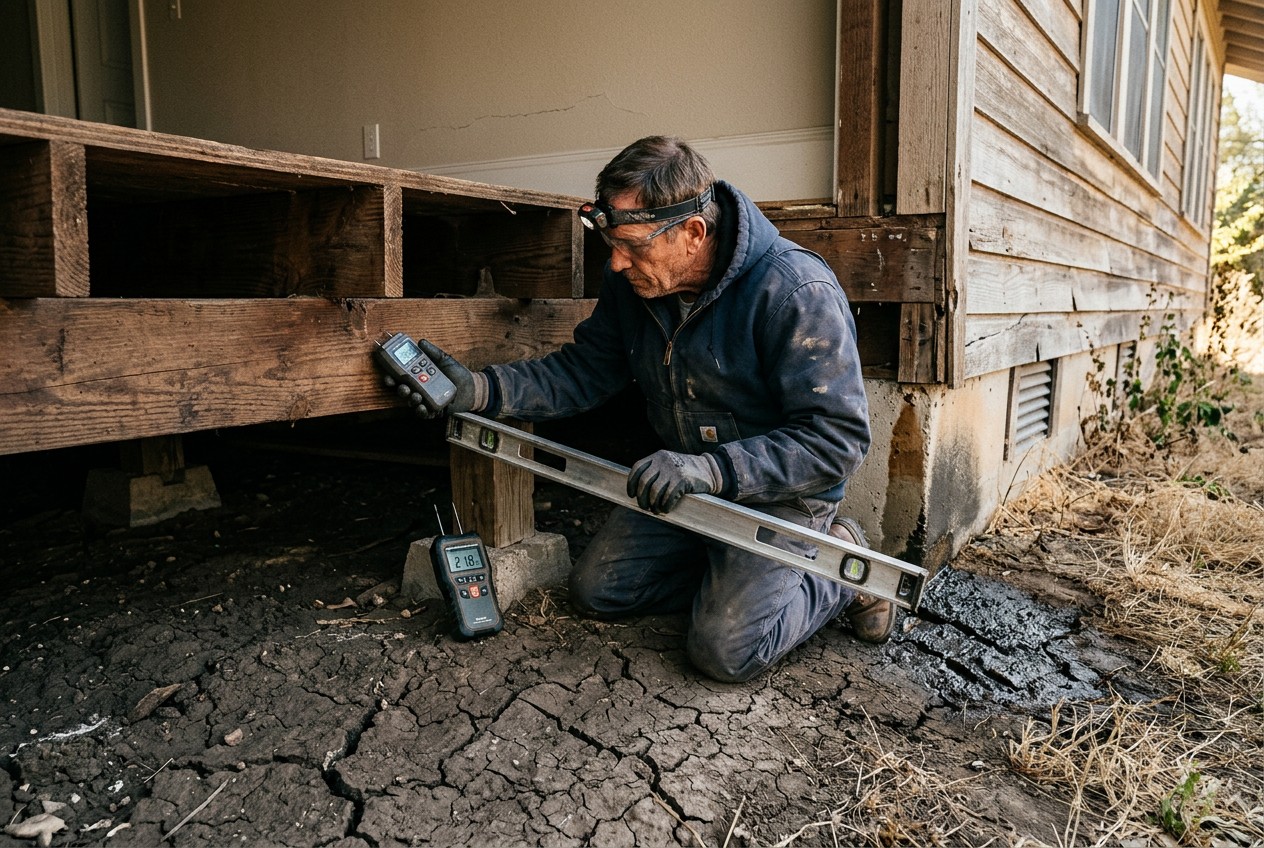
How drought and heavy rain move expansive clay soil
Expansive clay contracts as it dries during drought and swells after heavy rain. If one section of soil changes more than another, individual piers may rise or settle by different amounts. This differential settlement can shift beams, joists, floors, walls, doors, and windows.
Repeated shrink-swell cycles may cause symptoms to return after cosmetic repairs. Foundation work that ignores the underlying water pattern may not address the source of recurring movement.
Drainage, leaks, and crawl space humidity
Poor grading can direct runoff toward the house. Short downspouts, clogged gutters, and standing water may concentrate moisture around certain piers, while nearby soil remains dry. Review practical corrections in this guide to foundation drainage and grading.
Plumbing leaks can also soften soil or keep framing damp. Inside the crawl space, high humidity and persistent moisture may contribute to wood rot, mold, rusted fasteners, and conditions favorable to termites. These problems can weaken support beams, floor joists, or sill beams even when the piers remain stable.
Signs to monitor and signs that need prompt evaluation
Monitor small, stable drywall cracks and minor seasonal door sticking. Record the date, measure crack width with a ruler, and photograph changes from the same position.
Schedule an inspection if you notice:
- Sagging or increasingly uneven floors
- Multiple sticking doors and windows
- New or widening drywall cracks
- Gaps developing between floors, walls, or trim
- Persistent crawl space moisture or musty odors
Request prompt professional evaluation for rapid changes, severely weakened or bouncy flooring, active plumbing leaks, standing water, visible failed supports, or beams separating from piers. The broader guide to foundation warning signs explains what else to document.
For major work, obtain 2-3 written estimates with comparable scopes. If recommendations conflict or extensive movement is suspected, consider an independent structural engineer’s report before authorizing repairs.
Pier and Beam vs Slab Foundation Repair
Pier and beam and slab foundations can show similar warning signs, but their structures and repair methods differ. Applying slab pricing assumptions to a crawl space home can produce a misleading budget.
Different structures, access, and symptoms
| Feature | Pier and beam | Slab |
|---|---|---|
| Structure | Piers support beams, joists, and wood flooring | Concrete slab serves as the foundation and floor base |
| Access | Crawl space allows inspection below the home | Components beneath the concrete are concealed |
| Common concerns | Sagging floors, rotten joists, loose shims, failed piers | Slab cracks, tilted sections, plumbing leaks, settlement |
| Shared signs | Drywall cracks, sticking doors, uneven floors | Drywall cracks, sticking doors, uneven floors |
Floor sag in a pier and beam home may come from damaged framing rather than soil movement alone. A slab can also become uneven, but diagnosis may require elevation measurements, plumbing tests, and inspection of visible concrete movement.
Different repair methods and cost drivers
Pier and beam repairs may include reshimming, adjusting or replacing piers, house leveling, and repairing beams or joists. Slab repairs more commonly involve underpinning or stabilization with concrete or steel piers installed around or beneath the slab. See the detailed pier and beam vs slab comparison and guide to foundation settlement repair.
Pier and beam repair commonly falls within a typical Texas range of $3,000-$15,000, not a project quote. Final costs depend on access, framing damage, pier design, soil movement, drainage, and repair depth. Obtain 2-3 written estimates with comparable scopes. For major work or conflicting recommendations, consider an independent structural engineer’s report.
How to Read a Pier and Beam Repair Estimate
Sample estimate line items
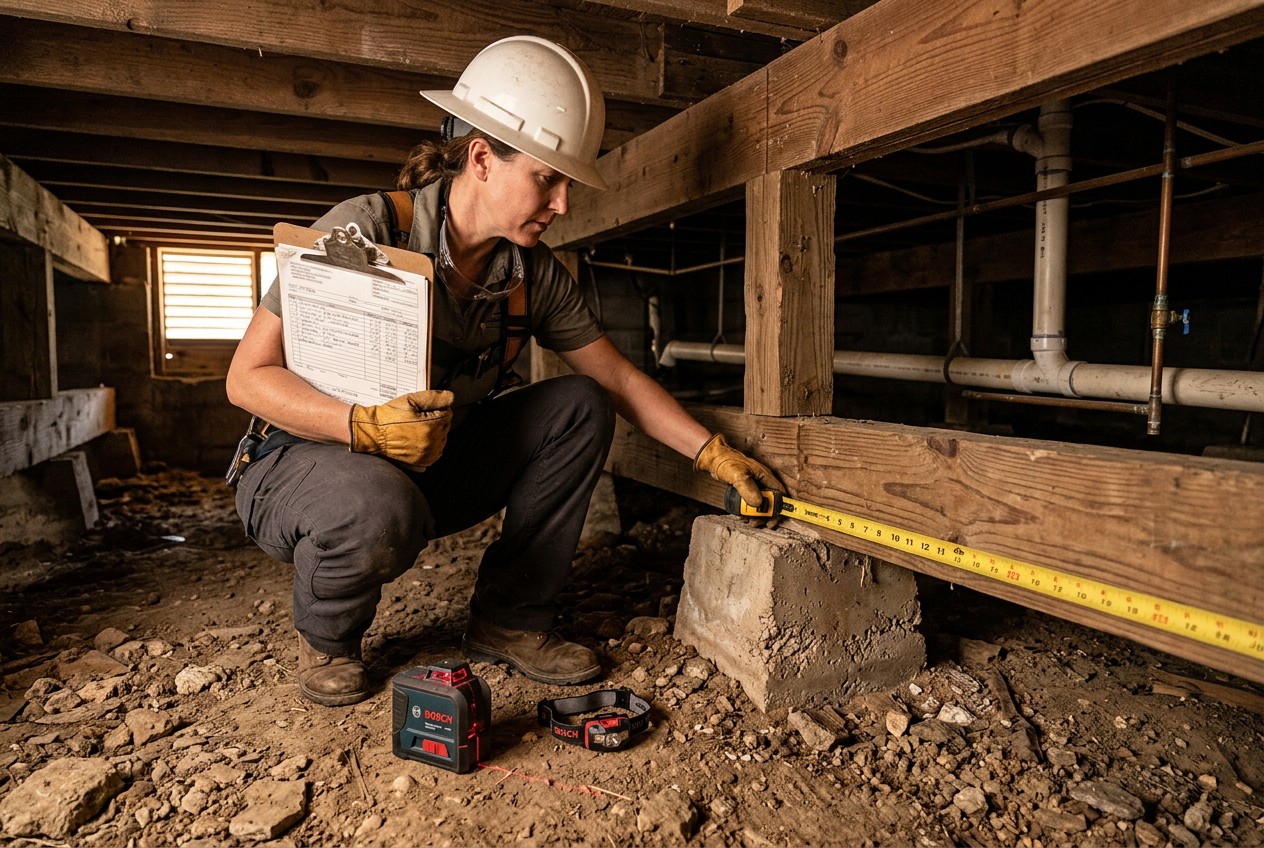
A useful estimate explains how the total was built. A sample scope might include:
| Line item | Typical Texas planning range |
|---|---|
| 4 concrete piers, materials and installation | $2,000-$6,000 |
| Leveling and reshimming labor | $2,000-$5,000 |
| 12 feet of beam or joist repair | $1,800-$4,500 |
| Restricted crawl space access | $500-$2,000 |
| Drainage correction | $1,500-$4,000 |
| Structural engineer services | $500-$1,500 |
| Permit fees | $100-$500 |
| Cleanup and debris removal | $250-$1,000 |
| Applicable taxes | Itemized separately |
These are typical Texas ranges, not project quotes. Contractors may bundle labor, materials, leveling, and cleanup, so confirm that charges are not duplicated. The bid should identify pier type and quantity, beam or joist lengths, pier locations, elevation measurements, drainage work, permit responsibility, and completion criteria.
Common add-on costs
Ask whether the quoted total includes:
- Plumbing or HVAC relocation around the work area
- Removal and replacement of damaged flooring
- Mold treatment or crawl space drying
- Termite treatment and pest-damaged wood replacement
- Additional repairs for concealed wood rot
- Grading, drains, gutters, or downspout extensions
- Restricted-access labor and debris removal
- Post-leveling drywall, door, trim, and flooring repairs
Some items require separate licensed trades. A foundation contractor may expose a plumbing leak, for example, without including the plumber’s repair cost.
Exclusions and contingency allowances
Read every exclusion before signing. Concealed framing damage, utility repairs, finish restoration, engineering, permits, drainage, and taxes may be excluded or listed as allowances. An allowance is not a fixed price.
The contract should explain who can authorize changes, how added work will be priced, and whether written approval is required before work continues. Obtain 2-3 written estimates with comparable scopes. For major repairs, unclear damage, or conflicting bids, consider an independent structural engineer’s report.
Inspections, Written Bids, and Contractor Vetting
When to get a structural engineer report
Consider an independent structural engineer’s report before major repairs, when the cause of movement is unclear, or when contractors recommend different solutions. An engineer can document visible conditions, review drainage and expansive-clay movement, record foundation elevation measurements, and recommend a repair scope without selling the installation.
Engineering inspections often cost $500-$1,500, a typical Texas planning range, not a quote. See the foundation inspection cost guide for pricing factors.
How to compare 2-3 written estimates
Obtain 2-3 written estimates, then compare the same details:
- Elevation data - Look for measurements showing high and low areas, not only a statement that the house is uneven.
- Pier plan - Confirm the number, type, depth, and location of adjusted or replacement piers.
- Repair quantities - Require beam and joist lengths, reshimming areas, and drainage work to be itemized.
- Materials and tolerances - Check pier materials, lumber specifications, and the contractor’s target leveling tolerance.
- Exclusions - Identify engineering, permits, plumbing, HVAC, concealed rot, pest treatment, cleanup, and cosmetic repairs that are not included.
- Contract terms - Compare the payment schedule, change-order process, completion criteria, estimated duration, and warranty.
A lower bid may simply exclude work included by another contractor.
How to vet a foundation repair contractor
Texas does not have one statewide foundation-repair contractor license covering every company. Check applicable city or county registration requirements and confirm who will obtain required foundation repair permits.
Request a current certificate of general liability insurance and, where applicable, workers’ compensation coverage. Call recent references, review complaint history, and ask whether employees or subcontractors will perform the work. The contract should match the pier map, materials, quantities, exclusions, and payment terms discussed during the inspection.
Read warranty language closely. A “transferable warranty” may require registration, fees, inspections, or continued drainage and moisture maintenance. Determine what movement is excluded, whether wood repairs are covered, and which company is legally responsible for future claims. Use this foundation repair contractor checklist before signing. For major work, compare 2-3 written estimates and consider an independent engineer’s report.
Pier and Beam Foundation Repair Cost FAQ
These figures are typical Texas planning ranges, not project quotes. Actual costs and timelines require an inspection.
How much does repair cost, and what is the cost per pier?
Pier and beam foundation repair typically costs $3,000-$15,000 in Texas. Individual concrete piers may run $500-$1,500, while steel piers may cost $1,000-$2,500 each.
Pier pricing alone does not account for house leveling, beam or joist repairs, crawl space access, drainage, permits, or engineering.
How long do repairs take, and how long should the foundation last?
Minor reshimming may take 1-2 days. Moderate leveling and pier work often takes 3-7 days, while extensive framing replacement can require two weeks or more.
A well-maintained pier and beam foundation can last many decades, but service life is different from a contractor warranty. Proper grading, extended downspouts, leak repairs, and crawl space moisture control may reduce future movement. They do not replace necessary structural repairs.
Does insurance cover repairs, and which scenarios cost the most?
Coverage usually depends on the cause and policy language, not settlement alone. Review your policy and the guide to homeowners insurance and foundation repair.
The highest costs often involve widespread pier failure, sill beam or framing replacement, rot, termites, restricted access, utility relocation, or extensive rebuilding. Obtain 2-3 written estimates and consider an independent structural engineer’s report before major work.
Foundation lifting, pier adjustment, reshimming, excavation beneath a building, and temporary structural support are hazardous and should be designed or performed by qualified professionals. Improper work can cause structural collapse, utility damage, serious injury, or death.
Do not enter a crawl space with standing water, suspected sewage, exposed or damaged wiring, strong gas odors, extensive mold, inadequate clearance, pest hazards, or visibly unstable supports. Contact an appropriate qualified professional before entering or disturbing the area.
If floors or supports appear close to failure, structural movement is rapid, or you suspect a gas leak, electrical hazard, or major water-line failure, leave the affected area and contact emergency services or the appropriate utility provider as necessary.
Permit, contractor-registration, inspection, and professional-license requirements vary by location and scope of work. Verify current requirements with the applicable local authority and Texas regulatory agencies before work begins.