Why Texas Homes Have Foundation Problems
Expansive clay can contribute to foundation movement across parts of Texas, including areas around Dallas, Austin, and Houston. Soil is only one variable: fill, drainage, plumbing, trees, grading, foundation design, and construction details can produce or amplify similar symptoms.
Wet and dry periods can change clay volume, but the timing and effect vary by site. Foundation settlement means measured downward movement; it should not be assumed from a seasonal crack alone.
Foundation type matters too. Texas homes include conventional and post-tension slabs, pier-and-beam systems, and mixed additions. Build date can provide a clue, but records and inspection should confirm the system.
Foundation Compass does not publish repair-price ranges without representative observed bids. Seek measured evaluation when symptoms progress or cluster, then compare written scopes.
Use the foundation-crack guide to record direction, displacement and change rather than relying on a single width rule. The foundation inspection guide explains how contractor evaluations and independent engineering scopes differ.
7 Warning Signs You Need Foundation Repair
Potential foundation movement may appear through several symptoms, but there is no reliable three-sign rule. Progression and related floor, door, exterior, plumbing, or moisture evidence make measured inspection more important.
The seven signs to watch for:
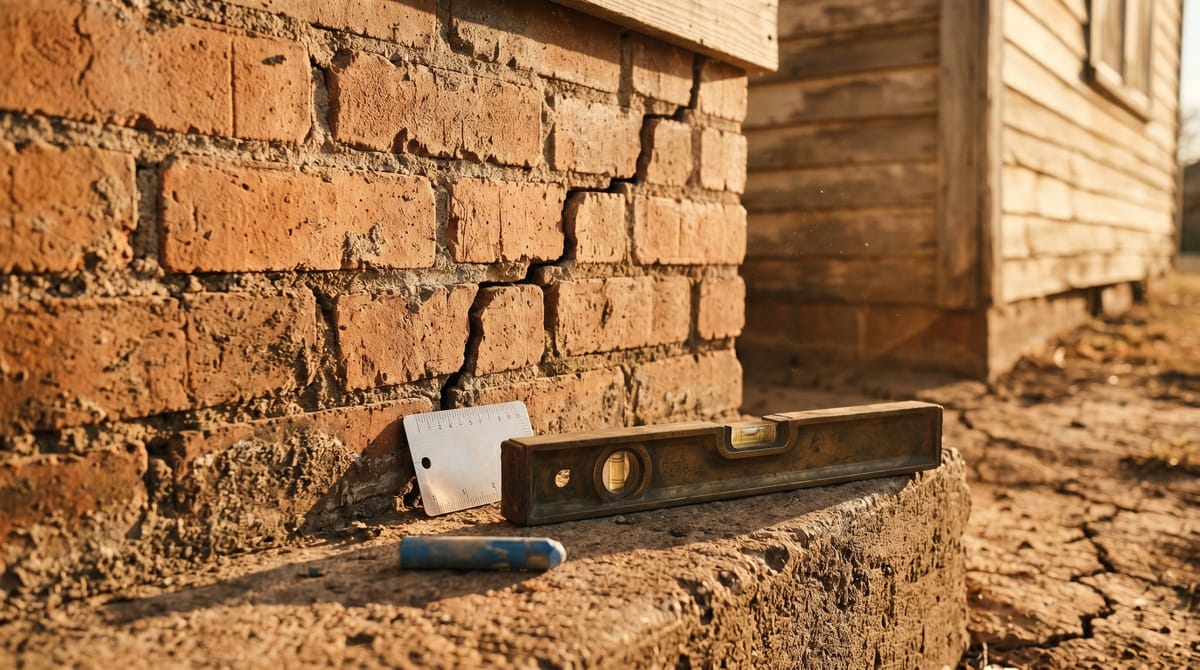
- Stair-step cracks in exterior brick - cracks that follow the mortar joints in a staircase pattern
- Diagonal drywall cracks - especially ones running from the corners of doors and windows
- Sticking doors and windows - doors that drag or will not latch, windows that jam halfway
- Uneven or sloping floors - a visible tilt or a soft, bouncy spot
- Gaps between walls and door or window frames - daylight or widening caulk lines around frames
- Separation of walls from ceiling or floor - a gap opening above the baseboards or below the crown molding
- Cracks in the slab itself - visible in the garage floor, tile floors, or exposed concrete
Cracks in Brick, Drywall, and Concrete
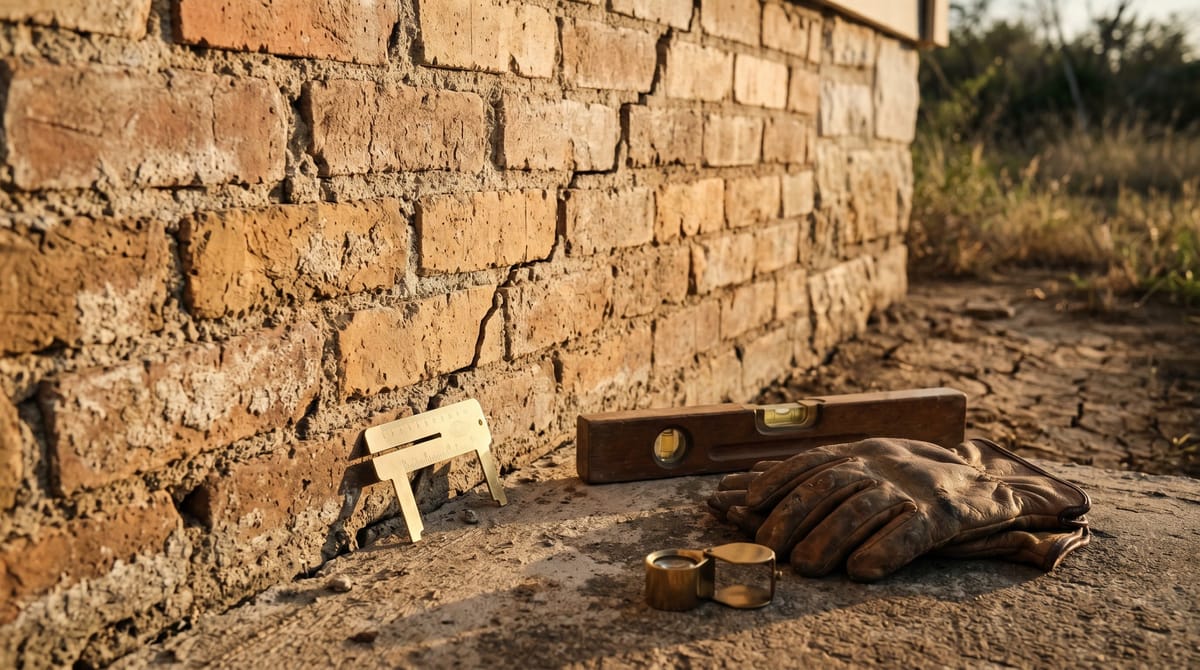
Stair-step brick cracks can occur with differential movement, but veneer, lintels, thermal movement, corrosion, and construction details also matter. Track location and change rather than treating the pattern as a diagnosis.
Inside, note diagonal drywall cracks near openings and whether they widen or appear with sticking doors, floor changes, or exterior evidence. A width threshold can help document the crack but cannot identify its cause by itself.
In the garage or any room with exposed concrete, look for slab cracks wider than a credit card is thick, especially ones where one side sits higher than the other.
Sticking Doors and Windows
A moving foundation racks door and window frames out of square. The telltale detail: a door that rubs at the top corner of the frame, or a gap you can see widening along one side of the jamb.
Humidity, hinges, framing, finishes, and foundation movement can all affect a door. Progressive binding or several aligned symptoms deserves inspection, but a door’s seasonal behavior does not prove the cause.
Sloping Floors and Wall Separation
Informal observations can help locate a concern, but a short level or rolling ball is not a structural survey and floors may have intentional or original variation. Have elevations measured when a slope changes or appears with other symptoms.
Also scan where walls meet the ceiling and floor. Gaps opening above baseboards, crown molding pulling away, or countertops separating from the wall all suggest the frame is shifting on its foundation rather than settling cosmetically.
Normal Settling or a Real Foundation Problem?
Many cracks are non-structural, but concrete shrinkage, framing, finishes, moisture, and foundation movement can overlap. No list can identify which cracks to ignore without context.
Often lower-concern observations when stable and isolated:
- Vertical hairline cracks narrower than 1/8 inch
- A single crack that stays the same size for months
- Short cracks above doors that appeared once and never grew
- Cracks in fresh drywall or new construction during the first 1-2 years
Observations that merit closer evaluation:
- Horizontal cracks in a foundation wall or brick
- Any crack wider than 1/4 inch - about the width of a pencil
- Stair-step cracks running through multiple brick courses
- Cracks that keep widening, or reopen after patching
- Cracks appearing together with sticking doors, sloping floors, or wall gaps
The pattern matters more than any single crack. A stable isolated hairline may be a finish issue, while several changing cracks plus a door or floor change warrant evaluation; neither pattern should be diagnosed from text alone.
If there is no immediate safety, water, electrical, gas, or plumbing concern, dated photos and measurements can help an inspector understand change. A crack that appears stable for 6-12 months may still relate to hidden or intermittent conditions, so stability is not proof that it is cosmetic.
Seek prompt evaluation for rapid change, displacement, water entry, horizontal or widening cracks, or several related symptoms. An independent structural engineer’s report can provide third-party assessment; request the fee and confirm whether it includes diagnosis, monitoring, repair criteria, or design.
Slab vs Pier and Beam: Different Foundations, Different Signs
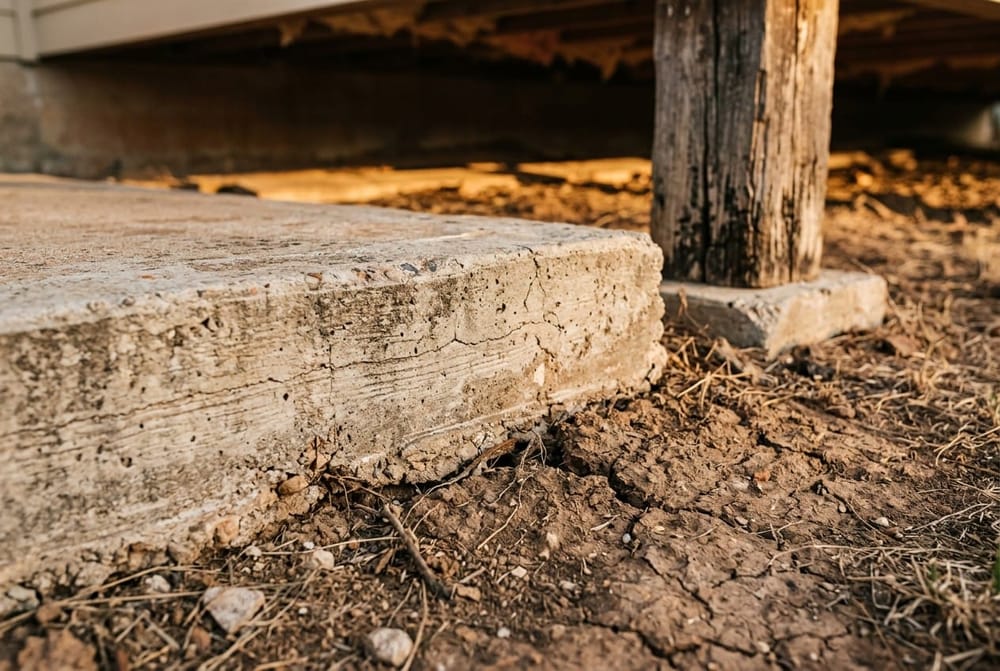
Texas homes commonly use slab or pier-and-beam systems, with variations and mixed additions. Confirm the type because it changes access and possible work, not because each system has one failure pattern.
Slab-on-grade construction may place plumbing within or below the slab. Cracks, tile changes, warmth, dampness, sound, odor, or unexplained water use are observations to investigate, not proof of a leak or foundation movement. Use an appropriately licensed plumber for leak diagnosis.
Pier-and-beam foundations provide a crawl space beneath framed floors. Bounce, slope, odor, visible moisture, framing condition, and supports can be inspected, but do not enter an unsafe or restricted crawl space without qualified help.
Repair methods differ accordingly:
| Foundation type | Typical warning signs | Common repairs |
|---|---|---|
| Slab-on-grade | Slab cracks, warm floor spots, brick cracks | Pressed concrete or steel piers, mudjacking |
| Pier and beam | Sagging floors, crawl space moisture, rotted beams | House leveling, shimming piers, beam replacement |
Crawl-space access can simplify some work, but deterioration, footings, utilities, and clearance can expand the scope. A slab concern does not automatically require perimeter piers.
Foundation Repair Costs in Texas
Some slab proposals use per-pier pricing, but support count must follow measured conditions and a justified plan. Compare unit prices only after the support system, mapped locations, quantity, acceptance criteria, access, engineering role, installation records, restoration, exclusions, and warranty are aligned.
Soil, structure, access, system, engineering, permits, plumbing risk, and restoration can change pricing, so compare written scopes covering the same work.
Cost by Repair Method
| Method | Quote unit to clarify | What to verify |
|---|---|---|
| Pressed concrete piers | Per support or project | System, capacity basis, termination, access, warranty |
| Steel push piers | Per support or project | Design load, depth or termination record, brackets, warranty |
| Helical piers | Per support or project | Design load, helix configuration, torque or capacity record, warranty |
| Mudjacking | Treated area, material, or project | Slab type, condition, voids, drainage, loads, expected performance |
| Pier-and-beam work | Defined repair scope | Framing, supports, footings, moisture, pests, access, exclusions |
Material alone does not determine depth, capacity, durability, or warranty value. Ask for the system’s technical basis and installation record. Request an independent engineer’s fee and deliverable directly before relying on the engagement.
What Happens If You Wait
Some progressive conditions can expand damage or narrow repair options, while other observations remain stable or prove cosmetic. A generic article cannot predict future pier count or cost. Document change, address immediate gas, electrical, water, or safety concerns, and obtain measured evaluation when symptoms progress or cluster.
Does Homeowners Insurance Cover It?
Coverage depends on the policy language and cause of loss. Settling or earth-movement exclusions are common, while plumbing events, ensuing damage, endorsements, deductibles, and foundation limits vary. Read the full policy, notify the insurer as required, and use an appropriately licensed plumber when leak investigation is indicated.
How to Hire a Foundation Repair Contractor Without Getting Oversold
Price alone does not establish scope or quality. Texas does not offer one simple statewide foundation-repair specialty credential, so verify the business, insurance, local requirements, and any trade-specific licenses for engineering, plumbing, or electrical work.

Follow this process before signing anything:
- Get written proposals. Each should map support locations, identify the system, state installation or termination records, list access and restoration, and show total pricing.
- Ask why the system fits. Material alone does not determine depth, capacity, longevity, or suitability; request the technical basis.
- Read the warranty as a contract. Check duration, covered adjustments, service fees, exclusions, responsible entity, and transfer steps rather than relying on a “lifetime” label.
- Consider independent engineering. An engagement can add third-party assessment when symptoms are significant or scopes conflict; request the fee and confirm whether it includes repair design.
- Verify the paper trail. Check the business, current insurance, applicable permits or registrations, trade licenses, and service history.
Walk away from anyone who pressures you to sign the same day, quotes a price without taking elevation measurements inside the house, or cannot put the warranty terms in writing.
Reducing Moisture Risk in Expansive Clay Soil
Moisture management can reduce one source of movement, but it cannot prevent every foundation problem or reverse existing settlement. Inspect the property first and choose only measures that address a documented condition.
- Use supplemental watering only with site-specific guidance. A fixed hose placement and schedule is not appropriate for every foundation, soil, drainage pattern, or local restriction. Avoid saturation and ponding.
- Redirect roof runoff where the outlet is safe. A drainage professional can choose a route that does not cause erosion, violate local rules, or send water to a neighboring property.
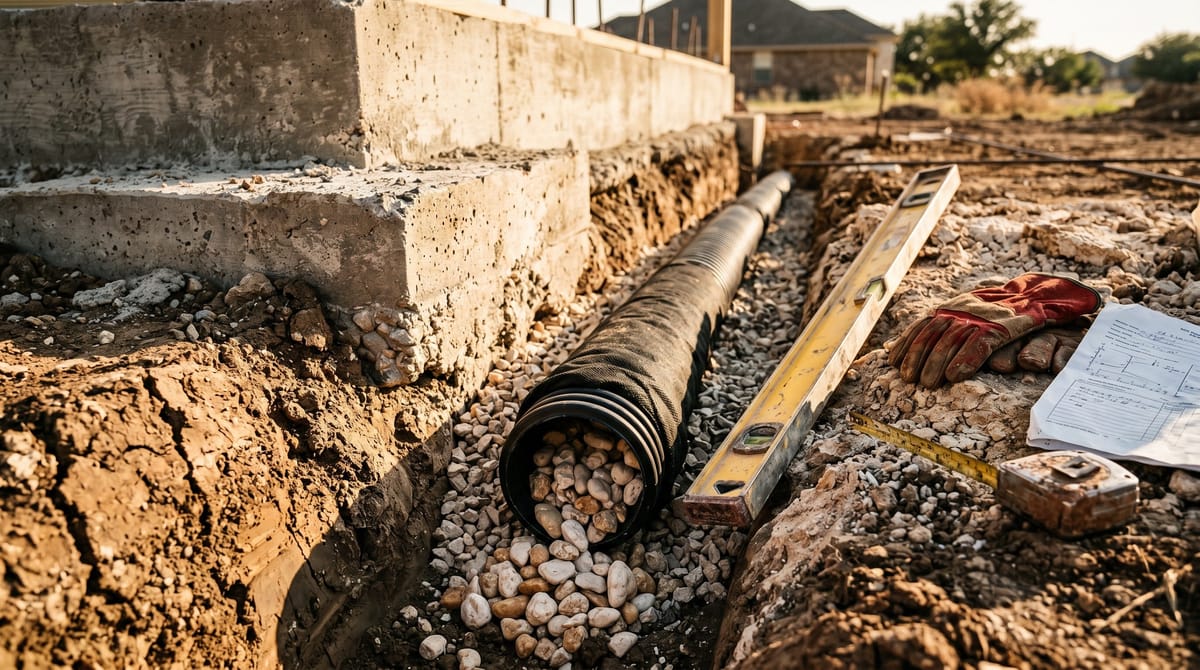
- Correct confirmed grading problems. The required slope and fill approach depend on clearances, utilities, the downstream path, and local code; do not bury the slab edge or weep openings.
- Use an arborist for tree and root decisions. Do not trench a generic-depth barrier or cut roots based only on distance from the house; tree stability, utilities, soil, and structural evidence all matter.
Low-cost water-management work can be worthwhile when it solves the measured problem, but it is not evidence that structural repair is unnecessary.
Foundation Repair FAQ
Can I sell a house with foundation problems in Texas?
A sale is possible, but disclosure duties and exemptions depend on the transaction and current law. Use the applicable form and qualified guidance. Buyers should review current inspection, repair, permit, engineering, plumbing, elevation, and warranty records as part of due diligence.
Is it safe to live in a house with foundation issues?
Safety cannot be determined from a generic description. Leave the area and contact appropriate emergency or licensed help for sudden displacement, collapse signs, gas odor, electrical damage, major water release, or blocked egress; otherwise arrange prompt professional evaluation based on the symptoms.
How long does foundation repair take?
Duration depends on support count, access, excavation or tunneling, inspections, plumbing risk, lifting, restoration, weather, and follow-up. Ask for a project-specific schedule.
Do I need a foundation inspection before buying?
A general home inspection may identify symptoms, and specialist or engineering review may be appropriate depending on the findings, property, lender, insurer, and buyer’s risk tolerance. Ask the engineer for a property-specific fee and scope; an engagement is not a guarantee of stability.
This article is for general informational purposes only and does not replace an inspection by a licensed structural engineer. Foundation damage varies from home to home - have significant or worsening symptoms evaluated professionally before starting repairs.
Before digging or trenching anywhere on your property (including root barrier installation), call 811 to have underground utility lines located. It is free, and it is required by Texas law before excavation.
Crawl space inspections can expose you to mold, pests, standing water, and electrical hazards. If you are not comfortable or properly equipped, observe from the access hatch and leave entry to a professional.
Foundation Compass does not publish repair-price ranges without a representative observed-bid dataset. Actual prices depend on the site and scope; obtain written estimates. Insurance coverage varies by policy and cause, so confirm details with your insurer.