What Is Slab Foundation Repair?
Slab foundation repair corrects or stabilizes movement in a concrete slab foundation. In Texas, expansive clay soil can swell after heavy rain and shrink during drought. This repeated soil movement may leave parts of the slab unsupported or push some areas upward.
Uniform foundation settlement is often gradual and may cause few visible problems. Differential settlement is more concerning because one section moves more than another. The resulting stress can produce diagonal wall cracks, uneven floors, separated trim, and sticking doors or windows.
Sealing a narrow, stable concrete crack may help block moisture or insects. However, crack sealing does not stop active settlement, restore support beneath the slab, or correct the underlying drainage, soil, or plumbing problem.
How Slab Movement Affects a Texas Home
Foundation stabilization typically uses piers, pilings, or other underpinning methods to transfer the home’s load to stronger soil. Foundation lifting may then raise settled areas toward a planned elevation, although returning a house perfectly to its original position is not always practical or advisable.
The cause should be identified before choosing a repair. Expansive clay, poor grading, standing water, tree roots, and an under-slab plumbing leak can produce similar symptoms but require different responses.
For major work, consider an independent structural engineer’s report and obtain 2-3 written contractor estimates based on the same scope. Any prices discussed in this guide are typical Texas ranges, not quotes.
Typical Slab Foundation Repair Costs in Texas
Most Texas slab foundation repairs fall between $3,500 and $15,000, but a small crack repair may cost hundreds while extensive underpinning or slab replacement can exceed $25,000. Every figure below is a typical Texas range in USD, not a contractor quote.
Texas Foundation Repair Cost Table
| Repair scope | Typical Texas cost |
|---|---|
| Cosmetic crack sealing or epoxy repair | $300-$1,000 |
| Localized slab repair or limited stabilization | $1,500-$5,000 |
| Pier installation | $1,000-$3,000 per pier |
| Multiple-pier project | $5,000-$15,000 |
| Extensive underpinning and foundation lifting | $15,000-$30,000+ |
| Partial slab removal and replacement | $5,000-$20,000 |
| Full slab replacement | $25,000-$60,000+ |
Crack sealing is appropriate only for certain stable surface defects. It does not correct active foundation settlement, expansive-clay movement, or missing support beneath the concrete slab foundation.
What Determines the Final Repair Price?
Pier count is often the largest cost driver. A house needing four exterior piers will generally cost much less than one requiring 15 piers, interior access, and extensive excavation. Push piers, helical piers, pressed concrete pilings, and steel pilings also have different material and installation costs.
Other factors include:
- Damage severity and the amount of foundation lifting required
- Installation depth and local soil conditions
- Access beneath flooring or through landscaping and concrete paving
- Elevation measurements and engineering documentation
- Permit and inspection requirements
- Under-slab plumbing leak testing or pipe repairs
- Grading, drainage, gutter, or downspout corrections
- Replacement of tile, wood flooring, drywall, trim, or landscaping
Interior piers may require cutting through flooring and the slab. Ask whether the estimate includes surface restoration, debris removal, plumbing tests, and post-repair elevation readings. These items can add thousands of dollars if excluded from the original scope.
Slab vs Pier-and-Beam Foundation Repair Costs
Pier-and-beam repairs often range from $3,000-$12,000 in Texas for shimming, replacing damaged supports, or correcting localized floor sagging. Major beam, joist, moisture, or underpinning work may reach $15,000-$30,000 or more.
Crawlspace access can make some pier-and-beam work simpler than cutting through a slab. However, restricted clearance, rotten joists, damaged beams, inadequate ventilation, or widespread support failure can increase labor substantially. Slab repairs more commonly involve exterior or interior piers, concrete cutting, tunneling, and finish restoration.
Obtain 2-3 written estimates based on the same pier count, repair method, depth criteria, and restoration responsibilities. For expensive work, conflicting diagnoses, or substantial underpinning, consider getting an independent structural engineer’s report before signing a contract.
Signs Your Slab Foundation May Need Repair
Foundation trouble usually appears as a pattern, not one isolated blemish. Check both the interior and exterior of the house for changes that develop together or worsen over time.
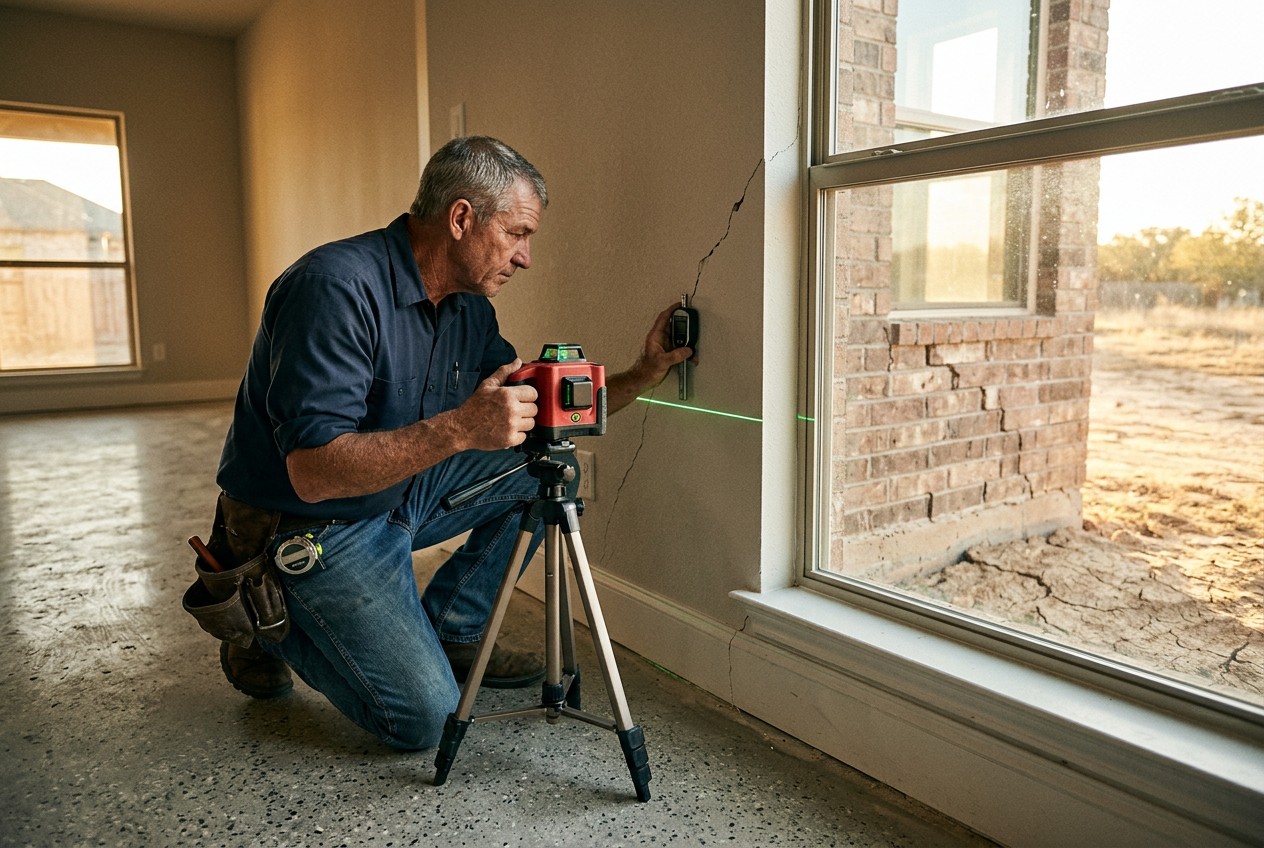
Common warning signs include:
- Diagonal wall cracks extending from door or window corners
- Stair-step cracks in brick or masonry
- Cracks with visible separation or displacement
- Uneven, sloping, or soft-feeling floors
- Doors and windows that stick, swing open, or no longer latch
- Gaps between walls, ceilings, cabinets, trim, or exterior brick
- Cracked tile or flooring without an obvious impact
- Foundation cracks that widen, return after repair, or leak
- Chimneys, porches, or exterior walls pulling away from the house
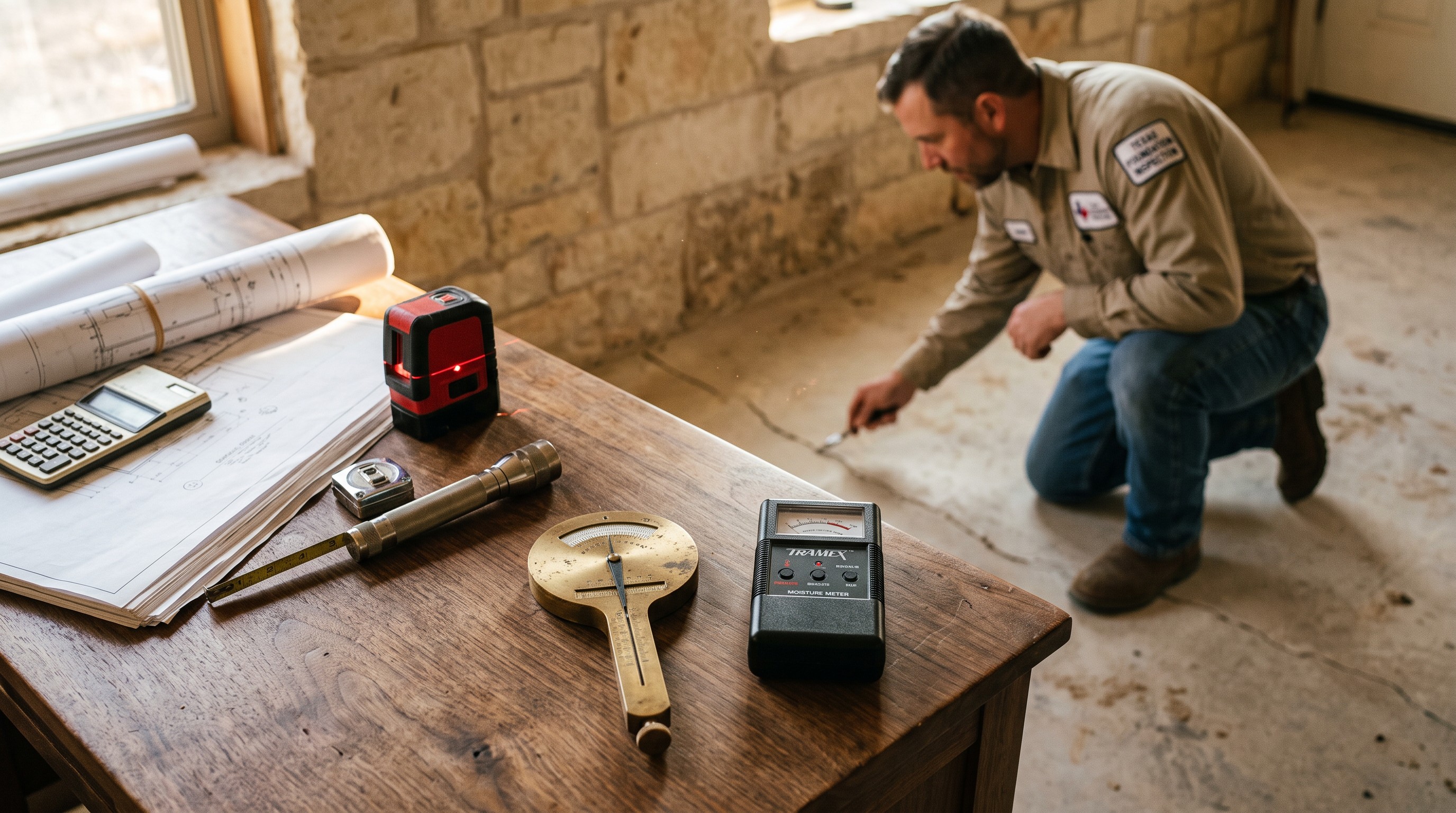
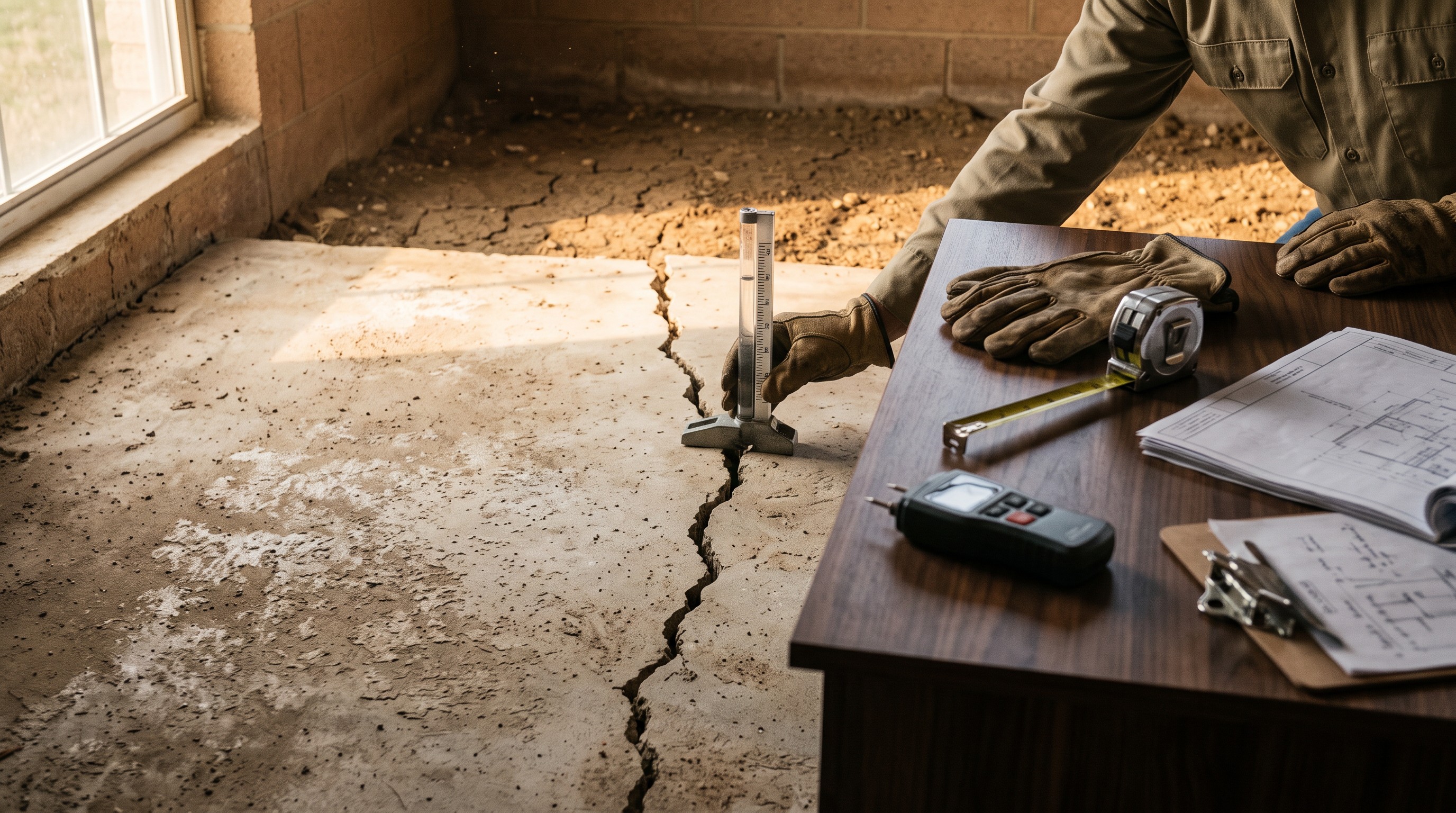
Take dated photos and measure accessible cracks with a ruler or crack-width gauge. A 4-foot level or laser level can help identify floor changes, but these tools do not replace a professional foundation inspection.
Cosmetic Cracks vs Signs of Active Settlement
A thin, stable surface crack in drywall or concrete may result from normal curing, minor seasonal movement, or material shrinkage. Cosmetic cracks are generally more reassuring when they remain narrow, show no vertical displacement, and do not occur with other symptoms.
Active differential settlement is more likely when a crack widens, reopens after patching, runs diagonally, follows mortar joints in a stair-step pattern, or has one side higher than the other. Several symptoms in the same area - such as a diagonal wall crack, sticking door, and sloping floor - justify closer evaluation.
Crack sealing may improve appearance or limit moisture entry, but it will not stabilize active soil movement beneath a slab.
When Foundation Movement Is Urgent
Arrange a prompt professional evaluation if changes occur over days or weeks, floors become severely uneven, framing separates, or doors suddenly become difficult to open. Plumbing symptoms also matter. Unexplained high water bills, warm floor areas, running-water sounds, low pressure, or recurring sewer odors may indicate an under-slab plumbing leak affecting expansive clay soil.
Major elevation differences, visibly displaced foundation cracks, or worsening structural and plumbing symptoms should be reviewed by an independent structural engineer. Then obtain 2-3 written estimates based on the same findings and repair scope.
Any inspection or repair figures discussed in this guide are typical Texas ranges in USD, not contractor quotes. This information is educational and is not structural-engineering advice.
Why Texas Slab Foundations Move
Expansive Clay, Drought, and Heavy Rain
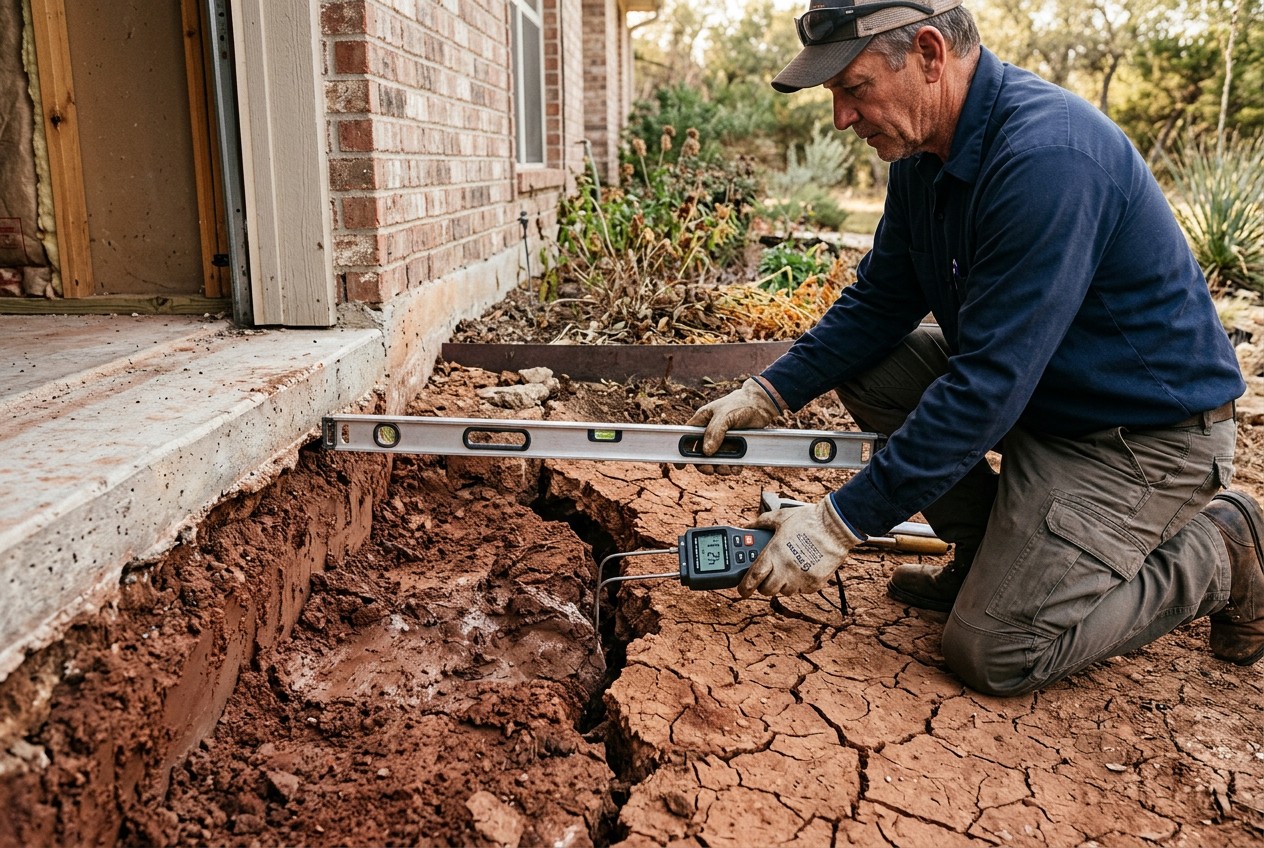
Much of Texas has expansive clay soil that changes volume as its moisture content changes. After prolonged rain, clay absorbs water and swells. During hot, dry periods, it loses moisture and shrinks, sometimes leaving gaps beneath a concrete slab foundation.
The greatest risk often comes from uneven moisture. One side of a house may stay damp because of shade, irrigation, or poor drainage while another side dries in full sun. Different sections of the slab then rise or settle at different rates, causing differential settlement.
Large trees and shrubs can also draw moisture from nearby soil. Their effect depends on species, size, distance from the house, and local soil conditions. Do not remove a mature tree solely because cracks appear - abrupt moisture changes can sometimes create additional movement.
Grading, Gutters, Downspouts, and Standing Water
The ground should generally direct rainwater away from the foundation. Negative grading does the opposite, allowing water to collect beside the slab. Repeated saturation can soften supporting soil or make expansive clay swell along one edge of the house.
Inspect for:
- Soil or mulch sloping toward the foundation
- Clogged, damaged, or missing gutters
- Downspouts that discharge beside the slab
- Standing water after rainfall
- Erosion channels near corners
- Irrigation heads spraying walls or soaking one area
- Flower beds that trap water against the house
Extending downspouts and correcting grading may reduce future moisture swings, but drainage work will not automatically reverse existing settlement. Avoid adding large amounts of soil above the foundation edge or blocking brick weep holes.
Plumbing Leaks and Other Moisture Problems
An under-slab plumbing leak can create a persistently wet pocket beneath the home. Supply-line leaks may cause warm floor areas, low water pressure, running-water sounds, or unexplained water bills. Drain-line leaks can produce odors, damp soil, or recurring pest problems.
A plumber may use a pressure test, acoustic equipment, thermal imaging camera, or sewer camera to locate the problem. Irrigation leaks, condensate discharge, damaged drain lines, and neighboring runoff can create similar moisture imbalances.
Leak testing and drainage correction may be needed before or alongside foundation stabilization. For major movement, obtain an independent structural engineer’s report and 2-3 written contractor estimates based on the same findings. Any costs later associated with these measures should be treated as typical Texas ranges in USD, not quotes.
Slab Foundation Repair Methods Compared
Piers, Pilings, and Underpinning
Underpinning stabilizes a settled slab by transferring the home’s weight to stronger soil or load-bearing material below the active clay zone. The appropriate system depends on soil conditions, structural load, access, and the depth of competent support.
| Method | How it works | Typical application |
|---|---|---|
| Slab piers | Installed beneath a concrete slab and connected with brackets | Interior or exterior slab settlement |
| Push piers | Steel sections are hydraulically driven using the structure’s weight | Heavier homes where firm bearing material can be reached |
| Helical piers | Screw-shaped steel shafts are rotated into the soil | Lighter structures, variable soils, or sites requiring measured installation torque |
| Pressed concrete pilings | Concrete cylinders are hydraulically pressed into the ground | Common Texas residential stabilization where soil and access are suitable |
| Steel pilings | Steel segments reach deeper supporting layers | Projects requiring greater depth or load capacity |
Steel systems generally cost more than pressed concrete pilings but may reach greater depths. Pier installation commonly falls around $1,000-$3,000 per pier. These are typical Texas ranges in USD, not contractor quotes.
Ask how installation depth will be determined. A vague promise to install piers “to refusal” does not explain the target load, soil conditions, or verification method.
Slabjacking, Mudjacking, and Polyurethane Foam Injection
Slabjacking and mudjacking pump a cement-based mixture beneath settled concrete to fill voids and raise the surface. Polyurethane foam injection uses expanding material through smaller drilled holes and usually adds less weight.
These methods may work for some patios, walkways, driveways, garage slabs, or limited voids. They are not automatically suitable for stabilizing a home’s load-bearing foundation. Foam or grout can lift concrete, but it does not necessarily transfer structural loads below expansive clay or stop ongoing differential settlement.
Typical Texas costs may range from $1,000-$5,000, depending on area, material volume, access, and lift required. These figures are ranges, not quotes.
What to Expect During Foundation Lifting
Limited exterior pier work may take 1-3 days. Larger projects with interior piers, tunneling, or extensive underpinning may take a week or longer. Homeowners can often remain in the house, although contractors may restrict work areas or temporarily interrupt plumbing.
Lifting is controlled and incremental, but finishes can shift. Possible effects include:
- New or reopened drywall and tile cracks
- Changes in door and window alignment
- Damaged flooring where interior access holes are cut
- Plumbing leaks or stressed connections
- Disturbed landscaping, paving, and irrigation lines
Ask who pays for plumbing tests, flooring repair, drywall work, and landscaping restoration. For substantial lifting or conflicting recommendations, obtain an independent structural engineer’s report and compare 2-3 written estimates using the same pier count, system, depth criteria, and repair scope.
How to Choose a Texas Foundation Repair Contractor
Start with a documented foundation inspection that includes floor-elevation measurements, crack locations, drainage observations, and the proposed cause of movement. Then request 2-3 written estimates based on the same repair scope. Comparing only the bottom-line price can hide major differences in pier count, installation depth, and restoration work.
When to Hire an Independent Structural Engineer
Obtain an independent structural engineer’s report before approving major foundation lifting, extensive underpinning, or an expensive multi-pier project. An engineer is especially useful when contractors disagree about the cause, repair method, or number of piers.
Choose an engineer who is not paid according to the repair contract. The report should document elevations, observed damage, likely causes, and recommended stabilization criteria. This is informational guidance, not structural-engineering advice.
Checklist for Comparing Written Estimates
Each estimate should clearly identify:
- Pier count, location, type, and price per pier
- Installation depth or load-verification criteria
- Existing elevation readings and proposed lifting targets
- Drainage, grading, or plumbing corrections
- Required permits and inspections
- Flooring, concrete, drywall, landscaping, and cleanup responsibilities
- Start date, project duration, payment schedule, and change-order process
- Foundation repair warranty coverage, exclusions, transfer rules, and service fees
Ask whether plumbing tests will be performed before and after lifting. Confirm what happens if additional piers or deeper installation become necessary. Any prices discussed in this guide are typical Texas ranges in USD, not contractor quotes.
Credentials, Insurance, and Sales Red Flags
Texas does not issue one universal statewide license specifically for every foundation repair contractor. Verify any applicable local registration, permits, and trade licenses required for related plumbing or electrical work. Request proof of general liability insurance and workers’ compensation coverage, then confirm the policies with the insurer.
Check recent references, complaint history, business address, and how long the company has operated under its current name. Review warranty language in writing rather than relying on claims such as “lifetime” or “fully transferable.”
Avoid contractors who use high-pressure deadlines, provide vague scopes, demand a large upfront payment, or submit a bid far below competing proposals without explaining why. For substantial work, use the engineer’s findings to compare 2-3 written estimates on equal terms.
Slab Foundation Repair FAQ
How Much Does Slab Foundation Repair Cost, and Is It Covered by Insurance?
Slab foundation repair typically costs $3,500-$15,000 in Texas. Minor crack work may cost under $1,000, while extensive underpinning or slab replacement can exceed $25,000. These are typical Texas ranges in USD, not contractor quotes.
Homeowners insurance may cover foundation damage caused by a covered event, such as certain sudden plumbing failures. It often excludes damage from settlement, expansive clay, drought, poor drainage, or maintenance issues. Coverage depends on the cause, exclusions, endorsements, and policy language. Ask your insurer for a written coverage decision.
How Long Does Repair Take, and Can You Stay Home?
Limited exterior pier work often takes 1-3 days. Projects involving interior piers, tunneling, plumbing repairs, or extensive foundation lifting may require a week or longer.
Homeowners can usually remain in the house during common repairs. Expect noise, vibration, restricted access, dust, and possible plumbing interruptions. Follow the contractor’s safety instructions, particularly around excavation and interior access openings.
Can Foundation Problems Be Repaired DIY, and When Should You Act?
Homeowners can clean gutters, extend downspouts, correct minor drainage problems, document cracks, and seal stable cosmetic defects. Structural lifting, pier installation, and underpinning are not DIY projects.
Arrange a professional evaluation when cracks widen, floors become noticeably uneven, doors suddenly stick, or symptoms worsen quickly. Act promptly when structural warning signs appear with plumbing symptoms such as warm floors, sewer odors, or unexplained water bills. For major work, obtain an independent structural engineer’s report and compare 2-3 written estimates based on the same scope.
Safety: Foundation lifting, underpinning, concrete cutting, excavation, and utility work should be performed by qualified professionals. Keep occupants, children, and pets out of work zones and follow any evacuation or access restrictions issued by the contractor or structural engineer.
Utilities: Call 811 before any digging and have affected gas, electrical, water, and sewer systems inspected by appropriately licensed professionals. If you smell gas, observe sparking, encounter sewage, or see sudden flooding, leave the area and contact the appropriate emergency service or utility provider.
Permits and licensing: Building permits, inspections, contractor registrations, and trade-license requirements vary by Texas municipality. Confirm current requirements with your local building department before work begins.
Occupancy: Whether a home can remain occupied during foundation repair depends on the extent of structural movement, excavation, dust, utility interruptions, and the repair method. Follow the project-specific instructions of the contractor and structural engineer.
This article provides general educational information and does not replace a site-specific assessment by a licensed structural engineer, qualified contractor, plumber, electrician, insurer, or local building authority.