What Is a Structural Engineer Foundation Inspection?
A structural engineer foundation inspection is a property-specific assessment performed by a licensed professional engineer. The engineer reviews visible cracks, floor elevations, drainage, and other signs of settlement or heave, considering whether the home has a slab-on-grade or pier-and-beam foundation. Findings may be documented in a written engineering report with measurements, photographs, monitoring guidance, or repair recommendations.
In Texas, a structural engineer foundation inspection typically costs $350-$1,000. This is a typical Texas range, not a quote for a specific property.
Engineer inspection vs free contractor evaluation
A paid independent structural engineer provides an objective structural assessment and generally does not profit from the recommended repairs. A foundation repair contractor may offer a free evaluation, but that visit can be connected to selling piers, leveling, or other repair work. Compare the credentials, scope, and deliverables - not just the fee.
When an independent opinion matters
An engineer’s opinion can help before buying or selling a home, approving major foundation work, or resolving conflicting contractor recommendations. For substantial repairs, obtain an independent structural engineer’s report and 2-3 written estimates from qualified foundation repair contractors. Each estimate should address the same repair locations, system, pier count, exclusions, and warranty terms.
Typical Structural Engineer Foundation Inspection Cost in Texas
Typical Texas inspection price ranges
Most Texas homeowners pay $350-$1,000 for an independent structural engineer to inspect a residential foundation. Every figure below is a typical Texas range, not a property-specific quote. The inspection fee is separate from any foundation repair estimate or repair cost.
- $350-$500: A straightforward visit for a smaller, accessible home, often including visual observations and basic floor elevation measurements.
- $500-$750: A detailed assessment that may include laser-level elevation mapping, photographs, drainage observations, and a written engineering report.
- $750-$1,000: A larger home, complicated movement pattern, pier-and-beam crawl space review, or assignment requiring additional analysis.
A limited local consultation may cost less than $350. Complex investigations, multiple structures, engineering calculations, or formal repair design can push the total above $1,000.
Home size, location, and access
Engineers often price inspections by expected time and scope, even when offering a flat fee. When billed hourly, a typical Texas engineer hourly rate may be $150-$300. Mapping a 4,000-square-foot home usually takes longer than assessing a 1,600-square-foot property.
Remote locations may carry a $75-$250 travel fee. Difficult terrain, detached structures, stored belongings, or tight crawl-space access can also increase the charge. For a pier-and-beam home, ask whether the fee includes entering the crawl space and whether low clearance, water, pests, or unsafe conditions could prevent inspection.
Report, design, and reinspection charges
Do not assume the lowest fee includes a sealed engineer report. Request a written scope confirming whether the price covers:
- A verbal summary, letter, full report, or sealed report
- Floor elevation measurements, calculations, and photographs
- Repair locations, pier specifications, or engineering drawings
- A post-repair return visit
Depending on scope, a report upgrade may add $150-$500, repair drawings or design may add $500-$2,000 or more, and reinspection may cost $200-$500. Confirm delivery dates and optional charges in writing.
For major work, use an independent structural engineer’s report and obtain 2-3 written estimates from qualified foundation repair contractors. Each proposal should follow the same scope so you can compare pier counts, exclusions, permits, and warranties fairly.
What Does the Quoted Foundation Inspection Fee Include?
Visual inspection and floor elevation measurements
A typical on-site assessment covers visible foundation cracks, brick or siding separation, drywall damage, uneven floors, sticking doors and windows, and accessible structural components. The engineer may also examine grading, gutter discharge, standing water, and signs of plumbing leaks or moisture intrusion.
Floor elevation measurements help identify high and low areas that may indicate differential settlement or foundation heave. Ask whether the quoted fee includes a laser level survey, how many readings will be taken, and whether you will receive an elevation diagram. In a pier-and-beam home, confirm whether crawl-space access and inspection of piers, beams, joists, and shims are included.
Written engineering report and repair recommendations
Deliverables vary significantly. A basic fee might cover the site visit and verbal findings only. A written engineering report may include:
- Property observations and measured floor elevations
- Photographs of relevant cracks or drainage conditions
- Conclusions about observed foundation movement
- Recommendations for monitoring, drainage correction, leak testing, or repair
- A foundation repair plan with repair locations or specifications
Calculations, photographs, engineering drawings, repair specifications, and a sealed engineer report are not automatically included. Ask whether the engineer will identify proposed pier locations, review contractor plans, or return for post-repair verification.
Any stated fees are typical Texas ranges, not quotes. The exact cost depends on the home, foundation type, access, location, and requested deliverables.
Questions to ask before hiring the engineer
Verify the engineer’s current Texas license through the Texas Board of Professional Engineers and Land Surveyors. Then request written answers to these questions:
- Are you independent from foundation repair contractors?
- Do you carry professional liability insurance?
- Does the fee include floor elevation mapping and crawl-space access?
- Will I receive a written, signed, or sealed report?
- Are photographs, calculations, repair specifications, travel, or reinspection billed separately?
- When will the report be delivered?
For major foundation work, obtain an independent structural engineer’s report and 2-3 written estimates from qualified contractors using the same repair scope.
Inspection Costs for Slab-on-Grade and Pier-and-Beam Homes
Foundation type affects access, inspection time, and cost.
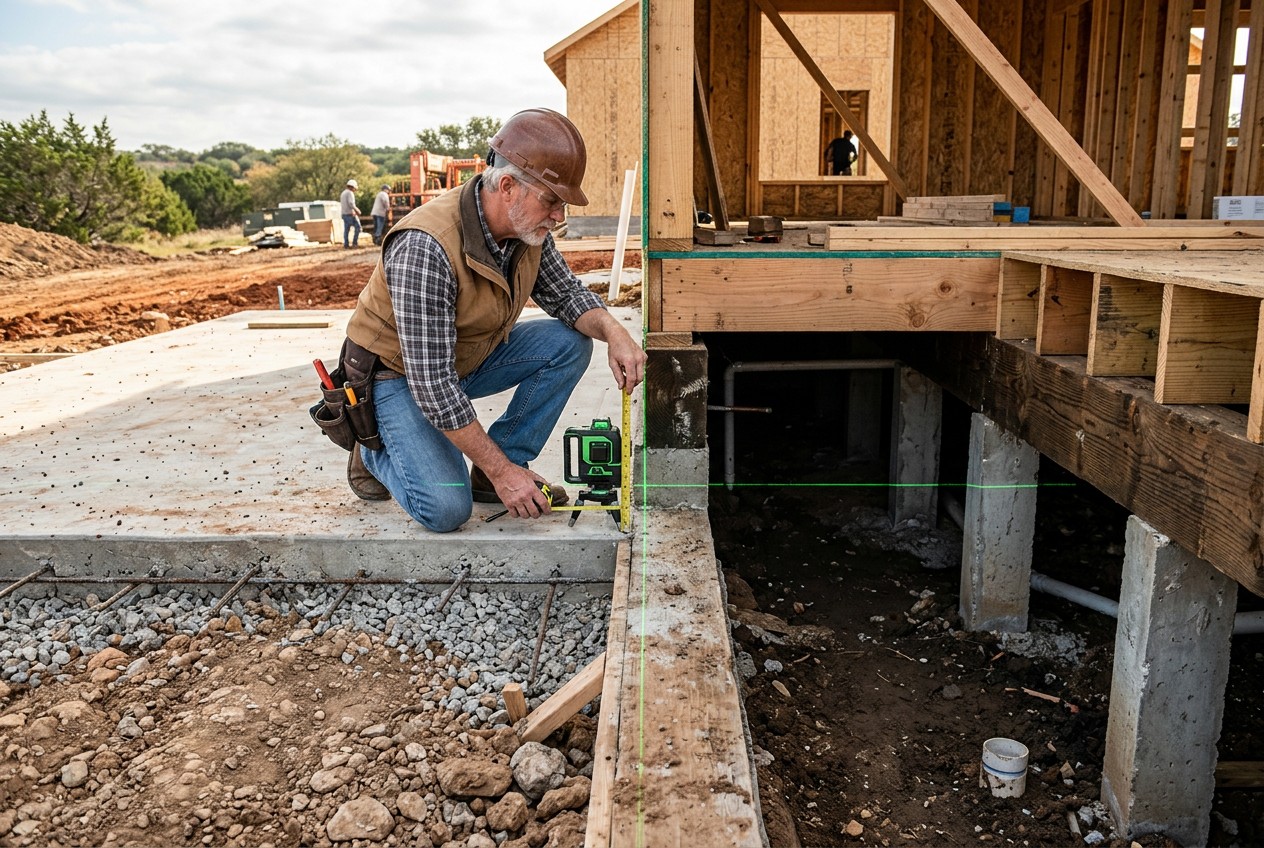
| Foundation type | Typical inspection focus | Typical Texas fee |
|---|---|---|
| Slab-on-grade | Elevation mapping, crack patterns, drainage, and leak indicators | $350-$700 |
| Pier-and-beam | Crawl space, piers, beams, joists, moisture, and ventilation | $500-$1,000 |
These figures are typical Texas ranges, not quotes. Larger homes, travel, unsafe access, or a sealed report can increase the fee.
Slab-on-grade foundation inspection
For a slab-on-grade home, the engineer typically maps interior floor elevations with a laser level and compares high and low readings. The inspection may also cover exterior brick cracks, slab-edge damage, drywall separation, sticking doors, grading, and soil movement around the perimeter.
Unexplained warm flooring, unusually high water bills, or concentrated foundation heave may indicate a plumbing leak. An engineer may recommend separate hydrostatic testing or leak detection because pipes and supporting soil beneath the concrete cannot be directly inspected during a standard visit. Post-tension cables, reinforcement, and underground conditions are also concealed unless specialized testing or records are available.
Pier-and-beam foundation inspection
A pier-and-beam inspection may require entering the crawl space to examine accessible piers, beams, joists, shims, connections, and subfloor materials. The engineer may look for leaning supports, excessive shimming, wood rot, poor ventilation, moisture intrusion, plumbing leaks, or soil erosion.
Low clearance, standing water, pests, stored materials, or unsafe framing can limit access and increase time on site. The engineer may charge more or request that obstructions and hazards be corrected before returning.
For major repairs, obtain an independent structural engineer’s report and 2-3 written estimates. Ask each qualified foundation repair contractor to price the same locations, pier count, materials, exclusions, permits, and warranty terms.
Why Texas Foundations Settle or Heave
Texas foundations can move when the soil beneath one area gains or loses more moisture than the soil elsewhere. This uneven movement may contribute to differential settlement or foundation heave, but visible symptoms alone do not establish the cause.
Expansive clay soil and weather cycles
Expansive clay soil is common in many parts of Texas. During drought, clay loses moisture, shrinks, and may pull away from a slab-on-grade foundation or reduce support beneath individual piers. After heavy rain, the same soil absorbs water and expands.
Repeated shrinking and swelling can create changing pressure beneath the home. Movement may appear as uneven floors, stair-step brick cracks, recurring drywall cracks, or doors that stick seasonally. The location and pattern matter, so an independent structural assessment is more reliable than diagnosing the problem from one crack.
Drainage, grading, and moisture problems
Poor grading can direct runoff toward the foundation instead of away from it. Ponding water, overflowing gutters, short downspouts, and irrigation concentrated in one area may leave some soil wetter than the rest.
Check for water collecting near the slab edge, erosion beside piers, and damp conditions in a crawl space. Inconsistent watering during dry weather can also produce uneven moisture levels. Drainage corrections may help stabilize conditions, but they will not reverse every type of structural movement.
Plumbing leaks beneath or near the foundation
A leaking supply line or drain can saturate soil beneath a slab, contributing to localized heave, loss of support, or erosion. In a pier-and-beam home, leaking pipes may also damage joists, beams, subflooring, and wood supports through moisture intrusion or rot.
Warning signs include unexplained water bills, warm flooring, persistent dampness, musty odors, or movement concentrated near plumbing fixtures. Because an engineer does not usually perform plumbing tests, the report may recommend separate leak detection, hydrostatic testing, or evaluation by a licensed plumber.
Any costs stated in this guide are typical Texas ranges, not quotes. Before authorizing major work, obtain an independent structural engineer’s report and 2-3 written estimates from qualified foundation repair contractors.
Warning Signs and How to Prepare for the Inspection
Signs that warrant prompt evaluation
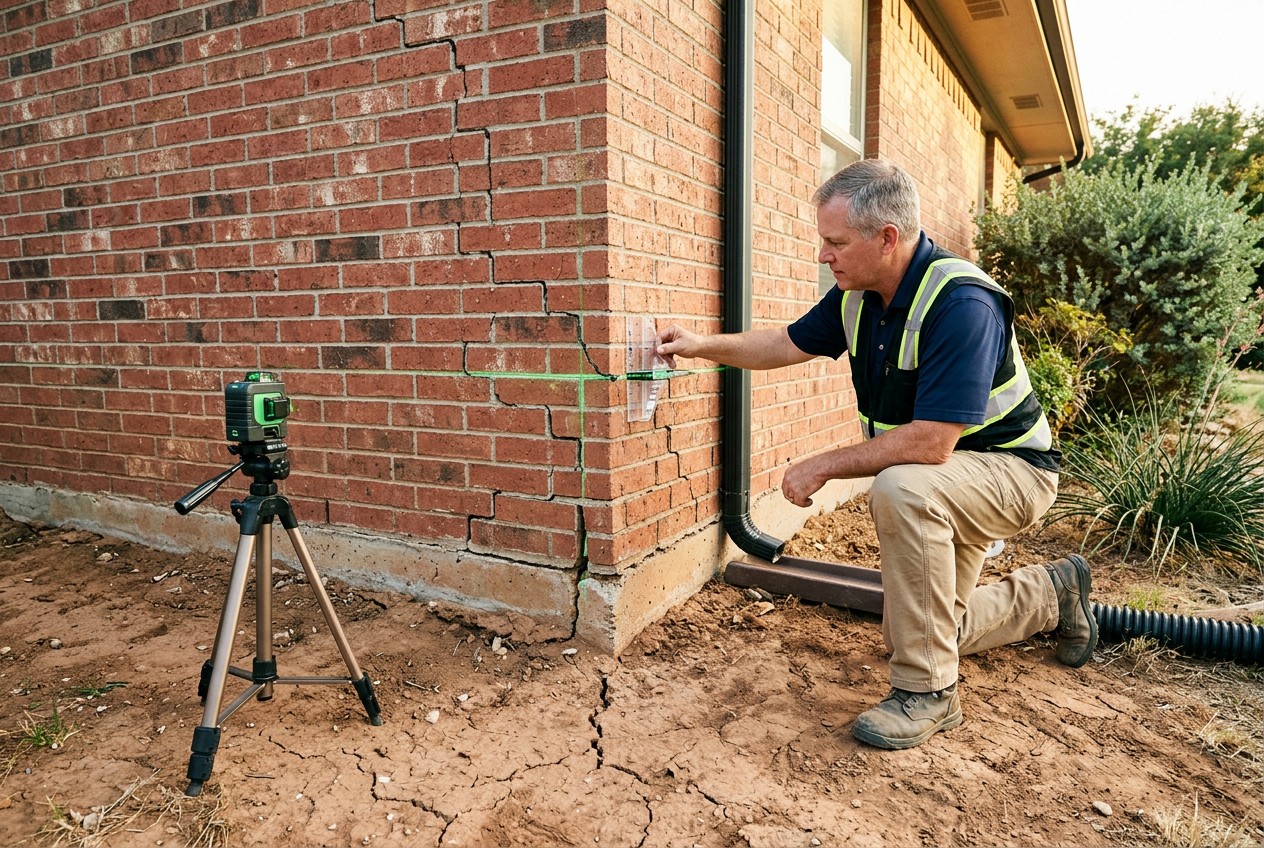
Schedule a professional inspection when you notice a widening foundation crack, stair-step cracking in brick or mortar, recurring drywall cracks, or visible separation around walls, cabinets, windows, or exterior trim. Uneven or sloping floors and doors or windows that suddenly stick can also indicate movement.
One symptom does not confirm foundation failure. Concern increases when several signs appear together, worsen over time, or develop after drought, heavy rain, drainage changes, or a plumbing leak. Rapid movement, significant floor changes, or visibly displaced structural materials deserves prompt evaluation by a licensed professional engineer.
Cosmetic cracks that may be monitored
A small, stable hairline crack in paint, drywall finish, concrete, or mortar is not automatically evidence of structural damage. Normal material shrinkage, temperature changes, and minor settling can affect finishes.
Mark the crack ends lightly with a pencil, record its width, and photograph it beside a ruler. Check it monthly. Seek professional advice if it lengthens, widens, reopens after repair, or appears alongside uneven floors or sticking doors. Only an appropriate professional can assess the specific property and determine whether monitoring, maintenance, or further investigation is reasonable.
What to document before the appointment
Prepare a simple property record for the engineer:
- Take dated photographs of cracks with a ruler or crack-width gauge for scale.
- Note when doors and windows stick, including whether the problem changes seasonally.
- Record recent plumbing leaks, unusually high water bills, warm flooring, or crawl-space moisture.
- Photograph ponding water, overflowing gutters, erosion, and downspout discharge after rain.
- Gather repair invoices, transferable warranties, property surveys, elevation data, and previous engineering reports.
- List when each symptom began and whether it is getting worse.
Any costs discussed in this guide are typical Texas ranges, not property-specific quotes. Before authorizing major work, obtain an independent structural engineer’s report and 2-3 written estimates from qualified foundation repair contractors.
What to Do After Receiving the Engineer’s Report
Compare the report with contractor estimates
- Identify whether the engineer recommends monitoring, drainage correction, plumbing testing, or foundation repair. Do not assume every crack requires piers.
- Obtain 2-3 written estimates from qualified foundation repair contractors.
- Compare each proposal against the engineer’s scope, including repair locations, system type, pier count, target elevations, and sequencing.
- Review assumptions and exclusions. The contract should explain who pays for hidden plumbing damage, deteriorated framing, extra excavation, landscaping removal, or additional piers discovered during work.
If a contractor recommends substantially more or less work than the report, request a written explanation and ask the independent structural engineer to review the difference before proceeding.
How to vet a foundation repair contractor
Verify any contractor registration or license required by the city or local jurisdiction. Texas requirements vary by location and project. Also request:
- A current certificate of general liability insurance
- Proof of workers’ compensation coverage or a written explanation of coverage
- Recent references for similar slab-on-grade or pier-and-beam repairs
- The company’s operating history and complaint record
- The name of the on-site supervisor
- Written details about subcontractors, materials, pier installation, and elevation tolerances
Contact references and ask whether the final price matched the proposal, the crew protected the property, and warranty service was responsive. Treat verbal promises as unenforceable project details unless they are added to the signed agreement.
Permits, warranties, and final verification
Confirm who will obtain local permits and provide required engineering documents. The contract should state the payment schedule, start and completion expectations, cleanup responsibilities, landscaping exclusions, and procedures for approving change orders. Avoid paying the full amount before the work is completed and documented.
Read the repair warranty carefully. Check its duration, transfer requirements, service fees, exclusions, adjustment limits, and whether the company or a separate warranty provider is responsible.
Ask whether post-repair floor elevation measurements and an engineer reinspection are recommended. A reinspection may typically cost $200-$500 in Texas, but this is a general Texas range, not a quote. Major proposed work should be supported by an independent structural engineer’s report and 2-3 written contractor estimates.
Frequently Asked Questions About Texas Foundation Inspections
Is a free foundation inspection the same as an engineer inspection?
No. A free evaluation is usually performed by a foundation repair contractor and may lead to a repair proposal. A paid inspection from an independent, licensed professional engineer is intended to provide an objective structural assessment without a financial interest in selling repairs.
Ask who performs the inspection, what measurements are taken, and whether you will receive floor elevation data, photographs, recommendations, or a sealed written report.
Do I need a sealed engineer report before foundation repair?
Requirements depend on the repair scope and local jurisdiction. A sealed engineer report may be valuable for major repairs, permit applications, real estate transactions, and comparing contractor proposals. It can define repair locations, pier counts, monitoring recommendations, or other specifications.
Confirm whether the quoted fee includes a signed or sealed report. A typical Texas foundation inspection costs $350-$1,000, but this is a general Texas range, not a property-specific quote.
How many inspection or repair estimates should I get?
Confirm the engineer’s inspection scope and deliverables in writing before scheduling the visit. For major foundation work, obtain an independent structural engineer’s report and 2-3 written estimates from qualified contractors.
Compare the same repair scope across every proposal, including system type, pier count, permits, exclusions, payment terms, insurance, and transferable warranty conditions. Do not compare price alone.
Structural safety: This guide provides general information and cannot determine whether a specific building is safe. If you observe sudden movement, collapsing or displaced materials, major wall separation, unusual structural noises, or blocked exits, leave the affected area and contact emergency services or the local building authority.
Crawl-space safety: Do not enter a crawl space that is flooded, contaminated, poorly ventilated, electrically hazardous, pest-infested, visibly unstable, or too confined for safe access. Have qualified professionals evaluate hazardous or inaccessible areas.
Permits and professional requirements vary by project and jurisdiction. Confirm current permit, engineering, contractor-registration, and inspection requirements with the applicable local authority before work begins.