What is a foundation repair warranty?
The foundation repair warranty documents reviewed for this guide tie their promises to specified repair work. They generally promise adjustment or re-shimming of affected piers or pilings installed by that contractor. They do not promise to correct every future defect or movement anywhere in the foundation.
Read the signed contract and warranty certificate for the stated covered work, service trigger, remedy, exclusions, fees, and property-owner responsibilities. This guide is informational and is not structural-engineering or legal advice.
What “limited lifetime” means
“Lifetime” does not necessarily mean the homeowner’s lifetime or unlimited coverage.
The Advanced Foundation Repair form refers to adjustments during the life of the home. The W.C.K. certificate covers adjustable drilled piers for the life of the repaired structure. StrucSure describes a separate insurance-backed warranty with a fixed 10-year term.
Even a limited lifetime warranty may apply only to covered piers. It may also contain a settlement threshold, drainage duties, access costs, transfer conditions, service-call fees, and exclusions.
What foundation repair warranties may cover
The reviewed provider documents identify steel piers, helical piers, pressed concrete pilings, adjustable drilled piers, and named piling systems. Confirm that the support named on your proposal matches the support identified in the warranty.
Granite Foundation Repair states that portions directly supported by its piers or pilings may qualify for adjustment if further settlement meets its terms. It also states that other foundation areas are not warranted.
Dura Pier similarly limits its remedy to readjustment of pilings it installed. Its document warns that when partial underpinning leaves other perimeter or interior areas unsupported by the repaired pilings, later settlement in those other areas is not covered.
Pier adjustments and settlement thresholds
Granite defines settlement as one-half inch across 15 feet. The reviewed W.C.K. excerpt refers to resettlement of the repaired foundation and promises adjustment and re-shimming of affected piers.
Read the measurement language carefully. Identify:
- The baseline used to evaluate movement
- The covered pier locations
- The stated settlement threshold, if any
- Who determines whether the threshold has been met
- Whether the remedy is adjustment, re-shimming, repair, or replacement
A no-charge pier adjustment may not make the entire claim free. W.C.K. assigns the owner responsibility for moving anything that blocks access, including floor coverings above interior piers. Dura Pier excludes tunnels and removal or replacement of floor or ground covering from its no-cost readjustment promise.
Slab foundation and pier-and-beam foundation terms
The reviewed forms do not establish one universal warranty for every slab foundation or pier-and-beam foundation.
| Warranty question | Slab foundation review | Pier-and-beam foundation review |
|---|---|---|
| Covered area | Confirm which piers or pilings are listed in the signed warranty. Do not infer coverage for the entire slab from a promise covering specified supports. | Confirm which supports, repaired areas, and shimming work are listed. |
| Remedy | Look for the exact adjustment or readjustment promise and any settlement threshold. | Ask whether support adjustment and re-shimming are treated as separate services. |
| Drainage | Review water, drainage, runoff, soil-moisture, and ponding provisions. | Granite’s published terms warrant drainage and shimming of pier-and-beam work for one year. This is one provider’s term, not a universal period. |
| Access | Check responsibility for tunnels, flooring, ground covering, and objects blocking pier access. | Ask who must provide crawl-space or other access and remove obstructions. |
| Duration | Apply the stated term only to the supports or work named in the document. | Do not infer the duration of shimming or drainage coverage from a longer pier warranty. |
A line-by-line warranty checklist
Read the warranty together with the written contract and proposal. The Federal Trade Commission recommends checking the coverage period, exclusions, remedy, claim contact, and service costs.
-
Covered work: Identify every covered pier, piling, support, or repaired area. Compare the wording across the proposal, contract, and warranty certificate.
-
Service trigger: Find the definition of settlement or resettlement and any required measurement threshold.
-
Remedy: Determine whether the contractor promises adjustment, re-shimming, repair, replacement, or another response.
-
Workmanship and materials: Ask whether the document separately provides workmanship coverage or materials coverage. Do not infer either from a pier-adjustment promise.
-
Exclusions: Review soil, water, plumbing, excavation, structural-change, third-party work, and consequential damage clauses.
-
Access costs: Establish who pays for tunnels, floor or ground-covering removal, moving obstructions, and restoration required to reach covered piers.
-
Other services: Ask whether engineering reports, plumbing tests, permits, drainage work, and related services are included. Granite lists certain reports, post-repair plumbing tests, and city permits as work not warranted unless stated elsewhere.
-
Fees: Identify every service-call fee and warranty transfer fee, including provisions allowing fees to change.
-
Transfer rules: Locate the warranty transfer form, transfer deadline, required signatures, payment instructions, and acceptance procedure.
-
Claims and disputes: Record the claim contact, notice method, required documents, decision process, and any binding arbitration provision.
Keep every promise in the written contract. Save the signed warranty, receipt, contract, invoices, transfer documents, and contractor correspondence.
Soil, water, plumbing, and maintenance exclusions
Granite’s terms exclude soil upheaval, soil undermining, earthquakes, and water damage. They also identify failure to maintain drainage and soil moisture, and failure to test and correct plumbing leaks after lifting, as conditions that can void coverage.
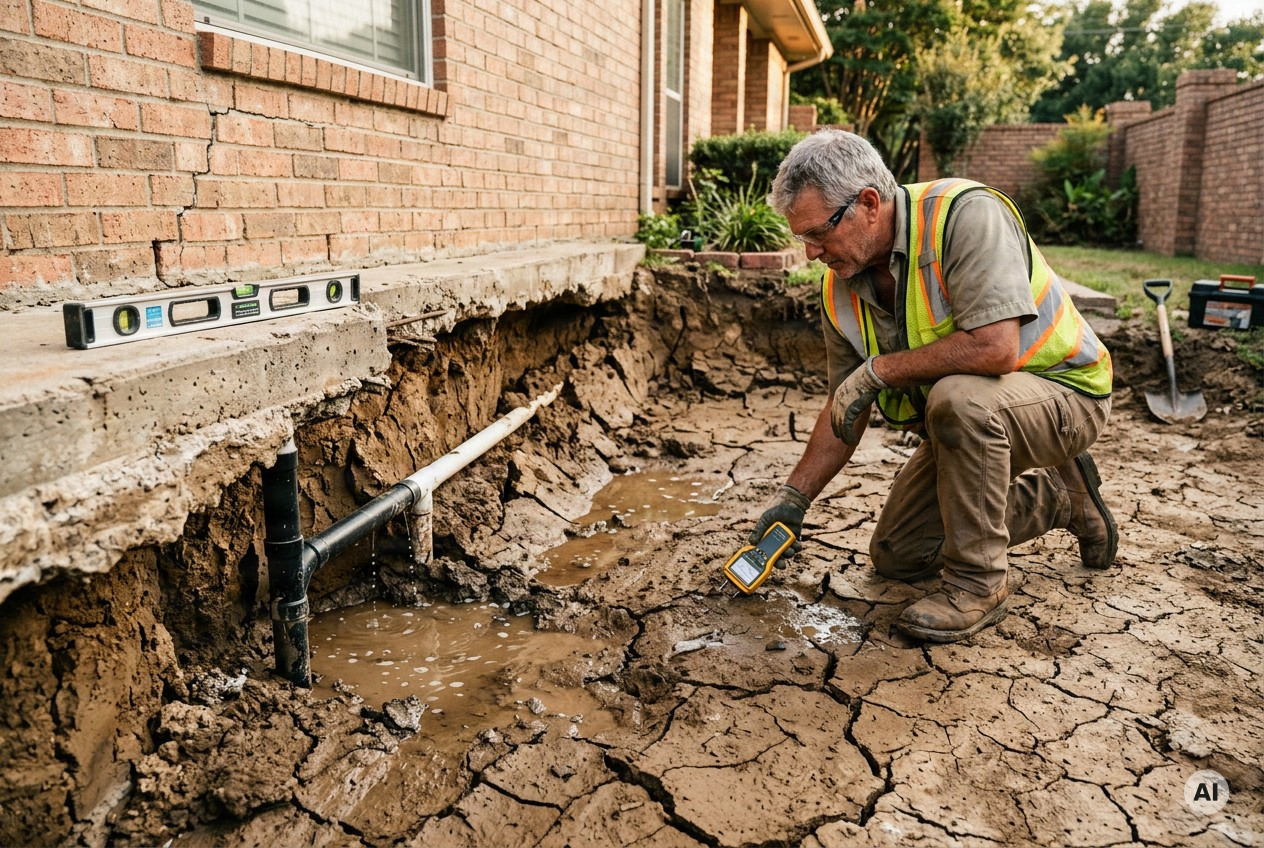
W.C.K. makes the property owner responsible for adequate foundation drainage and runoff and for avoiding ponding near the foundation. Other reviewed terms exclude certain excavation, load-bearing changes, third-party damage, and adjustment or alteration by another contractor.
The reviewed excerpts do not specifically explain expansive clay soil or establish how its movement affects a claim. If a proposal mentions expansive clay soil, grading, shrinkage, or swelling, require the contractor to explain in writing how those terms relate to the warranty’s soil upheaval, soil-moisture, drainage, runoff, ponding, and water exclusions.
Maintain one claim file containing relevant drainage and plumbing invoices, test results, dated photographs, repair receipts, measurements, reports, and written communications. These records can help show what maintenance or testing occurred, although the warranty still controls what evidence the contractor requires.
How a transferable warranty works
A transferable warranty may require action after a sale. It should not be treated as automatic without checking the certificate.
The Advanced form requires the seller or buyer to submit its warranty transfer form within 30 days of the sale. It states that a late transfer voids the warranty. Granite requires proper transfer within 30 days of title transfer. W.C.K. describes its certificate as fully transferable without giving the same procedure in the reviewed excerpt. Dura Pier allows transfer provided no major load-bearing changes have occurred.
Before closing, buyers and sellers should gather:
- The original written contract and invoices
- The warranty certificate
- The required transfer form
- Instructions for any transfer fee
- Available repair and measurement records
- Written confirmation that the contractor accepted the transfer
Check when the stated deadline begins, who must sign, where the form must be sent, and whether payment is required. Keep proof of delivery and copies of the submission.
Contractor-backed and insurance-backed warranties
A contractor-backed warranty depends on the named contractor performing the promised service. Ask in writing how claims will be handled if the company closes, changes ownership, defaults, or cannot perform.
StrucSure describes an insurance-backed 10-year foundation repair warranty underwritten by Golden Insurance Company, ARRG. Its stated purpose is to ensure performance if the repair contractor defaults or cannot perform warranty obligations. The program is transferable within its 10-year term and includes third-party arbitration.
For an insurance-backed warranty, verify the named insurer, term, liability limit, claim contact, transfer conditions, exclusions, and circumstances that activate the third-party protection.
How to file a warranty claim
Build the claim around the signed warranty rather than a general expectation about foundation repair.
-
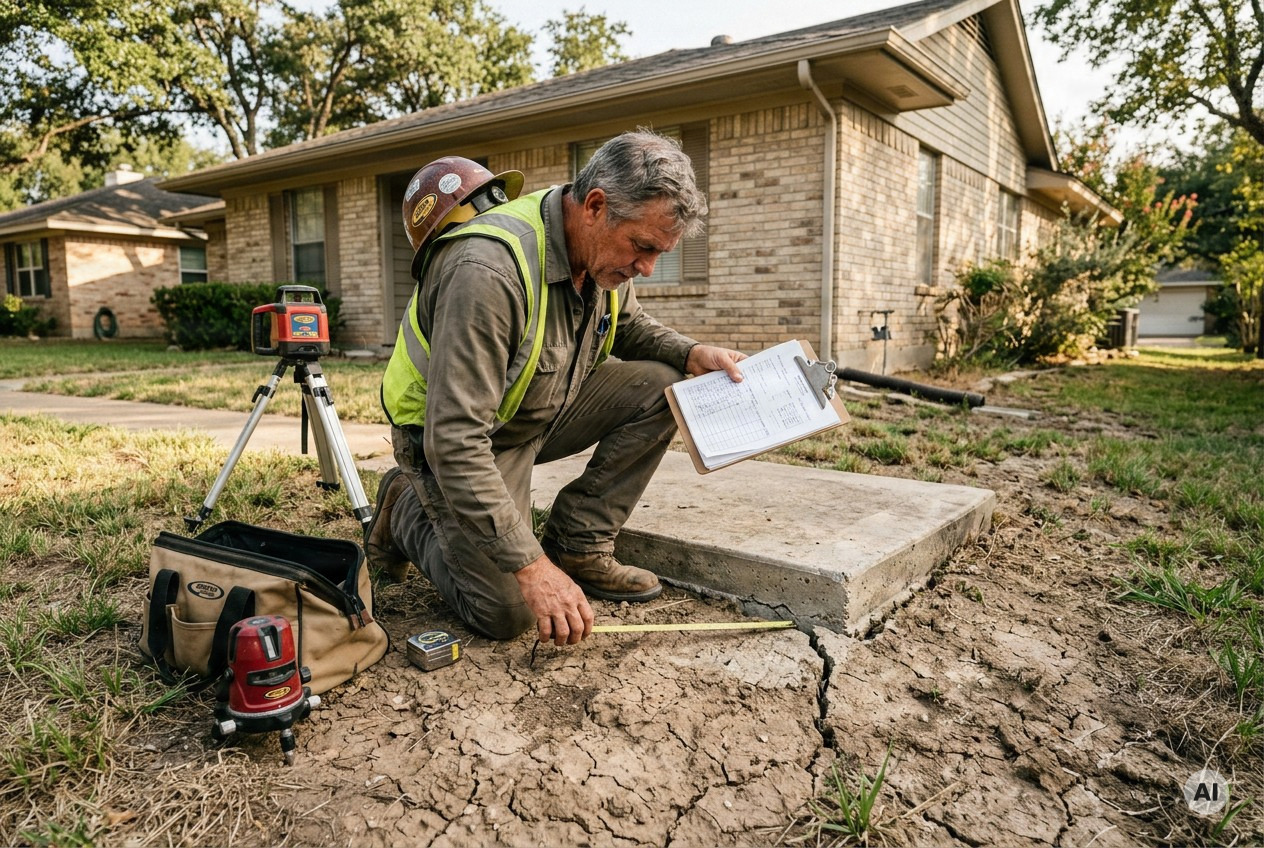
Review the certificate and contract. Mark the covered supports, service trigger, exclusions, fees, and claim contact.
-
Gather the records requested by the warranty, along with relevant photographs, receipts, maintenance records, measurements, tests, and communications.
-
Send written notice to the designated contact. Describe the reported condition and its location. Use a delivery method that proves receipt.
-
Confirm any service-call fee and access requirement before the inspection.
-
Keep a written record of the contractor’s measurements and observations.
-
Request the decision, supporting findings, remedy, and proposed schedule in writing.
If the claim is denied, ask which clause supports the denial, what measurements were used, whether the location falls outside the covered area, and which exclusion applies. Also ask what evidence would support another review and whether the agreement provides another inspection or arbitration process.
Do not allow another contractor to adjust covered supports before reviewing the warranty. Advanced and Dura Pier state that alteration, adjustment, or tampering by another party can void coverage.
Vetting a Texas foundation repair contractor
The Texas Attorney General recommends getting more than one detailed written bid, seeking references, speaking with satisfied customers, and inspecting completed work when a customer permits it.
For any work requiring a state-licensed trade, contact the responsible licensing agency to check credentials and ask about complaints. Ask the relevant local or state authority which contractor registration, permit, or licensing requirements apply to the proposed work.
A contractor review can also address:
- References and completed projects
- Complaint history
- Record of handling warranty claims
- Applicable local contractor registration
- Proof of insurance and what the document covers
- Written repair scope and materials
- Start and completion dates
- Access work and owner responsibilities
- Warranty service if the business changes ownership
Put every promise in the contract and retain copies when you sign.
Fees and repair-related costs
The source documents do not provide typical Texas market ranges for inspections, structural engineer reports, piers, plumbing tests, tunneling, or complete repairs. Any such range would therefore be unsupported by these sources.
They do provide specific contract examples, not market averages or quotes. The Advanced form states a $250 transfer charge and a $75 warranty service-call fee, with adjustments tied to changes in the consumer price index after January 1, 2020.
The reviewed terms treat repair-related items differently. Granite lists pre- and post-repair engineer reports, post-repair plumbing tests, and city permits as work not warranted unless stated elsewhere. W.C.K. makes the property owner responsible for moving anything that blocks access to pier locations, including floor coverings over interior piers. Dura Pier excludes tunnels and removal or replacement of floor or ground covering from its no-cost readjustment promise. Ask whether landscaping or restoration is included before accepting a proposal.
Compare more than one written bid and require each bidder to separate the repair price from access, testing, reporting, permitting, drainage, and restoration charges.
Repair warranty, homeowners insurance, and home warranty
A contractor’s foundation repair warranty addresses the work defined in its terms.
Homeowners insurance pays for damage caused by events covered by the policy, such as fire or theft, but not wear and tear. A home warranty may cover listed household items that fail through normal wear, depending on its terms.
A new-home structural warranty, if one exists for the property, should be reviewed as its own document. Do not assume that a contractor repair warranty, homeowners insurance policy, home warranty, or separate structural warranty provides the same remedy.
Foundation repair warranty FAQ
Does a lifetime warranty cover the whole foundation?
Not necessarily. The reviewed warranties may cover only contractor-installed piers or pilings and the areas directly supported by them. Other foundation areas may remain outside the warranty.
Does a no-charge adjustment mean the claim costs nothing?
Not always. The adjustment may be free while the owner remains responsible for a service-call fee, tunnels, flooring, ground covering, or other access work.
Does a transferable warranty move automatically?
Not under every reviewed form. Some require a transfer form, fee, and submission within 30 days. Other certificates use different conditions. Follow the signed document.
What matters most before signing?
Confirm the covered supports, settlement threshold, remedy, exclusions, drainage and plumbing duties, access costs, fees, transfer procedure, claim steps, and dispute terms. Keep all verbal promises in writing.
Sources reviewed
The provider documents below are examples of their own terms, not universal industry standards:
- Texas Attorney General - How to Avoid Home Improvement Scams
- Federal Trade Commission - Warranties
- Texas Department of Insurance - A Home Warranty Is Not Home Insurance
- Advanced Foundation Repair Warranty Form
- Granite Foundation Repair Warranty Terms
- W.C.K. Lifetime Warranty Certificate
- Dura Pier Lifetime Transferable Warranty
- StrucSure Foundation Repair Warranty Program