Warning Signs Your Texas Home Has a Foundation Problem
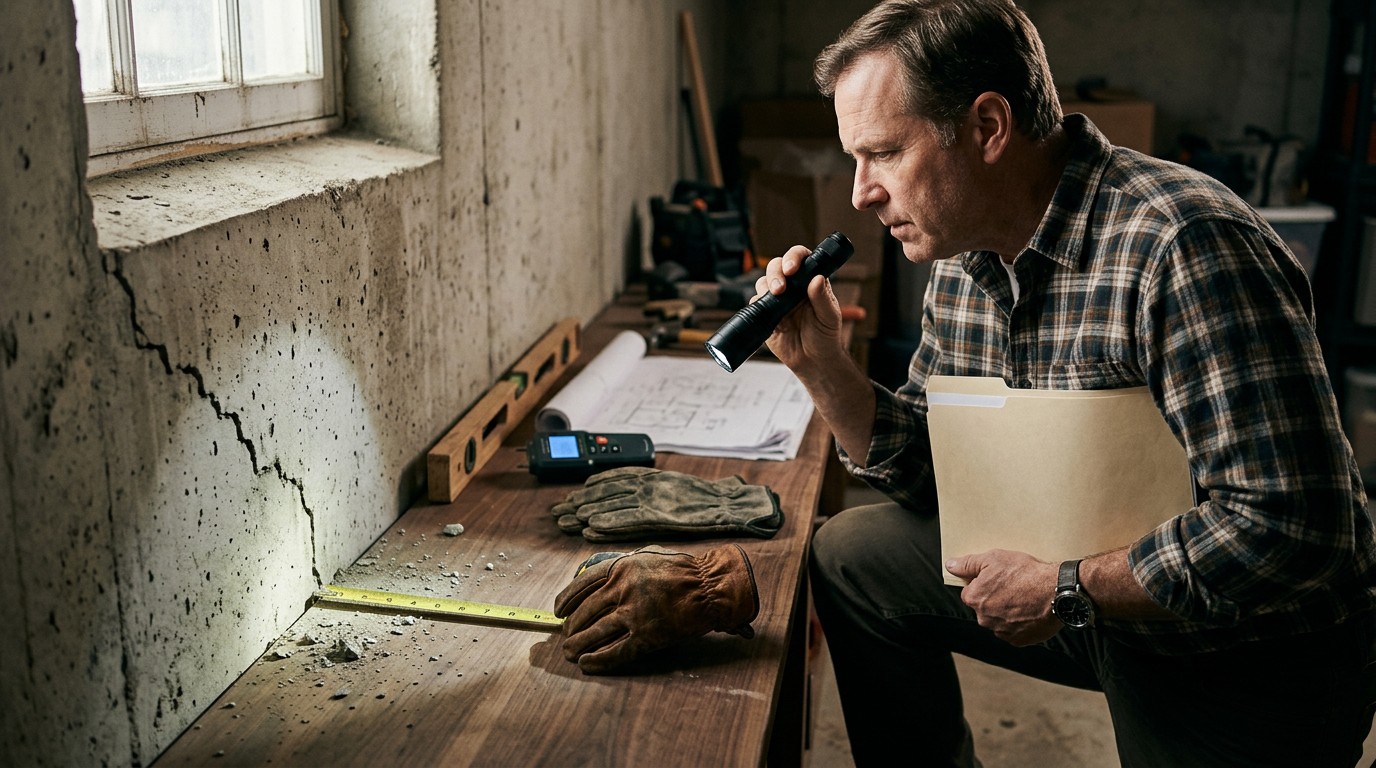
Sticking doors, diagonal cracks near openings, floor changes, and gaps are observations homeowners often notice. They can have foundation, framing, finish, humidity, plumbing, or other causes, so document progression and related evidence before selecting a repair.
Other signs worth taking seriously:
- Cracks in interior drywall, especially diagonal ones at door and window corners
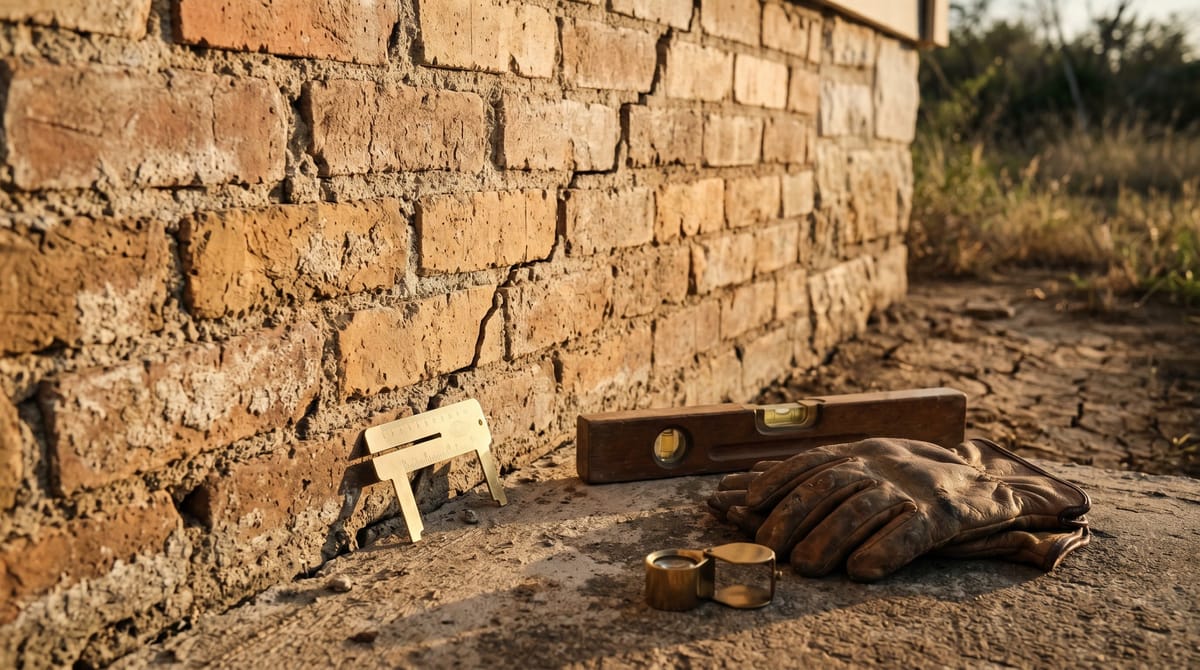
- Exterior brick cracks, often stair-stepping along mortar joints
- Windows that stick or won’t close flush
- Gaps appearing between walls and the ceiling or floor
- Doors that swing open or closed on their own
Not every crack is a structural emergency. Width helps document a crack but does not identify its cause; rapid change, displacement, water entry, or several related symptoms deserve closer evaluation.
Expansive clay occurs in parts of Texas and can change volume with moisture, but soil is only one input. Fill, drainage, plumbing, vegetation, construction, and previous work also matter.
Before asking companies to bid, decide whether you need an independent evaluation using the foundation inspection scope guide. Once the same repair basis is available to every bidder, use the foundation repair cost guide to normalize units and exclusions rather than comparing headline totals.
Why Site Conditions Matter in Texas
Expansive clay occurs in parts of Texas and can change volume as moisture conditions change, but a regional soil label does not diagnose an individual property. Soil profiles, fill, drainage, plumbing, vegetation, shade, construction, and previous work can differ within the same neighborhood.
Moisture changes may contribute to uneven movement at some homes, while other symptoms have different or multiple causes. Treat season, city, and soil-map descriptions as context to investigate - not proof that a foundation is moving or that a particular repair is required.
Slab Foundations: What Goes Wrong and Why
Texas slab foundations include conventional and post-tensioned systems. Soil-moisture change may contribute to movement at some sites, while fill, plumbing, drainage, loads, design, and construction can also matter. Direct inspection is needed to distinguish these possibilities.
What you see inside: diagonal cracks at window and door corners, floors that slope noticeably toward one end of the house, and gaps along baseboards. What you see outside: stepped cracks in brick mortar, or cracks running vertically through the slab itself at the perimeter edge.
Pier-and-Beam Foundations: Different Problem, Different Fix
Pier-and-beam systems support framed floors over a crawl space using beams and piers or posts. Age and neighborhood are clues, but records and inspection should confirm the foundation because additions can use mixed construction.
Low clearance, moisture, pests, utilities, framing, footings, soil, and drainage can affect a pier-and-beam scope. Require bidders to separate limited shimming or releveling from framing, footing, pest, drainage, or new-support work in the written scope.
How to Verify a Foundation Repair Contractor in Texas
Texas does not issue one universal TDLR specialty license for general foundation-repair contractors. Verification therefore starts with the exact scope and location rather than a nonexistent statewide credential.
Check the legal business name, physical contact information, service history, current insurance, and any city registration or permit requirements. Verify trade-specific credentials when the proposal includes regulated engineering, plumbing, electrical, or other work. A person offering professional engineering services should be checked in the Texas Board of Professional Engineers and Land Surveyors roster.
Search the company name with terms such as “complaint” and “lawsuit,” read reviews critically, and ask for recent references for comparable work. These checks do not guarantee performance, but they can reveal identity mismatches, unresolved patterns, or claims that need clarification.
Insurance Requirements to Ask About Before Signing
Ask for a current certificate of general liability insurance and the contractor’s written explanation of worker-injury coverage. Policy terms, exclusions, limits, and who is insured matter; a certificate alone does not change the policy.
When possible, confirm coverage with the named agent or carrier using independently obtained contact information. Ask how subcontractors are covered and have the contract assign responsibility for property damage, utility strikes, worker safety, permits, and cleanup. Foundation Compass does not prescribe a universal dollar limit because project size and risk differ.
Contractor Evaluations and Independent Engineering
Some foundation repair companies offer no-charge evaluations. These can provide measurements, a proposed method, and pricing, but they are contractor proposals rather than independent engineering. Ask who performed the inspection, what credentials apply, and what the document is intended to establish.

A contractor evaluation can explain the repair the company recommends and its price. When the diagnosis, urgency, or alternatives need third-party review, an independent structural engineer may provide a separate assessment; confirm the scope of that engagement.
When an independent structural engineer may help
Request an independent engineer’s fee directly and confirm whether it includes observations, elevations, diagnosis, monitoring, repair criteria, or a final design. Independent review may be useful when:
- Symptoms are significant or progressing and a structural assessment is needed
- A purchase or sale involves known or suspected movement and the parties want third-party evidence
- Contractor scopes conflict materially on cause, method, or support locations
An engineer’s deliverable and a contractor proposal serve different purposes. Do not assume every engineering visit supplies diagnosis or repair design, and do not use a universal dollar threshold to decide when engineering is required.
Foundation Repair Methods and Bid-Normalization Questions
Foundation proposals may include structural support, slab lifting, plumbing, drainage, framing, or monitoring. Understanding each line item helps compare bids, but it does not replace verified credentials or a site-specific diagnosis.
Foundation Compass does not publish method prices without a representative observed-bid dataset. Compare written scopes covering the same measured work.
Pier Installation: Helical Piers vs Push Piers
Some slab-repair designs use steel push or helical piers. There is no generic support count; locations and whether lifting is appropriate depend on the structure, loads, subsurface conditions, access, and design. Compare unit prices only after those locations and the system specification are equivalent.
The two main types are helical piers and push piers, and a contractor may propose either - sometimes both on the same job.
Helical piers are rotated into the ground, while push piers are hydraulically advanced using the structure as reaction weight. System, shaft or helix configuration, brackets, depth or termination, capacity verification, equipment access, and load requirements determine suitability.
If a contractor proposes one system, ask for the structural and subsurface basis, design load, component configuration, installation or termination record, and warranty. A claim that one system fits every site deserves further review.
Mudjacking and Drainage Correction
Mudjacking uses a cementitious slurry for suitable slab-lifting applications. If quoted by area, require the measured area, material, hole pattern, void findings, lifting objective, structural role, slab condition, drainage, load, surface restoration, and expected performance.
Drainage correction is where homeowners often get surprised by a separate line item - and it’s the one most worth understanding before you sign anything.
Poor drainage can contribute to uneven moisture, but it is one hypothesis among soil, fill, plumbing, vegetation, grading, and construction details. A structural repair does not automatically require drainage work, and drainage work does not guarantee that movement will stop.
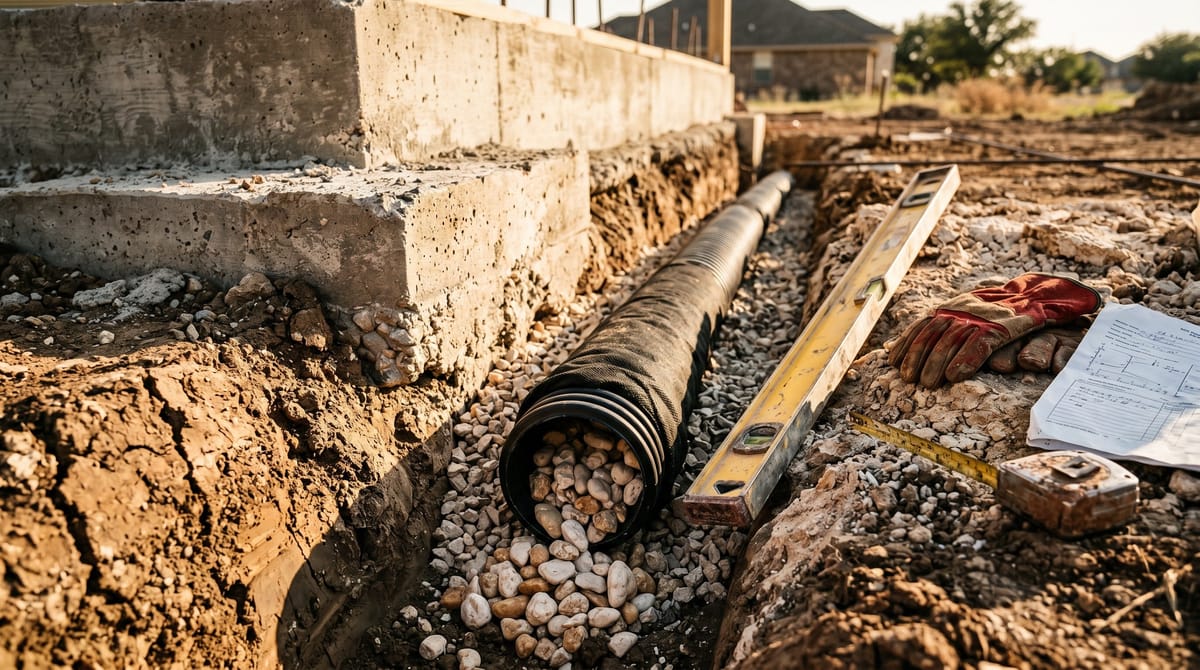
Drainage correction may include grading, roof-water routing, surface collection, or subsurface drainage when a measured water path and safe outlet support it. Ask for elevations, route, outlet, quantities, material, utility conflicts, erosion control, permits, restoration, and maintenance in writing; do not add drainage work without diagnosis.
Red Flags to Watch for in the Texas Foundation Repair Market
Clear scopes, verifiable credentials, reasonable review time, and written terms make contractor proposals easier to compare.

Vague credentials or permit responsibility. Texas does not use one TDLR foundation-repair specialty license for every contractor. Verify the business, insurance, applicable local registration, permits, and any trade-specific licenses required for engineering, plumbing, electrical, or other regulated work.
High-pressure close after an inspection. A same-day discount can interfere with comparison. Ask the evaluator to identify any immediate safety condition in writing; absent an emergency, take reasonable time to review the scope, warranty, and another proposal.
Verbal estimates or vague written scopes. “We’ll take care of it” is not a contract. Before you sign anything, the estimate should list the number of piers, the method, the material specs, access points, and what’s excluded. If a plumbing inspection after pier installation isn’t mentioned, ask whether it’s included - pier work can shift plumbing lines, and you don’t want to find that out after the crew leaves.
Unclear warranty transfer terms. Duration, covered adjustments, service fees, exclusions, responsible entity, and transfer steps all affect value. Do not assume that a “lifetime” or transferable label predicts negotiations.
Warranties, Disclosures, and the Impact on Your Home Sale
Disclosure duties and exemptions depend on the transaction and current law. Use the applicable Texas form and qualified real-estate or legal guidance, and keep inspection, engineering, permit, elevation, repair, plumbing, and warranty records.
A transferable warranty may provide continuing contractual rights, but transfer procedures, exclusions, fees, company continuity, and covered work matter. It does not guarantee buyer preference, sale price, insurability, or future performance.
Not all warranties are equal. Before signing any contract, ask:
- How many years does the warranty cover?
- Does it transfer automatically to a new buyer, or does the new owner need to register?
- What voids it - and is “lack of drainage maintenance” buried in the exclusions?
- Is the company financially stable enough to honor it in 7 years?
Do not rely on verbal warranty summaries. Ask for the complete written warranty before signing and compare it with the contract, including exclusions, adjustment fees, transfer steps, and the responsible legal entity.
A written estimate should also list the repair method, support locations or quantities, materials, exclusions, and included closeout documents. That paper trail helps the parties evaluate the work later, but does not determine disclosure duties or a sale outcome.
FAQ: Foundation Repair Contractors in Texas
How much does foundation repair cost in Texas? Foundation Compass does not publish a statewide or city repair-price range. Compare written scopes using the same measured work, system, support locations, quantities, acceptance criteria, access, engineering role, associated work, restoration, exclusions, and warranty.
Do I need a permit for foundation repair in Texas? Requirements, exemptions, applications, and responsible parties vary by city, address, and scope. Verify the current rule with the authority having jurisdiction and state permit and inspection responsibility in the contract.
Can I sell a house with foundation issues? A sale is possible, but disclosure duties and exemptions depend on the transaction and current law. Use the applicable form and qualified guidance. Records and exact warranty terms help a buyer evaluate the work but do not promise a negotiation outcome.
How long does foundation repair take? Duration depends on support count, access, excavation or tunneling, inspections, plumbing risk, lifting, restoration, weather, and follow-up. Ask for a project-specific schedule that distinguishes active installation from the full job.
What voids a foundation warranty? Exclusions vary by contract and may address drainage, plumbing, alterations, maintenance, access, ownership transfer, or service fees. Read the actual warranty before signing and ask for ambiguous terms to be clarified in writing.
This article is for general informational purposes only and does not constitute legal advice. Texas seller disclosure requirements, permit obligations, and contractor licensing rules may vary by municipality and transaction type. Consult a licensed real estate attorney or agent for guidance specific to your situation.
Foundation Compass does not publish repair-price ranges without a representative observed-bid dataset. Actual costs depend on site conditions and scope; obtain written estimates before committing.