Most Texas foundation contractors offer free or low-cost inspections, but many homeowners aren’t sure what to expect from the process — or how to tell a thorough inspection from a cursory one. Here’s what a professional inspection should cover, and what the findings mean.
Before the Inspector Arrives
Gather any information you have about the home’s history:
- Prior foundation repair records or warranties (these are especially important — they tell the contractor what’s already been done and where)
- Any engineer reports from a prior purchase or refinance
- Notes on when symptoms (cracking, sticking doors) first appeared and whether they’ve changed
Also do a quick walk-through before the appointment. Note the locations of cracks, sticking doors, gaps, and any areas where floors seem to slope. You’ll be more useful to the inspector if you can point out what you’ve observed.
What the Inspector Will Do
1. Exterior perimeter walk
The inspector walks the full perimeter of the home, examining:
- Brick or stone veneer for stair-step cracks, separation at mortar joints, or bulging
- Foundation perimeter at grade for visible cracks, spalling, or gaps between the slab edge and the soil
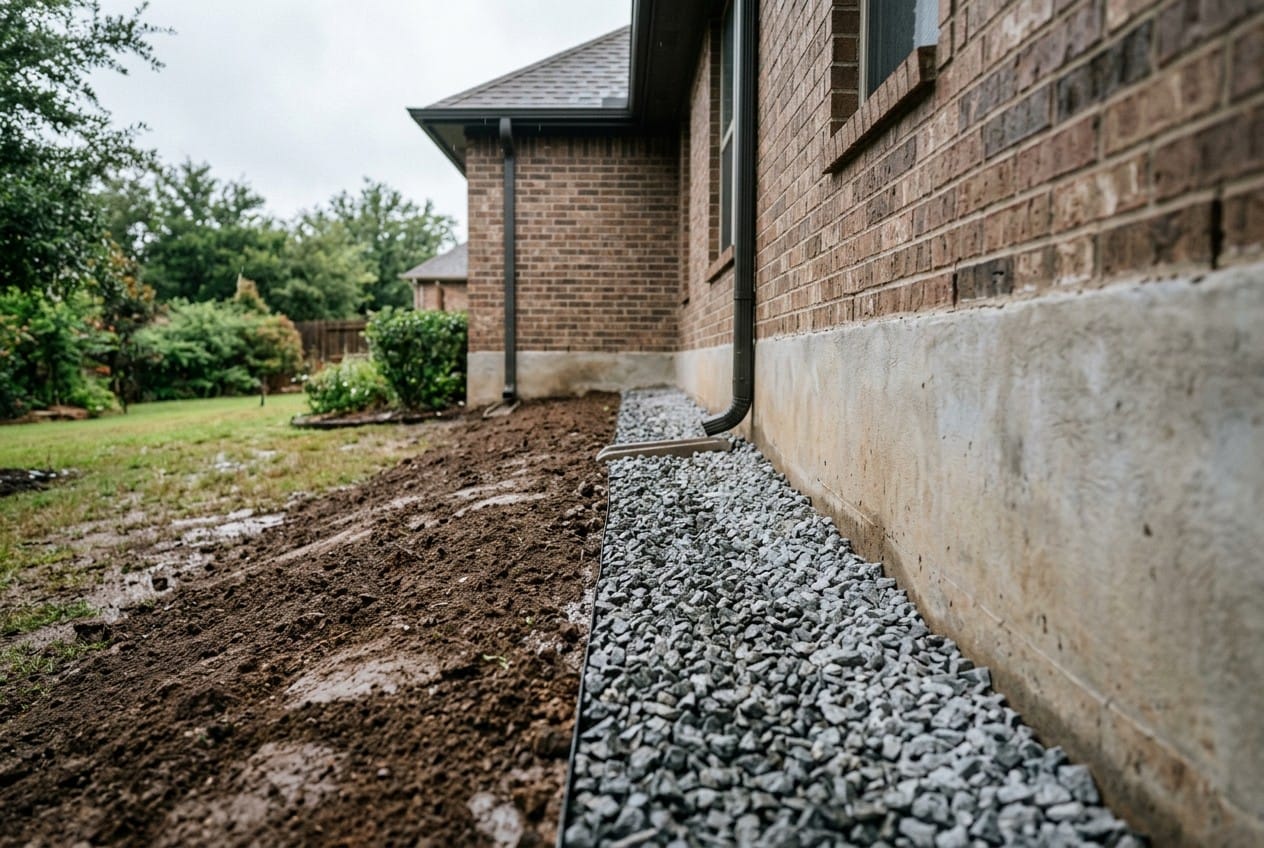
- Drainage patterns: does water drain away from the house, or does the grade direct it toward the foundation?
- Downspout termination points and any signs of soil erosion or saturation near the foundation
This exterior assessment tells the inspector a lot about where moisture is entering the soil-foundation interface and where differential movement is most likely occurring.
2. Interior elevation survey
This is the core diagnostic tool. Using a digital level (or a manometer — a water-level tube used by many experienced contractors), the inspector measures floor heights at numerous points throughout the home — typically every 6–10 feet in a grid pattern.
The resulting elevation map shows:
- The high point of the slab (or floor system)
- The low points where settlement has occurred
- The degree of differential — how many inches separate the highest and lowest points
In Texas, a differential of under 1 inch is generally considered within normal tolerance. Differentials of 1–2 inches often prompt watchful waiting or minor remediation. Above 2–3 inches is typically where active repair is recommended, though this depends on the pattern and rate of movement.
3. Interior walk-through
The inspector examines each room for:
- Diagonal cracks at window and door corners
- Cracks at ceiling-wall or floor-wall junctions
- Doors or windows that stick, don’t latch, or have visible daylight gaps
- Any visible floor slope or spring
They’ll also look at interior walls for signs of lateral movement or shear — long diagonal cracks running across an open wall surface rather than from a door corner.
4. Crawl space assessment (pier-and-beam homes)
For pier-and-beam homes, the inspection includes a crawl space evaluation:
- Condition of wood beams, joists, and sills (looking for rot, pest damage, or excessive moisture)
- Individual pier condition — are piers plumb, settled, or cracked?
- Moisture levels and whether a vapor barrier is present and intact
- Evidence of standing water or excessive humidity
5. The inspector’s report and recommendation
A professional inspector will summarize what they found, including the elevation survey results, and give you a recommendation. This typically falls into one of several categories:
- Monitor and maintain: No active repair needed; re-inspect in 6–12 months and focus on drainage maintenance
- Drainage correction only: The movement is early-stage and improving drainage may slow or stop it
- Pier installation recommended: Specific number, type, and locations proposed
- Refer to a structural engineer: Complex cases where independent verification is warranted
Always ask the inspector to show you the elevation readings and walk you through their logic. A good inspector explains the “why” behind their recommendation rather than just presenting a proposal.
One Important Caveat
A contractor’s inspection is free because the contractor hopes to sell you repair services. This creates no problem when the contractor is ethical and the recommendation is sound — but it means you should not treat a single contractor’s inspection as entirely independent advice. If the recommended scope is large or if you have any doubts, a second opinion from another contractor or from a licensed structural engineer is well worth the time.
Compare vetted Texas foundation contractors and find inspectors near you, or browse by city to see providers in your area.
FAQ
How long does a foundation inspection take?
A thorough inspection of an average Texas home (1,500–2,500 square feet) typically takes 45 minutes to 1.5 hours. Larger homes, pier-and-beam homes with crawl space access, or homes with complex histories take longer. Be wary of inspections that wrap up in 15–20 minutes — an accurate elevation survey alone requires measurements throughout the home.
What does the elevation survey actually measure?
It measures how far each point on your floor deviates from a reference plane — essentially, how level your floor is across the whole house. The numbers aren’t about absolute height from sea level; they’re about relative differences between points. A reading of “1.8 inches” means that location is 1.8 inches lower than the reference point, not that 1.8 inches of settling has occurred from original construction.
Should I get the inspection report in writing?
Yes, always. A written report with the elevation survey data, crack observations, and specific pier recommendation (number, type, locations) lets you compare proposals from multiple contractors on equal terms and provides documentation if you sell the home later. Reputable contractors routinely provide this; if one declines, treat that as a yellow flag.