Foundation repair costs in Texas vary dramatically — a minor adjustment on a small pier-and-beam home might cost a few hundred dollars, while a full perimeter slab repair on a large house can run into tens of thousands. Understanding what drives the price helps you evaluate bids intelligently and avoid overpaying.
All figures below are typical Texas ranges, not quotes. Your actual cost depends on site-specific conditions. Get at least two or three written estimates before committing.
Cost by Repair Method
| Repair Method | Typical Texas Range |
|---|---|
| Concrete pressed piles (per pier) | $200 – $450 |
| Steel push piers (per pier) | $900 – $1,500 |
| Helical piers (per pier) | $1,200 – $1,800 |
| Pier-and-beam shim / adjust | $500 – $2,500 |
| Pier-and-beam wood beam replacement | $1,000 – $5,000 |
| Interior tunneling (for interior slab piers) | $1,000 – $2,500 per tunnel |
| Crawl space vapor barrier / encapsulation | $1,500 – $5,000 |
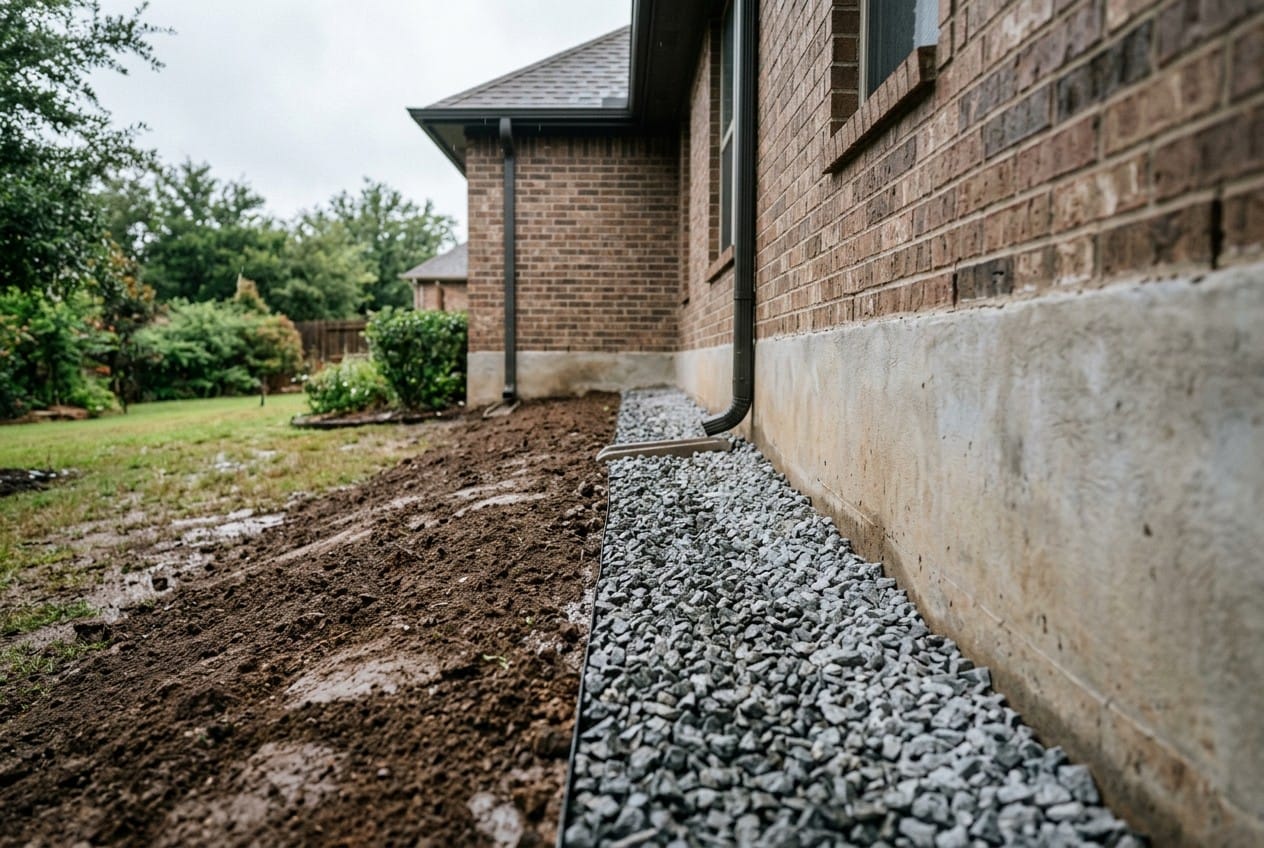
| French drain or surface drainage correction | $1,000 – $6,000 |
| Full perimeter repair (20–30 piers) | $8,000 – $30,000+ |
What Drives the Price Up
Number of piers needed
Every contractor will walk the perimeter and measure how far and how unevenly the foundation has moved. The number of piers is the single biggest cost lever. A home with 2–3 inches of differential settlement around one corner may need 8–12 piers. A home with 4+ inches of movement around most of the perimeter may need 20 or more.
Pier type and depth
Concrete pressed piles are the most affordable option and are widely used in North Texas clay soils. Steel push piers and helical piers are more expensive but better suited to situations where stable soil is deep, where load capacity requirements are high, or where a contractor needs torque-verified installation data (often required for commercial projects or high-end residential work).
Access and site conditions
Tight sideyard clearance, landscaping, hardscape (patios, driveways), or the need to work underneath a deck all add labor time. Interior piers — installed through tunnels excavated under the slab — are significantly more expensive per pier than exterior perimeter piers.
Drainage and soil conditions
Many foundation contractors will refuse to repair a foundation without also addressing poor drainage around the home. If water is pooling against your foundation or if downspouts are discharging within a few feet of the slab, drainage correction may be required as part of the scope. This is genuinely good practice — a repaired foundation on a water-saturated site will continue to move.
What Drives the Price Down
- Early intervention: Catching movement at 1–2 inches rather than 3–4 inches often means fewer piers needed
- Pier-and-beam vs. slab: Many pier-and-beam repairs are less invasive and therefore less expensive for equivalent amounts of movement
- Concrete pressed piles in clay soil: If your soil profile allows it, this method is significantly cheaper than steel options
What’s Typically Included in a Quote
Reputable contractors provide a written scope of work that specifies:
- Number and type of piers
- Locations marked on a diagram
- Lifetime transferable warranty (industry standard for piers — confirm this)
- Whether tunneling, permits, or drainage work are included or additional
Always confirm what is — and is not — in the quoted price. Ask specifically about backfill and cleanup, concrete patching over tunnels, and how the contractor handles re-leveling interior trim after the lift.
Should You Get an Engineer’s Report First?
For jobs under about $5,000, most homeowners work directly with a contractor. For larger, more complex repairs — or before buying a home with known foundation issues — commissioning an independent structural engineer’s report (typically $300–$700) gives you a neutral third-party assessment of the scope needed and can be used to evaluate bids.
Compare vetted Texas foundation contractors who provide written warranties and transparent pricing, or browse by city to find specialists in your market.
FAQ
Does foundation repair add to my home’s value?
Addressing a documented foundation issue generally helps rather than hurts resale value — buyers and their lenders will discover the problem through inspection anyway. A completed repair with a transferable lifetime warranty is a cleaner situation than an undisclosed or unrepaired issue. That said, foundation repair rarely adds dollar-for-dollar to sale price; it primarily removes a discount buyers would otherwise demand.
Are warranties transferable if I sell the house?
Most reputable Texas foundation contractors offer lifetime transferable warranties on pier installations. Confirm this in writing before signing. The warranty typically covers the piers returning to their installed position, not future movement in unrepaired areas. Ask about the process and any transfer fees.
Can I negotiate the price of foundation repair?
Yes, within reason. Contractors sometimes have scheduling flexibility and prefer to fill gaps with nearby jobs — getting multiple quotes, being flexible on timing, and asking whether bundling related work (drainage, crawl space vapor barrier) affects unit pricing can all help. What rarely moves is per-pier pricing for established contractors using quality materials.